
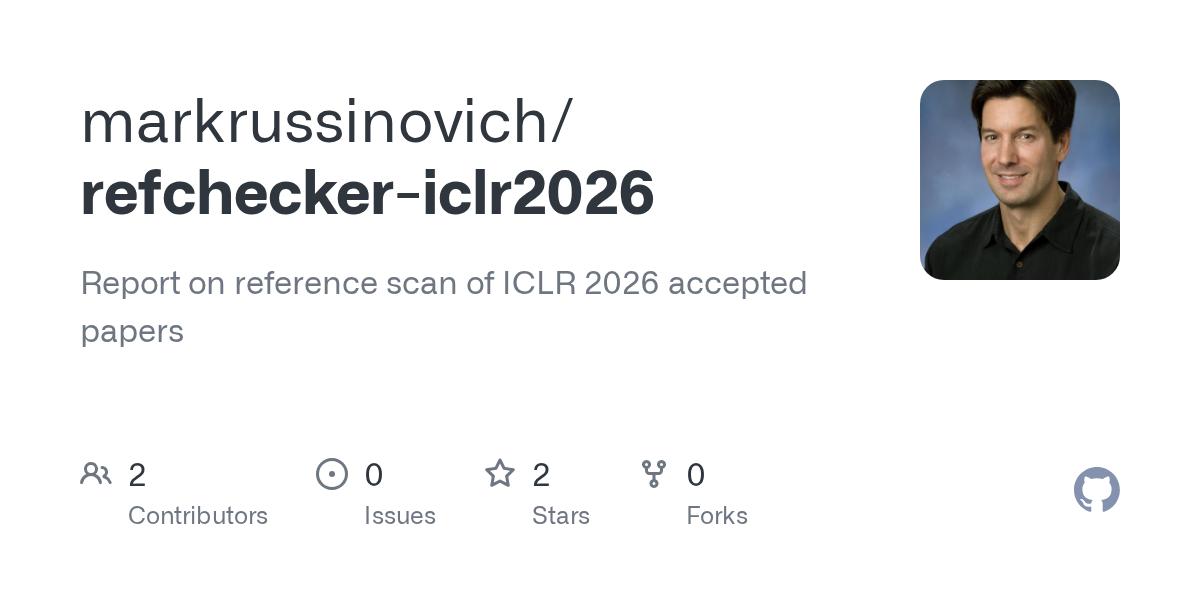
In a recent LinkedIn post, Mark Russinovich discusses the integrity of the archival record in the age of artificial intelligence, focusing on the proliferation of “hallucinated references” in academic papers. He and Ram Shankar Siva Kumar recently published a comprehensive scan of 180,501 citations from accepted papers at ICLR 2026, utilizing Russinovich’s open-source tool, RefChecker. Their findings indicate a significant issue: one in every 29 accepted papers contained at least one likely hallucinated reference.
Russinovich clarifies that the problem is not necessarily driven by malicious actors. Instead, he points to workflow failures as the primary cause.
“While many assume ‘AI slop’ is a problem of bad actors, our analysis found a different story. Most issues stemmed from workflow failures – well-intentioned researchers using LLMs to format BibTeX entries without a final human check.”
The Scale of Hallucinated References
The study identified a substantial number of erroneous citations within the analyzed papers. As Mark Russinovich notes, the scan revealed:
- 349 likely hallucinations across 184 accepted papers.
- Metadata corruption affecting over half the corpus, with more than 96,000 references exhibiting mismatched URLs or missing canonical links.
This extensive data suggests a systemic challenge in maintaining bibliographic accuracy as AI tools become more integrated into research workflows.
Metadata Corruption and Workflow Failures
Beyond direct reference hallucinations, Russinovich and Siva Kumar’s research also uncovered widespread issues with metadata. According to Mark Russinovich, over half of the references examined suffered from inconsistencies.
“Metadata corruption: Over half the corpus (96k+ references) had mismatched URLs or missing canonical links.”
This metadata corruption, Russinovich argues, further complicates the reliability of the archival record. He emphasizes that these issues often arise not from intent to deceive, but from unintentional errors introduced by researchers relying on AI for tasks like BibTeX formatting without adequate oversight.
A Call for “Bibliographic Integrity”
In response to their findings, Russinovich and Siva Kumar are not advocating for a ban on AI in research. Instead, Mark Russinovich calls for the establishment of new standards to ensure accuracy and reliability.
“Community Norms: We aren’t calling for a ban on AI, but for a new standard of ‘bibliographic integrity’ and verification.”
The authors have shared their anonymized results and the full dataset with ICLR to assist in strengthening the peer-review process. Russinovich highlights the importance of adapting verification methods to account for AI-assisted research, aiming to preserve the integrity of academic discourse.
The full write-up of their findings is available for further review, offering a detailed look at the challenges and potential solutions for maintaining academic rigor in the era of AI.
📝 About This Content
This article is based on insights shared by Mark Russinovich on LinkedIn.
📅 Originally posted on April 22, 2026 | View original post on LinkedIn →