
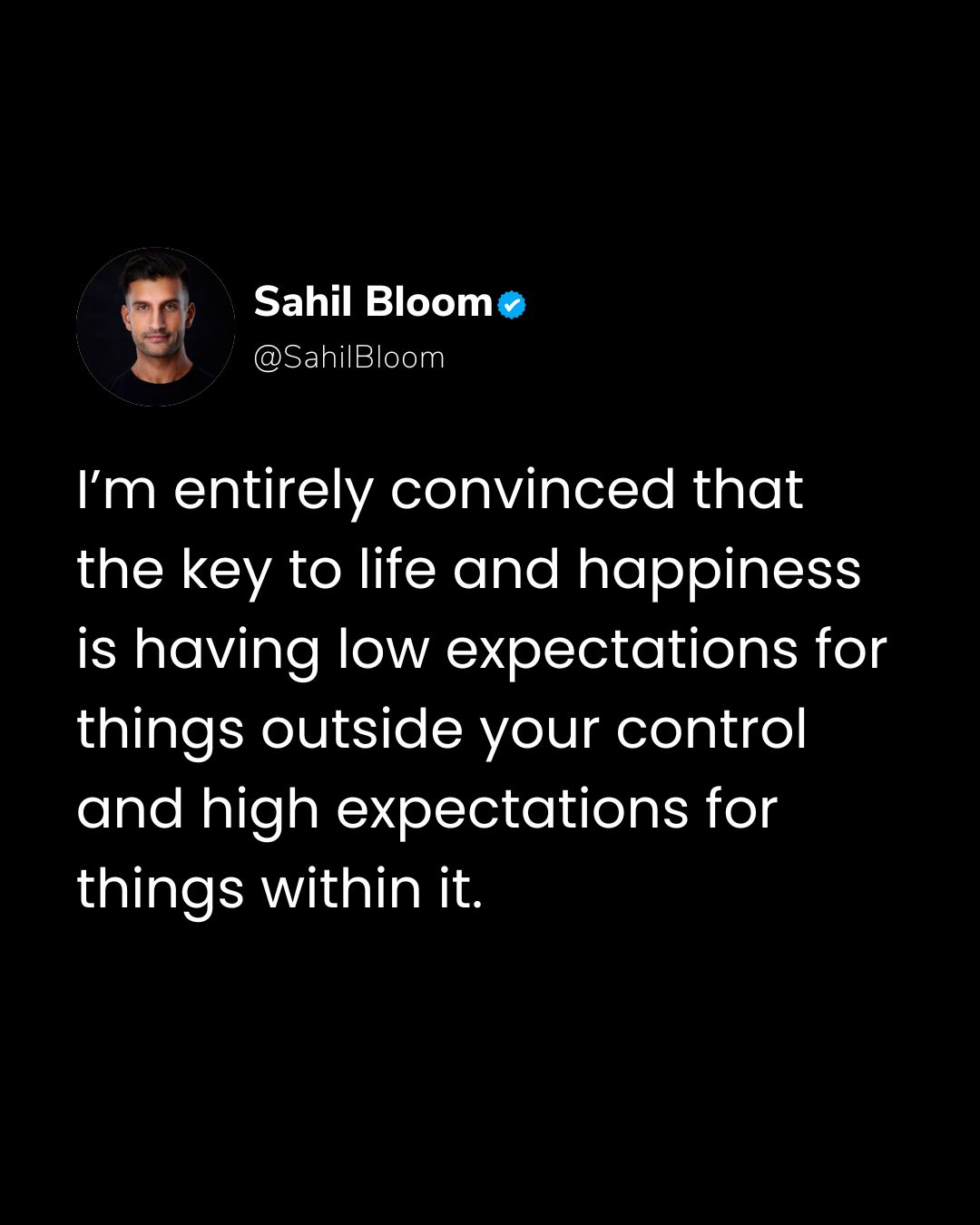
In a recent LinkedIn post, Sahil Bloom delves into a fundamental aspect of human happiness: managing expectations. Bloom argues that a primary source of dissatisfaction stems from misaligned expectations about what life owes us versus what we can actively influence.
He posits that a shift in perspective is crucial for achieving inner peace.
“I’m entirely convinced that the key to life and happiness is having low expectations for things outside your control and high expectations for things within it.”
According to Bloom, the pervasive issue lies in expecting too much from circumstances and individuals that are, by their nature, unpredictable. This external focus, he suggests, inevitably leads to disappointment and a lack of contentment.
The Misalignment of Expectations
Sahil Bloom highlights a common human tendency to project desires onto the external world, often without a corresponding commitment to action. This can manifest in various aspects of life, from career aspirations to personal relationships. When outcomes don’t match these often unrealistic external hopes, frustration sets in.
Bloom’s core message is about redirecting focus inward. He advocates for a dual approach:
- Lowering expectations for elements beyond individual influence (e.g., the economy, others’ opinions, luck).
- Raising expectations for personal efforts, discipline, and growth (e.g., skill development, work ethic, self-care).
The Role of Control
The distinction between what is within our control and what is not is central to Bloom’s thesis. He implies that peace is found not in achieving external desires, but in mastering one’s internal landscape and actions. By accepting the inherent unpredictability of many external factors, individuals can free themselves from the burden of constant striving for outcomes they cannot guarantee.
“You expect the wrong things from life. (That’s why you’re never at peace.)”
As Sahil Bloom notes, this internal recalibration is not about resignation but about strategic focus. It’s about investing energy where it yields the greatest return – in personal development and consistent effort. When high expectations are placed on one’s own actions and resilience, the potential for satisfaction and a sense of accomplishment increases significantly, regardless of external validation or fortune.
Cultivating Inner Peace Through Expectation Management
Bloom’s insights offer a practical framework for individuals seeking greater contentment. By consciously adjusting the targets of their expectations, people can cultivate a more resilient and peaceful mindset. This involves a disciplined practice of self-awareness, differentiating between controllable actions and uncontrollable outcomes.
The emphasis on personal responsibility, as put forth by Bloom, suggests that true agency lies in how we approach our own efforts and reactions. When we hold ourselves to high standards of performance and character, we build a foundation of self-efficacy that is less susceptible to the whims of external circumstances.
“[The key is] low expectations for things outside your control and high expectations for things within it.”
Ultimately, Sahil Bloom’s message on LinkedIn is a call to re-evaluate our fundamental assumptions about happiness and success. By shifting our focus from external validation to internal mastery, we can begin to find a more sustainable sense of peace and fulfillment.
📝 About This Content
This article is based on insights shared by Sahil Bloom on LinkedIn.
📅 Originally posted on April 21, 2026 | View original post on LinkedIn →