
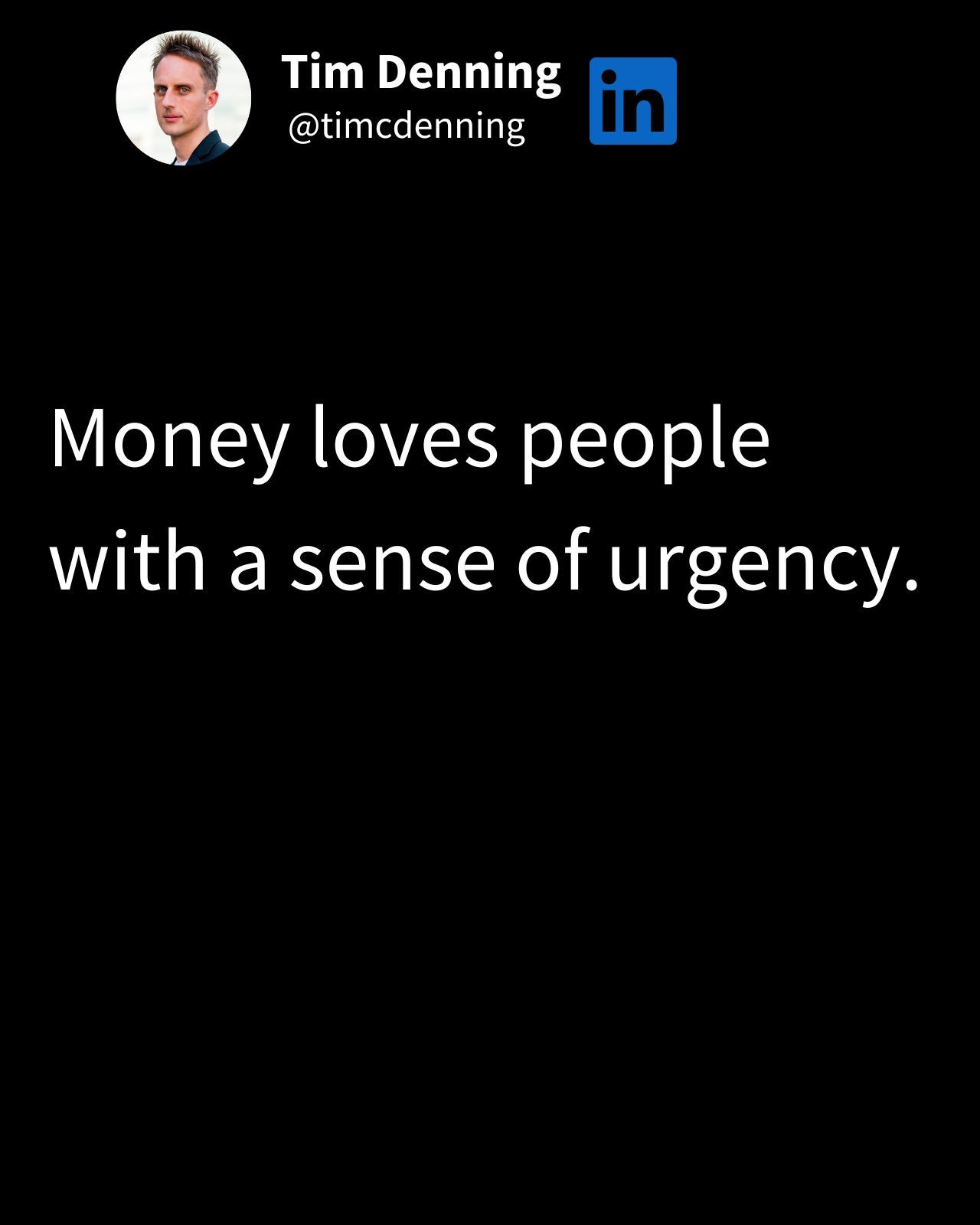
In a recent LinkedIn post, Tim Denning argues that a lack of speed is a primary reason many individuals remain financially stagnant. He shares his personal journey from a state of hesitation and overthinking to one of rapid execution, asserting that this shift was the catalyst for his business growth.
Denning recounts a period where he was “always preparing. Never executing.” This led to missed opportunities, such as potential clients hiring others and business ideas being launched by competitors before he could act. He attributes this inertia to waiting for “the right moment” and seeking “more information before making decisions.”
“Slow people stay broke.”
This stark statement, Denning explains, is not intended to be harsh but is a reflection of his own past experiences. He details how a personal setback—being fired—forced him to adopt a faster pace out of necessity. This involved making decisions with less than perfect information and launching projects before they felt entirely “ready.”
The Power of Urgent Action
The immediate aftermath of adopting a faster approach, according to Denning, was a significant increase in momentum. He observed that clients and partnerships materialized more readily because he was willing to respond and commit while others were still in the deliberation phase. This contrasts with the common misconception that financial success is solely the domain of the smartest individuals.
Denning posits that financial rewards often go to those who “move while everyone else is still thinking.” He has witnessed individuals with considerable intellect struggle financially due to an inability to “pull the trigger,” while others with less perceived brilliance achieve wealth through rapid execution. He emphasizes that this is not about recklessness but about understanding the irretrievable nature of time.
“The person who sends 10 imperfect proposals will always outperform the person who spends a month crafting one perfect pitch.”
According to Denning, urgency is about recognizing that time is a finite resource. He differentiates his current approach from his past self, noting that he had to consciously train himself to “act before I felt ready” and to “stop treating hesitation like wisdom.”
Shifting from Hesitation to Execution
Denning highlights that his decision-making process has transformed, with tasks that once took weeks now being completed in minutes. He embraces launching initiatives even when feeling uncomfortable and relies on his intuition, with the understanding that he can course-correct later. This personal transformation is directly reflected in his income.
“If you’re waiting for the perfect moment, you’re already losing. The perfect moment was yesterday. The second best moment is right now.”
He concludes by urging readers to move faster, decide quicker, and execute immediately, asserting that “Money is paying attention.” His core message is that in the competitive landscape of business, speed and decisive action are often more critical for financial success than prolonged planning or the pursuit of absolute perfection.
📝 About This Content
This article is based on insights shared by Tim Denning on LinkedIn.
📅 Originally posted on April 29, 2026 | View original post on LinkedIn →