
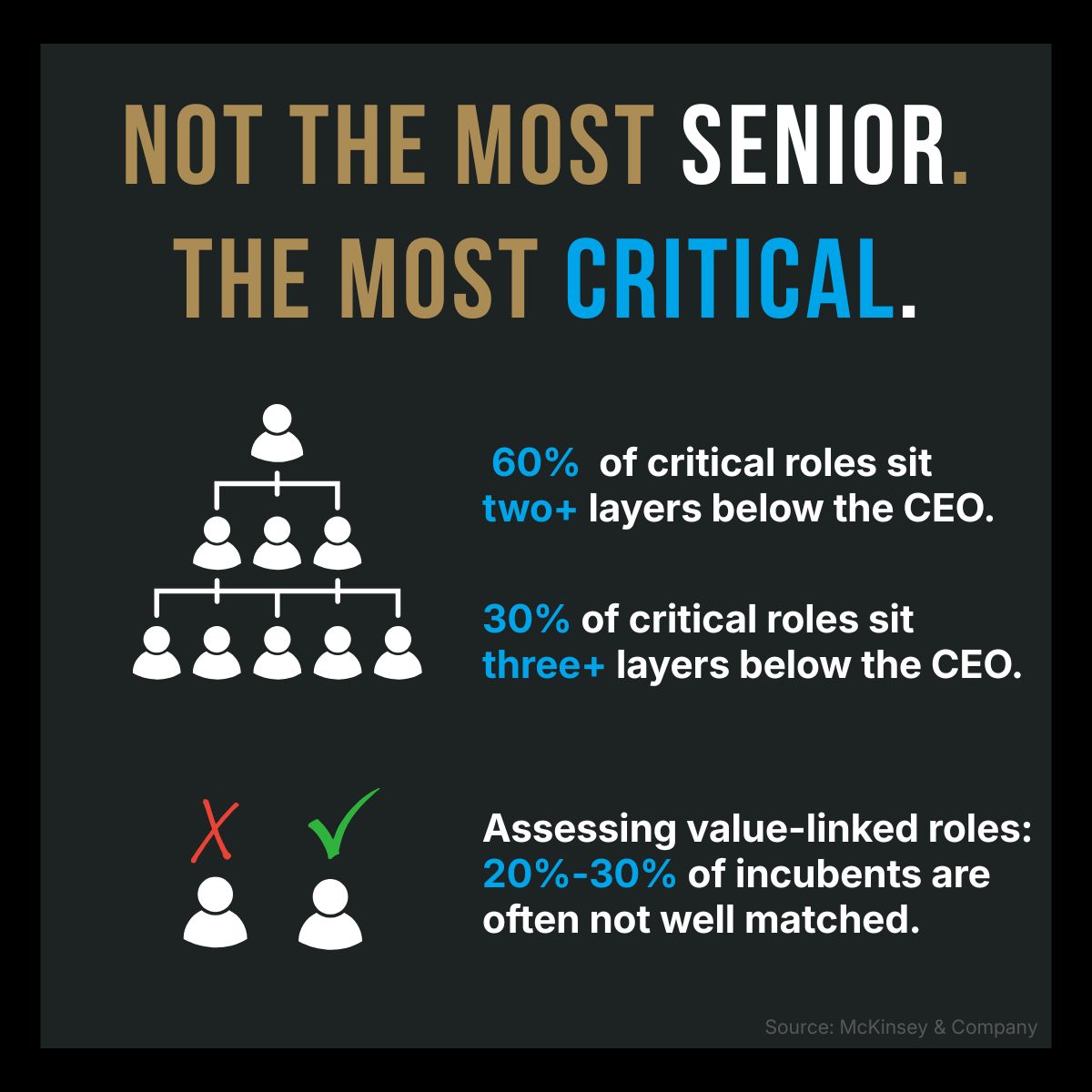
In a recent LinkedIn post, Nick Bradley explores a counterintuitive approach to value creation within organizations, emphasizing the importance of identifying and managing critical roles rather than solely focusing on seniority or headcount. Bradley, drawing from his experience at Getty Images, argues that true value is often generated by positions that might not hold prestigious titles or sit at the very top of the organizational chart.
He highlights the role of a “Head of Integrations” as a prime example. This individual, though not in a C-suite or VP position, played a pivotal role during Getty Images’ “buy-and-build” phase. The integration team’s responsibility was to ensure that newly acquired businesses were not just legally integrated but fully mapped into the broader organization.
“Systems. People. Processes. Reporting. Culture. Done properly.”
Bradley elaborates on the significance of this integration process, stating:
“Because in a roll-up strategy, value is not created when the deal is signed. Value is created when the acquired business becomes part of a stronger, more efficient machine.”
The Criticality of Critical Roles
According to Nick Bradley, the key takeaway from his experience at Getty Images is the identification of “absolutely critical roles.” He explains that the focus should not be on the most senior positions but on the 85 roles that genuinely created, enabled, or protected value within the company. This strategic focus allowed for more intensive and precise management.
Performance Management Reimagined
Bradley argues that concentrating performance management efforts on these critical positions, rather than attempting to manage thousands of individuals with uniform attention, leads to better outcomes. As he notes, this approach results in:
- Tighter execution in the roles that mattered most.
- Faster decision-making when individuals were not performing.
- Reduced costs associated with misplaced resources.
This refined management strategy, as described by Bradley, directly contributed to a significant increase in EBITDA and a meaningful reduction in operating costs for Getty Images.
A Lesson for Founders
Nick Bradley concludes by offering a direct lesson to founders and business leaders. He posits that if an organization cannot identify the relatively small number of roles that genuinely make the business stronger, more scalable, and thus more transferable, it is not truly managing enterprise value.
“If you cannot identify the relatively small number of roles that genuinely make the business stronger, more scalable, and therefore more transferable, you are not really managing enterprise value. You are just managing headcount.”
In Bradley’s view, this distinction is crucial for sustainable growth and maximizing the transferable value of a business. He emphasizes that effective enterprise value management requires a deep understanding of which positions drive the most impact, regardless of their hierarchical standing.
📝 About This Content
This article is based on insights shared by Nick Bradley on LinkedIn.
📅 Originally posted on May 5, 2026 | View original post on LinkedIn →