
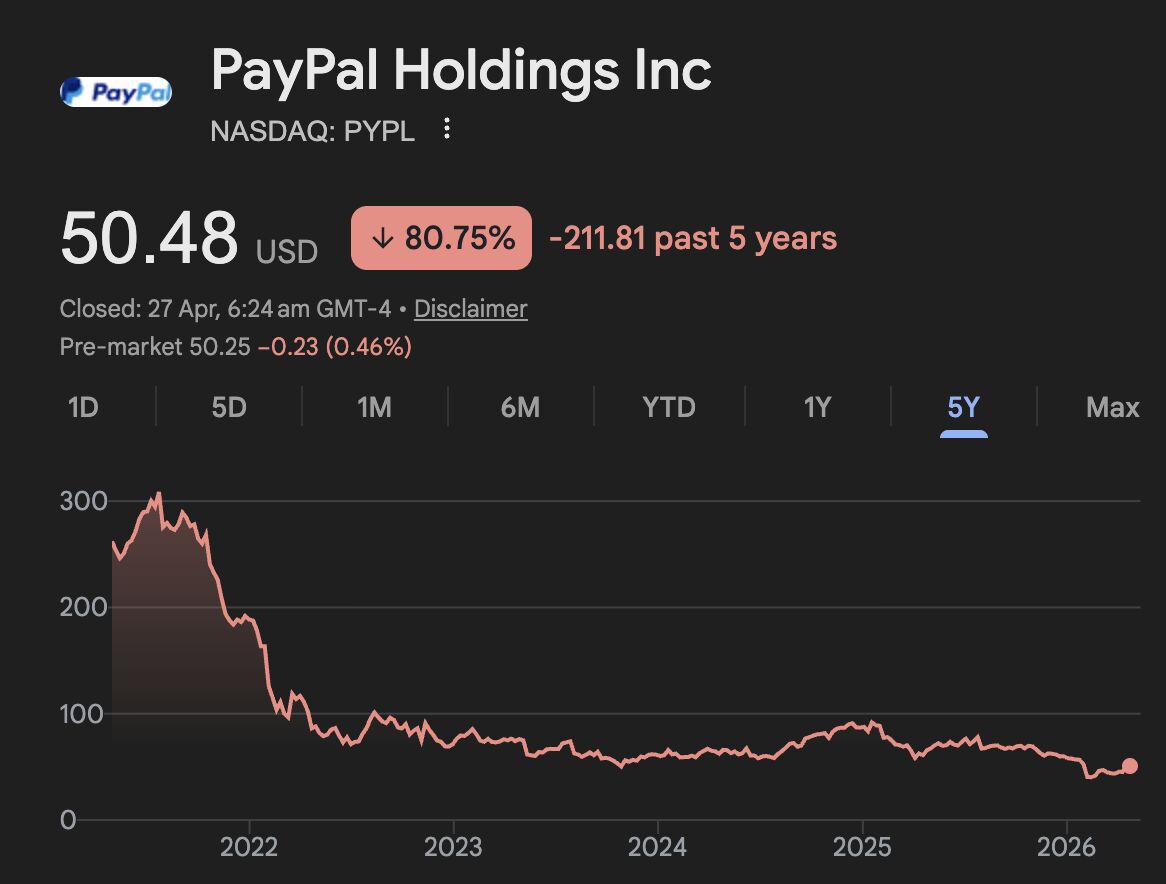
In a recent LinkedIn post, Rahul Kumar discusses a common pitfall faced by professionals receiving Restricted Stock Units (RSUs), particularly those earning in US dollars but looking to invest in India. Kumar highlights the significant opportunity cost associated with passively holding onto RSUs without a clear strategy, using the example of a friend who joined PayPal in 2023.
According to Kumar, this friend’s decision to simply hold onto his vested RSUs stemmed from a lack of planning and awareness about alternative investment strategies. Kumar quotes his friend’s sentiment, noting:
“I’ll figure it out later,” he kept saying.
This passive approach, Kumar argues, led to substantial financial underperformance compared to broader market gains.
The Cost of Inaction with RSUs
Rahul Kumar points out that while the friend’s intention might have been to avoid immediate decisions, the inaction proved costly. He elaborates on the financial implications, stating:
“Two years later, PayPal is down ~20%. Meanwhile, the S&P 500 is up nearly 50% in the same time. His “safe” decision to just hold quietly cost him lakhs in opportunity.”
This anecdote serves as a cautionary tale, illustrating a broader issue Kumar sees among Indian professionals earning RSUs. The core problem, as identified by Kumar, is a misunderstanding of the options available for managing these equity grants.
Beyond Traditional Selling and Wiring
Kumar emphasizes that many professionals are unaware of more efficient methods for handling their RSUs. The conventional approach, which often involves selling the stock, wiring funds to India, and then reinvesting, is described by Kumar as “the long, expensive, tax-heavy way.” He advocates for a more streamlined and effective strategy.
“You don’t have to sell your RSUs, wire money to India, and reinvest from scratch. There’s a smarter approach.”
The alternative Kumar proposes involves directly transferring RSUs into a diversified US portfolio. This method, he explains, bypasses the need for selling, international wire transfers, and the associated foreign exchange losses. As Rahul Kumar notes, this allows for “better allocation of the equity you’ve already earned.”
Leveraging Technology for Global Investing
Kumar introduces Rovia as a platform that facilitates this more efficient management of RSUs. He suggests that professionals can move their RSUs to Rovia to achieve diversification and align their investments with long-term financial goals in a tax-aware manner.
In his post, Kumar poses a question to his audience, seeking to understand their own strategies for handling RSUs: “How are you handling your RSUs — holding, selling, reinvesting, or still figuring it out?” This engagement aims to foster discussion and highlight the varied approaches professionals take towards managing their equity compensation.
📝 About This Content
This article is based on insights shared by Rahul Kumar on LinkedIn.
📅 Originally posted on May 12, 2026 | View original post on LinkedIn →