
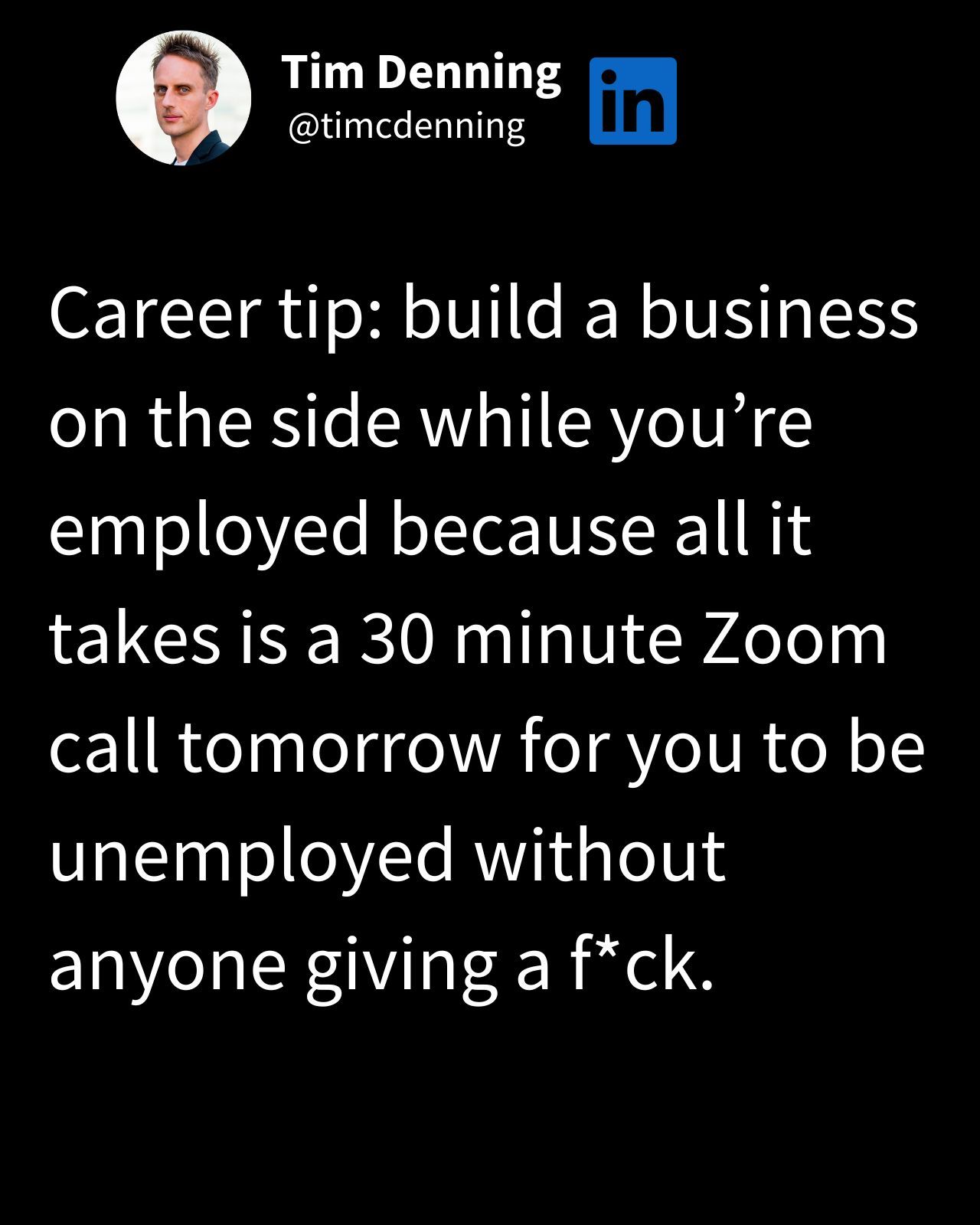
In a recent LinkedIn post, Tim Denning shares a stark personal account of job loss and argues for the critical importance of developing supplementary income streams while still employed. Denning recounts his own experience of being fired after years of dedicated service in banking, a situation that led him to a profound realization about the nature of employer-employee relationships.
Denning highlights the transactional reality of modern employment, stating:
“Your employer doesn’t owe you anything beyond your next paycheck.”
He elaborates on how corporate decisions are often driven by financial metrics rather than employee loyalty or tenure. This perspective challenges the common belief that dedication and long hours guarantee job security.
The Harsh Reality of Corporate Decisions
Tim Denning contends that companies operate on logic driven by spreadsheets and financial reports. When economic conditions shift or cost-cutting measures are implemented, individuals can become expendable line items. As Denning puts it:
“Companies make decisions based on spreadsheets. When the numbers change, people become line items to be removed.”
He emphasizes that personal dedication and years of service do not typically factor into these financial calculations, leaving employees vulnerable when budget adjustments are made.
Building a Resilient Future: The Power of Side Hustres
According to Tim Denning, those who navigate job loss successfully often have one key advantage: they have established other sources of income or developed skills outside of their primary employment. He observed that survivors of layoffs typically possessed:
- A side business
- A freelance income stream
- Skills cultivated beyond their job requirements
Denning advocates for a proactive approach, encouraging individuals to leverage their current employment stability to fund entrepreneurial experiments and skill development. He argues that this parallel growth provides a crucial safety net.
Options Over Income
In Denning’s view, the true value of these parallel ventures lies in the options they create. While a job provides a salary, a side business offers flexibility and the ability to transition if necessary. He writes:
“Your job gives you money. Your side business gives you options. Options are worth more than money because they let you walk away when you need to.”
Denning stresses that waiting until unemployment is imminent to start building an alternative income is a far more challenging path. He has witnessed firsthand that those who begin building their ventures before facing a crisis are the ones who ultimately thrive.
Challenging the Illusion of Security
Tim Denning concludes by challenging the perceived security of traditional employment, labeling it as an illusion. He asserts that genuine security stems from diversification of income sources. His advice to readers is clear: start building something on the side while still benefiting from the stability of a regular salary. This foresight, he suggests, is essential for long-term financial well-being and resilience in an unpredictable job market.
📝 About This Content
This article is based on insights shared by Tim Denning on LinkedIn.
📅 Originally posted on May 11, 2026 | View original post on LinkedIn →