
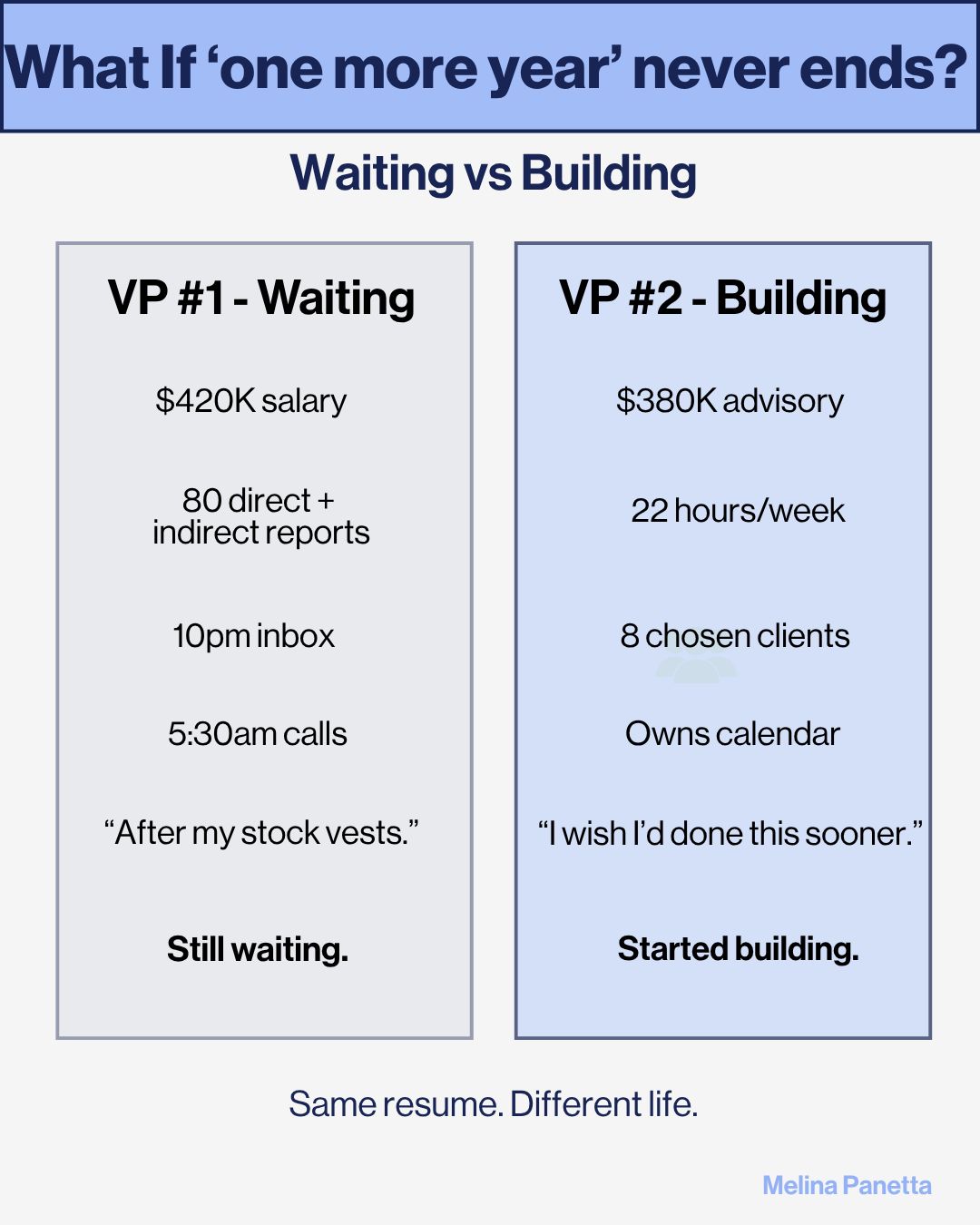
In a recent LinkedIn post, Melina Panetta explores the common professional dilemma of delaying personal career pivots, even when discontent is high, by examining the contrasting paths of two Vice Presidents who turned 50 last year. Panetta highlights how a seemingly rational decision to wait for a bonus or vesting period can become a significant trap, preventing individuals from proactively building towards a more fulfilling career on their own terms.
Panetta sets the stage by presenting two VPs with identical resumes and salaries at the age of 50. One remains in a traditional corporate role, achieving a promotion to SVP with a substantial salary increase and team expansion. From an external perspective, this VP appears to be ‘winning’. However, Panetta delves into the less visible realities of this path, detailing the demanding lifestyle that accompanies such success.
“10pm email clean-up so he doesn’t ‘fall behind’ → 5:30am global calls from different hotel rooms → Bonus tied to goals he didn’t set → A calendar that runs him → Slack open on vacation”
This VP, according to Panetta, rationalizes their continued corporate grind with phrases like, “After this bonus,” “After the next vest,” or “After my son graduates,” framing these as responsible decisions rather than potential postponements of personal fulfillment.
The Allure of the Rational Delay
The contrasting story, as shared by Panetta, is that of the second VP who chose a different route. This individual spent 12 months testing advisory work while still employed, securing three clients before resigning. Panetta notes that this VP had already committed $180,000 in advisory work before leaving their corporate position.
Eighteen months later, this second VP is reportedly earning $380,000, working only 22 hours a week with eight clients. The VP’s reflection, as quoted by Panetta, is stark: “I wish I did this five years ago.”
“The delay never sounds reckless. It sounds rational. That’s the trap.”
Panetta’s core observation is that the decision to delay a significant career change rarely feels like a fear-driven choice at the moment. Instead, it’s often framed as a sensible, short-term strategy. “No one wakes up and says, ‘I’m scared,’” Panetta writes. “They say, ‘Let’s just get through this year.’ And then another one goes by.”
Proactive Building vs. Reactive Waiting
The critical difference, Panetta argues, is not necessarily about having more courage, but about the timing of action. The key insight is whether an individual begins building towards their desired future state *before* a feeling of desperation sets in.
The Path to Leaving on Your Own Terms
Panetta’s advice is not to impulsively quit one’s job but to stop relying on future corporate milestones as the sole plan for transition. The strategy advocated is to leverage the current employment to fund and build the alternative career path simultaneously.
“Build while the job funds it. That’s how you leave on your terms.”
By proactively developing an advisory practice, side business, or other entrepreneurial venture while still employed, individuals can gain the confidence, client base, and financial security needed to transition smoothly. This approach, according to Panetta, allows for a departure that is driven by choice and preparation, rather than by necessity or burnout. Panetta encourages readers to share the post with those caught in the “one more year” cycle and to follow for more insights on seizing the right moment for career change.
📝 About This Content
This article is based on insights shared by Melina Panetta on LinkedIn.
📅 Originally posted on May 14, 2026 | View original post on LinkedIn →