
In a recent LinkedIn post, Ben Sands explores the often-overlooked trade-offs leaders make in pursuit of conventional success, arguing that true achievement lies not just in external metrics but in the cultivation of internal well-being and sustainable practices.
Sands contrasts the overt pursuit of ‘big wins’—such as faster growth, higher margins, and significant deals—with the often quieter, yet more profound, indicators of genuine success. He points out that many leaders dedicate years to chasing these external markers, sometimes at the expense of elements that contribute to a meaningful life.
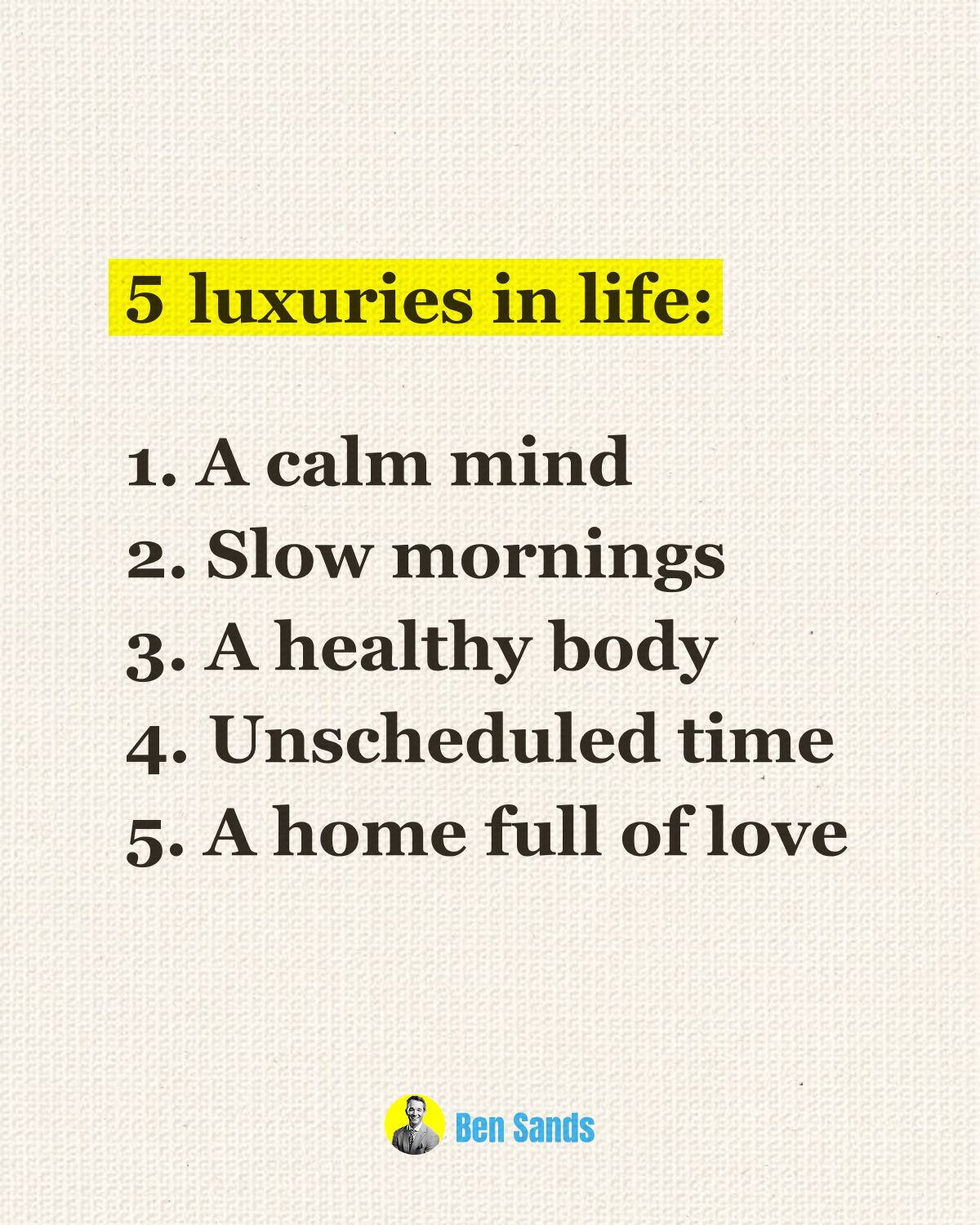
“But the things that make life feel meaningful are usually less flashy: 🧘♂️ A calm mind 🌄 Slow mornings 🍎 A healthy body 🕰️ Unscheduled time 🏡 A home full of love”
According to Sands, these vital aspects of life are not typically lost instantaneously. Instead, he observes that they are gradually ‘traded away’ through a series of seemingly minor concessions: a late night, a skipped workout, an extra meeting, or a weekend mentally tethered to work. While these sacrifices might initially fuel career advancement and company growth, Sands warns of the accumulating ‘hidden costs’.
The Gradual Erosion of Well-being
Sands highlights the insidious nature of this gradual erosion, noting the eventual emergence of negative consequences such as reduced patience, lower energy levels, poorer decision-making, increased reactivity, and a diminished sense of presence. This state, he argues, can lead to a paradoxical situation where external success is achieved, yet individuals become increasingly disconnected from the very life they aimed to build.
Identifying the ‘Quiet Breakdowns’
The best leaders, as observed by Sands, do not wait for burnout to initiate change. Instead, they proactively protect the foundational elements of their well-being. He emphasizes that this isn’t about achieving perfect life balance but about recognizing the significant expense incurred by neglecting these areas.
“These things are not rewards for success. They are the infrastructure that makes success sustainable.”
Sands outlines practical strategies employed by effective leaders to maintain this balance. These include intentionally blocking time for restoration, setting clear boundaries for when work concludes, and pre-defining non-negotiables. He cautions that without such deliberate measures, the demands of urgency and work can easily expand to fill all available space, displacing what truly matters.
The Importance of Proactive Guardrails
The core of Sands’s message is that these personal well-being factors are not mere afterthoughts or rewards for achievement; they are the essential infrastructure supporting long-term, sustainable success. He points out that the difficulty lies in the subtle nature of the ‘drift’ away from these principles, often unnoticed until it impacts health, relationships, decision-making, and overall leadership effectiveness.
“The hard part is most leaders don’t notice the drift until it’s already affecting: → their health → their marriage → their patience → their thinking → their ability to lead well”
To help leaders identify these potential issues, Sands introduces his Executive Health Quiz. This tool is designed to provide insights into areas of sustainable operation and potential breakdowns, offering guidance on small shifts that can yield significant improvements. As Sands suggests, such self-awareness is crucial for maintaining both personal fulfillment and professional effectiveness.
“In a few minutes, you’ll see: → Where you’re operating sustainably → Where things may be quietly breaking down → Which small shifts would create the biggest improvement”
Sands concludes by posing a reflective question to his audience: “What’s one boundary you need to put back in place this week?” This prompts readers to consider their own practices and the immediate steps they can take to reinforce the infrastructure of their sustainable success.
📝 About This Content
This article is based on insights shared by Ben Sands on LinkedIn.
📅 Originally posted on May 15, 2026 | View original post on LinkedIn →