
In a recent LinkedIn post, Dror Allouche discusses a critical behavioral blind spot that leads to a high failure rate for executives transitioning into Board roles. Allouche argues that the very skills which propelled individuals to C-level success can, paradoxically, become detrimental in a Board setting.
According to Allouche, approximately 60% of executives struggle with this transition not due to a lack of technical skills, but because of an ingrained “Operator Reflex.” This reflex, honed by years of crisis management, optimization, and direct control, is ill-suited for the strategic, oversight-focused nature of a Board.
“It’s not a lack of skills. It’s a behavioral blind spot. The reflex that made you a successful C-level will sabotage your next Board role.”
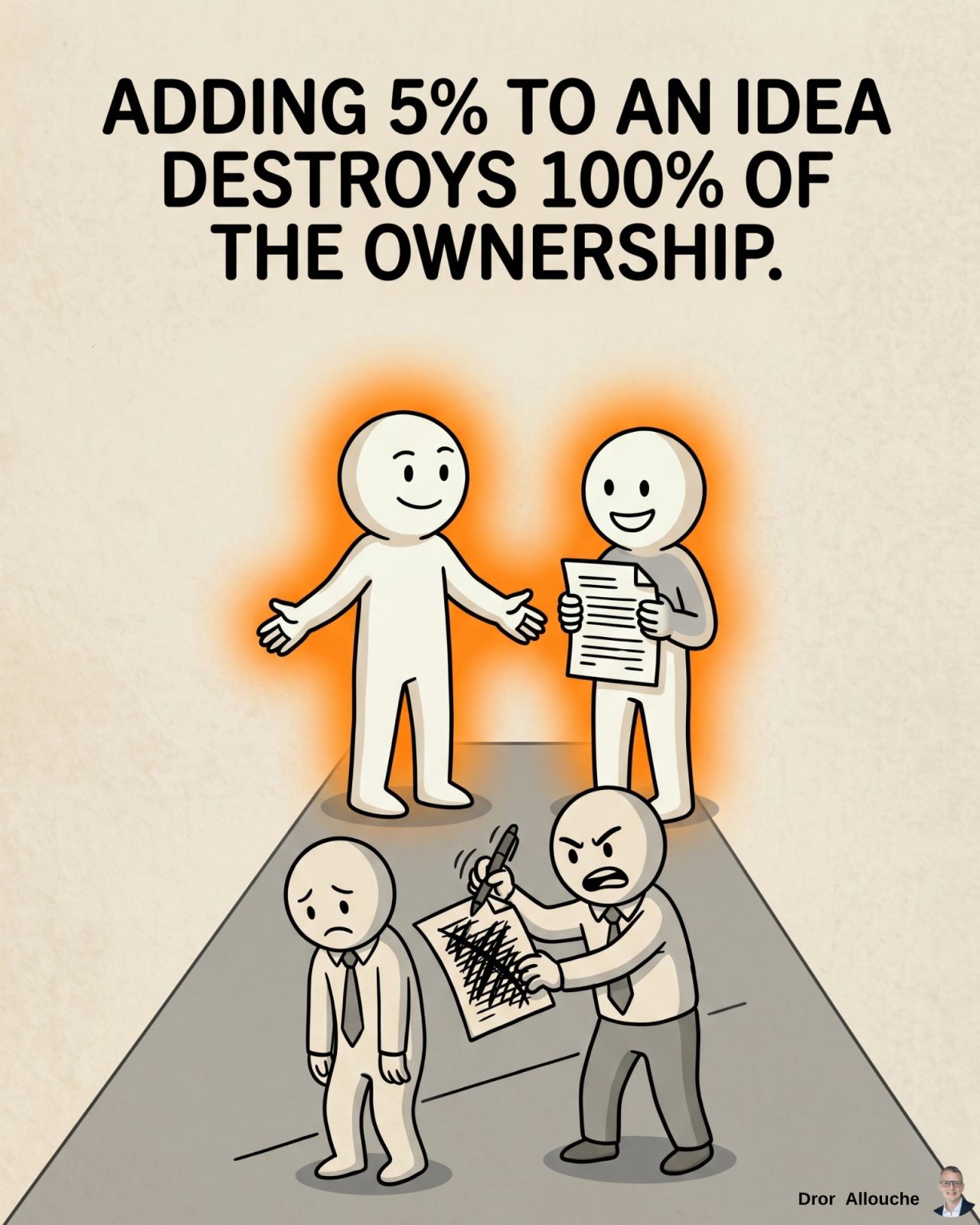
Allouche elaborates on how this reflex manifests, particularly in interactions with teams. He identifies a common pitfall he terms the “5% Trap.” In this scenario, an executive, accustomed to fixing and improving, instinctively tries to add their input to a team member’s well-developed idea. While intended as value-add, this action undermines the team member’s ownership and initiative.
The “5% Trap”: Undermining Ownership
Dror Allouche points out that when an executive intervenes to “improve” an idea that is already largely complete, they inadvertently claim ownership. This can stifle innovation and disempower team members, turning potential leaders into mere assistants.
“When your team brings you a brilliant idea, your reflex is to add 5% to improve it. You think you are adding value. In reality, you just destroyed 100% of their ownership. It’s no longer their idea, it’s yours.”
To combat this, Allouche advises executives to resist the urge to tweak and instead empower their teams. He suggests a simple yet powerful action:
“The Action: The next time a team member brings you a solution that is 90% there, say: ‘Great plan. Execute it.’ Bite your tongue on the final 10%. Let them own the win.”
This approach, as Dror Allouche emphasizes, shifts the focus from micro-management to fostering independent leadership. He poses a critical coaching question to prompt self-reflection:
Shifting from Operator to Strategist
The “Operator Reflex” is presented as a key symptom of what Allouche calls the “Executive Paradox.” This paradox highlights the challenge executives face in adapting their leadership style from hands-on operational management to the strategic oversight required at the Board level. A Board requires a strategist and a guide, not a firefighter or an optimizer in the traditional sense.
Dror Allouche is scheduled to conduct a closed session on this topic, aiming to equip leaders with a framework for this crucial mindset shift. The session promises to reveal further blind spots and offer strategies for successfully navigating the transition from an operational executive role to a governing Board position.
📝 About This Content
This article is based on insights shared by Dror Allouche on LinkedIn.
📅 Originally posted on May 14, 2026 | View original post on LinkedIn →