
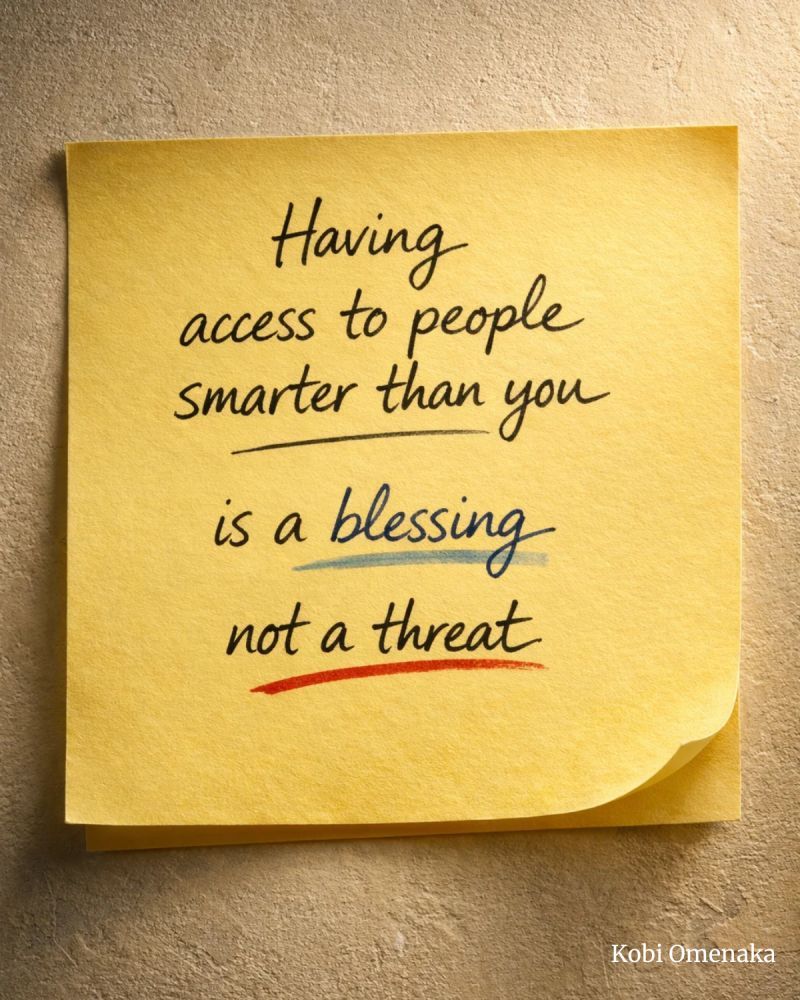
In a recent LinkedIn post, Kobi Omenaka discusses the often-overlooked challenge leaders face when hiring top talent, particularly individuals who may be more knowledgeable or skilled than they are. Omenaka argues that the desire to surround oneself with smart people can quickly turn into a test of a leader’s own confidence and humility.
The post highlights a common paradox: while leaders aspire to have brilliant individuals on their teams, the reality of working alongside them can expose insecurities. Omenaka posits that hiring people smarter than oneself requires a level of humility that many leaders lack.
“Being the smartest person in every room is nothing to brag about. It’s a bottleneck.”
The Leadership Challenge of Cognitive Diversity
Kobi Omenaka elaborates on the practical implications of building a team composed of highly intelligent individuals. According to Omenaka, this approach inevitably reveals a leader’s own limitations and areas for growth.
Exposing Gaps and Preventing Micromanagement
One of the primary benefits Omenaka identifies is the way smart team members illuminate a leader’s blind spots. “What you can’t see is usually what slows you down most,” Omenaka writes, emphasizing that these hidden deficiencies are critical for progress.
Furthermore, Omenaka suggests that surrounding oneself with capable individuals naturally curtails micromanagement. As leaders rely on the expertise of their team, they shift from needing to have all the answers to creating an environment where better solutions can emerge. This process, as Omenaka points out, “stops you from micromanaging.”
Fostering Intellectual Challenge and Self-Awareness
The environment created by smart people also serves as a catalyst for intellectual growth. Omenaka notes that “bad ideas get called out quickly. That’s a good thing. A GREAT thing.” This constructive challenge, in Omenaka’s view, is essential for innovation and prevents stagnation.
Crucially, Omenaka stresses that the discomfort arising from being around smarter individuals is a reflection of the leader’s internal state, not a failing of the team members. “Feeling threatened by smart people is a ‘you 🫵’ problem, not a ‘them’ problem,” the post states, underscoring the importance of self-security for effective leadership.
“Proximity to great people changes you. It makes you think bigger, move better, and grow faster than you would alone.”
Building a Smarter Collective
Kobi Omenaka concludes by reframing the ultimate goal of team building. The objective, as Omenaka articulates, is not personal dominance in intelligence, but the creation of a collaborative space that elevates everyone.
“The goal was never to be the smartest person in the room. It was to build a room that makes everyone smarter.”
This perspective shifts the focus from individual ego to collective achievement, advocating for a leadership style that prioritizes growth and shared intelligence. Omenaka’s insights challenge leaders to embrace humility and recognize the transformative power of a truly collaborative and intellectually stimulating environment.
📝 About This Content
This article is based on insights shared by Kobi Omenaka on LinkedIn.
📅 Originally posted on May 13, 2026 | View original post on LinkedIn →