
In a recent LinkedIn post, Tim Denning argues that the high burnout rate among Gen Z professionals is not a sign of weakness, but rather a symptom of systemic failures within the modern workplace. Denning, a business writer and consultant, highlights the disconnect between the expectations placed on young workers and the diminishing rewards they receive.
He begins by challenging the notion that Gen Z is inherently less resilient, stating:
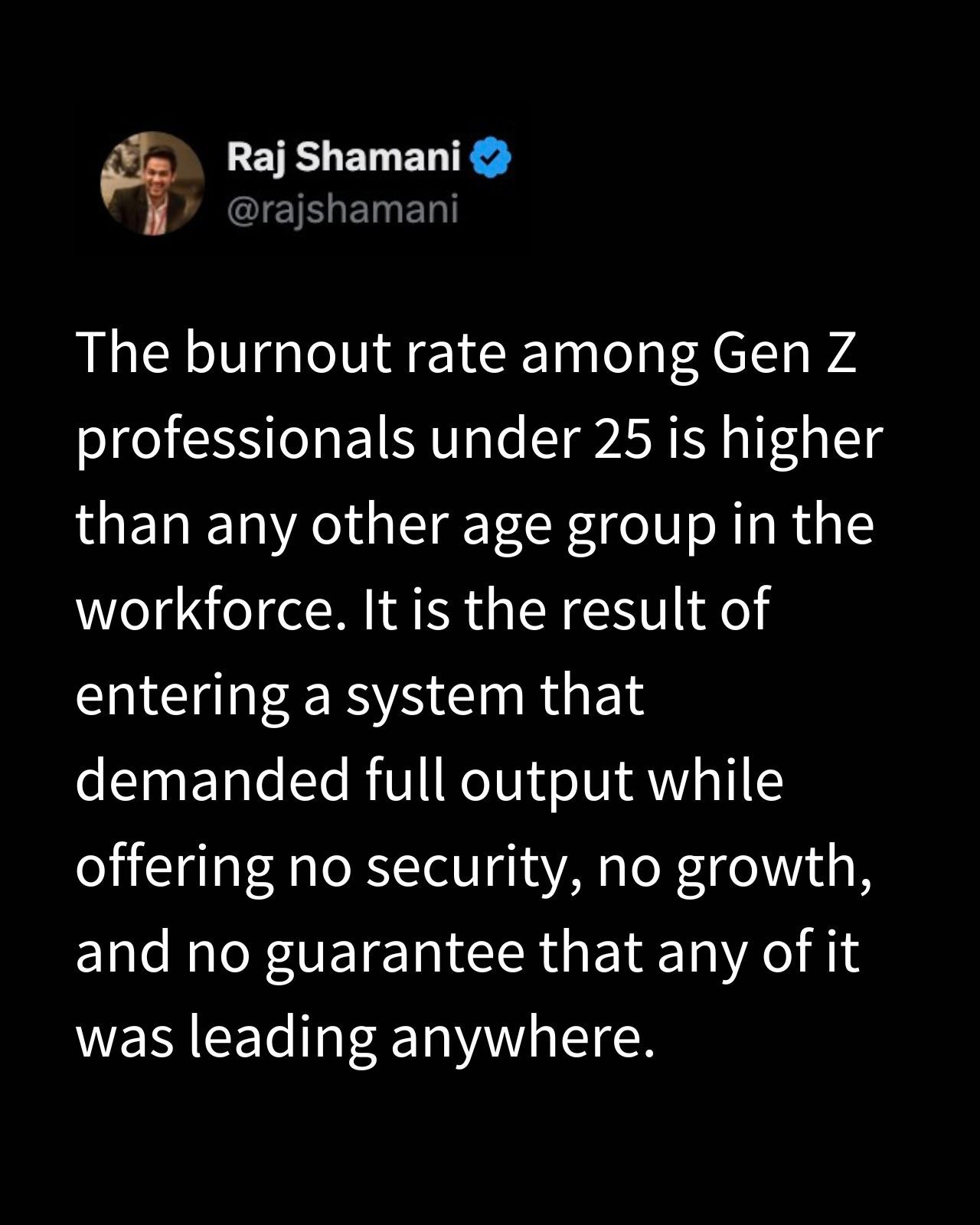
“Gen Z isn’t weak. They’re awake. The burnout rate among Gen Z professionals under 25 is higher than any other age group in the workforce. That’s not a character flaw. That’s a system failure.”
Denning emphasizes that his experience working with thousands of business owners reveals Gen Z clients to be exceptionally driven and capable, often requiring minimal supervision. However, he points out that this generation is asking fundamental questions about the value proposition of traditional work structures that older generations may not have considered.
Questioning the Traditional Work Deal
Denning elaborates on the core questions Gen Z is posing, which he frames as rational rather than entitled. These questions stem from a perceived imbalance in the modern employment landscape.
As Denning notes:
“Why am I grinding 60 hours a week for a company that could lay me off tomorrow?”
He contrasts the precariousness faced by Gen Z with the perceived stability enjoyed by previous generations. Denning explains that while older generations might have benefited from pensions and the ability to purchase homes on single incomes, Gen Z faces a landscape with less secure retirement benefits and the challenge of affording housing even with multiple incomes.
“The implicit deal used to be: sacrifice now, security later. That deal got shredded. But the sacrifice part stayed on the menu.”
This broken implicit contract, according to Denning, leaves Gen Z feeling asked to give significant effort to a system that offers little in return, leading to accelerated burnout.
The Appeal of Alternatives
Denning observes that many Gen Z individuals who feel disillusioned with traditional corporate roles are increasingly turning towards entrepreneurship or alternative career paths. He clarifies that this is not necessarily because building one’s own venture is easier, but because the effort invested feels more directly controlled and rewarding.
He states:
“The ones who decide to build something of their own come alive. Not because entrepreneurship is easy. It’s brutal. But at least the effort goes somewhere they control.”
In Denning’s view, Gen Z’s burnout is a logical response to a system that demands much and gives little back. He suggests that the most effective strategy for this generation is not to wait for existing systems to improve, but to actively create alternatives, whether through starting businesses, finding innovative companies, or forging non-traditional career paths.
Ultimately, Tim Denning concludes that understanding Gen Z’s perspective requires recognizing the systemic issues they face, rather than labeling them as inherently less capable or resilient. Their drive, he argues, is channeled into seeking work that offers a more equitable return on their considerable efforts.
📝 About This Content
This article is based on insights shared by Tim Denning on LinkedIn.
📅 Originally posted on May 21, 2026 | View original post on LinkedIn →