
In a recent LinkedIn post, Ross Simmonds discusses a critical evolution in how search engines, particularly those powered by Large Language Models (LLMs), are interpreting user queries, and why this shift necessitates a strategic approach to content and SEO. Simmonds highlights the difference between basic, short-tail prompts and the more detailed, long-tail queries that are becoming increasingly common.
Simmonds contrasts a generic search with a highly specific one, stating:
Most brands track prompts like: “What is the best CRM?”
He then presents a far more nuanced example of a query that reflects a sophisticated user intent:
Smart brands track prompts like: “I’m a VP of Sales at a Fortune 500, I oversee a team of 85 sales executives and we focus on B2B SaaS. We’re looking for a CRM alternative to our current platform. It needs to be GDPR compliant. It needs to have automated follow up sequencing and connect to Google Workspace. What are the best CRMs in the market for me?”
This distinction, according to Simmonds, is fundamental to understanding modern search behavior. He argues that the complexity of the second query demonstrates a user who is deep in the buyer’s journey, possessing specific needs and context.
The LLM Shift and User Intent
Ross Simmonds explains that the reason for tracking these more complex prompts is rooted in the current capabilities and usage patterns of LLMs. As Simmonds notes, “Because that’s the type of query happening inside of an LLM today.” This implies that AI-driven search and information retrieval are moving beyond simple keyword matching to understanding context, role, industry, and specific requirements.
This sophisticated understanding of user intent by LLMs means that content needs to be equally sophisticated. Generic content answering broad questions may no longer be sufficient to capture the attention of users who are posing highly specific problems. Simmonds suggests that brands need to anticipate these detailed inquiries and provide equally detailed, targeted answers.
The Strategic Importance of Long-Tail Content and Reddit
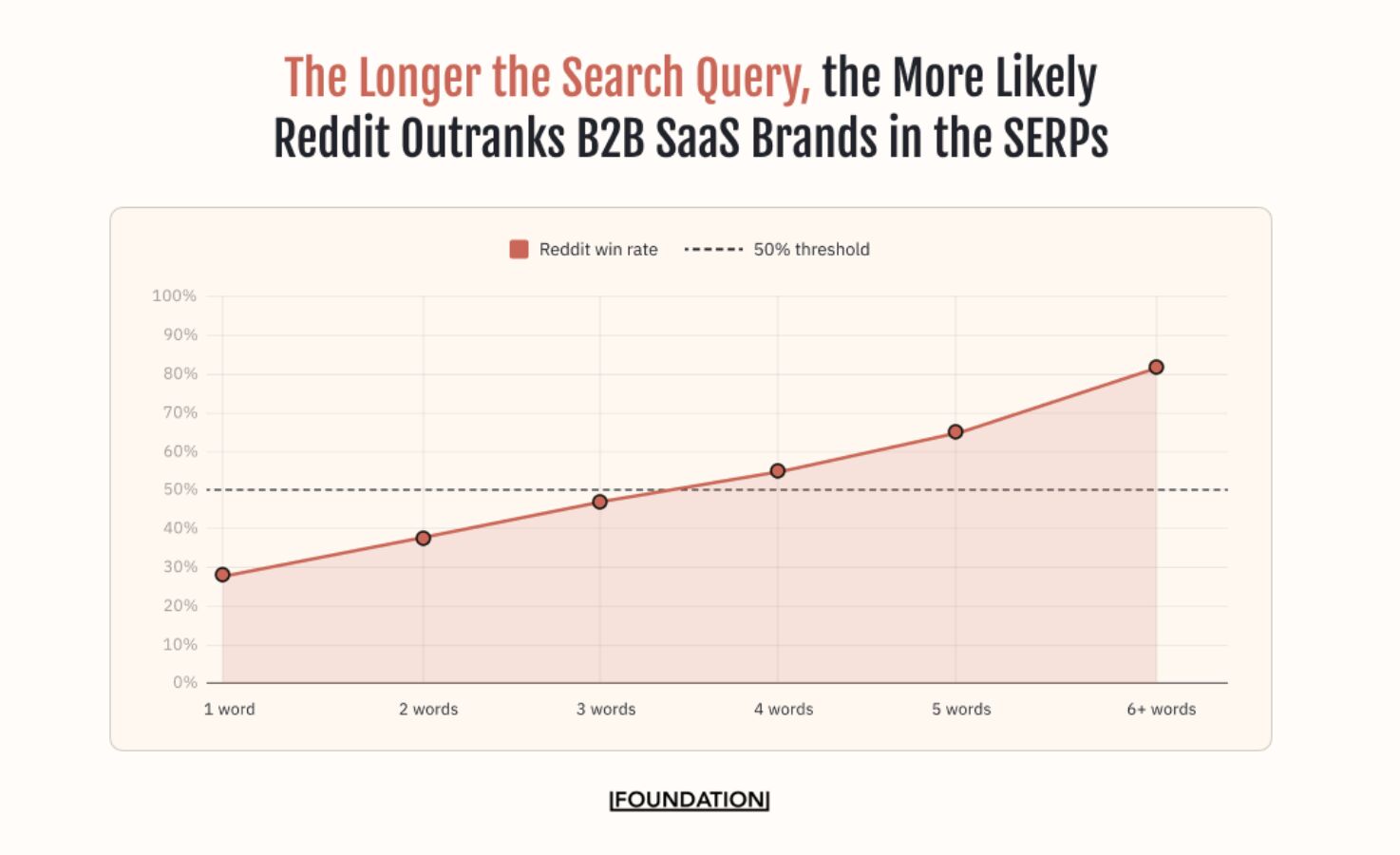
Simmonds connects this observation about query complexity directly to the importance of a robust Reddit marketing strategy. He points out a correlation between the length and specificity of a search query and the likelihood of Reddit appearing as a top source.
Recent research has shown that the longer the search query – the more frequently Reddit shows up as a TOP cited source for the prompt or query.
This insight is crucial for marketers. It suggests that communities and discussions on platforms like Reddit, where users often ask detailed questions and share specific experiences, are becoming invaluable resources for those conducting in-depth research. As Simmonds concludes, “The sale is in the long tail.”
For businesses, this means not only optimizing for traditional search engines but also engaging in platforms where long-tail conversations are happening. By providing valuable, detailed content that addresses these specific long-tail queries, brands can position themselves as authoritative sources and capture highly qualified leads. Simmonds’s analysis underscores a paradigm shift, urging businesses to move beyond surface-level keyword targeting to embrace the depth and specificity of modern search behavior.
📝 About This Content
This article is based on insights shared by Ross Simmonds on LinkedIn.
📅 Originally posted on May 25, 2026 | View original post on LinkedIn →