
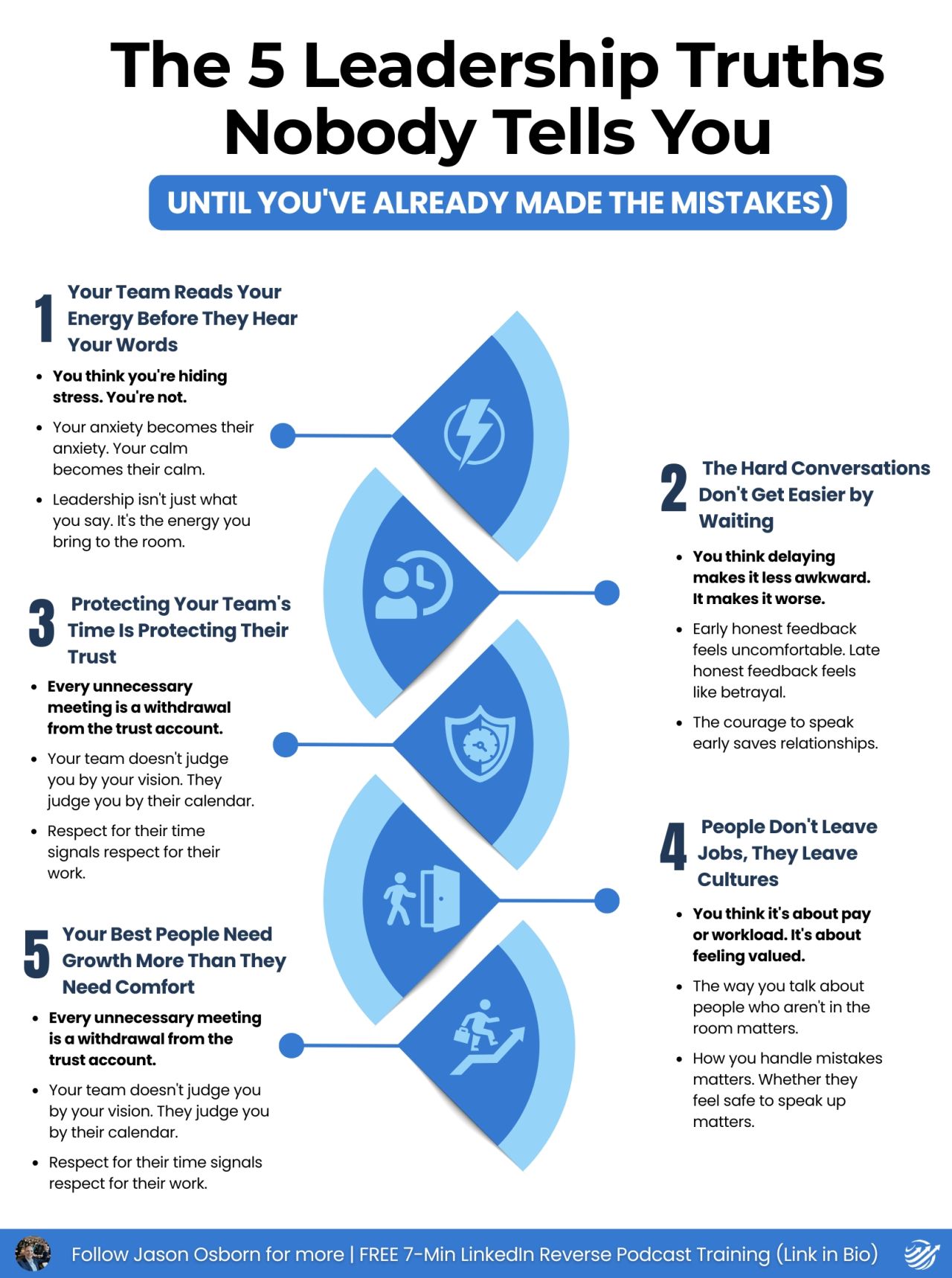
In a recent LinkedIn post, Jason Osborn delves into the critical leadership lessons that often come only through painful experience, rather than formal training. He highlights five core truths that, if unheeded, can lead to significant missteps in managing teams. Osborn frames these as insights that are typically learned the hard way, suggesting that leaders can proactively benefit from understanding them now.
Osborn emphasizes that the most impactful leadership development doesn’t always stem from books or courses. Instead, he posits that genuine learning often arises from the mistakes leaders wish they had been warned about earlier. He introduces his list by stating:
“Most leadership lessons don’t come from books. They come from mistakes you wish someone warned you about.”
This foundational idea sets the stage for his exploration of five often-overlooked aspects of effective leadership.
The Impact of a Leader’s Energy
One of the primary truths Jason Osborn addresses is the profound influence a leader’s emotional state has on their team. He argues that leaders often underestimate how transparent their feelings are to their employees. According to Osborn, attempts to conceal stress or anxiety are usually futile, as the team will inevitably pick up on these cues.
As Osborn notes:
“Your Team Reads Your Energy Before They Hear Your Words… Your anxiety becomes their anxiety. Your calm becomes their calm.”
He elaborates that leadership is as much about the unspoken energy and emotional atmosphere a leader cultivates as it is about explicit directives or communication. People, he suggests, tend to mirror the emotional state they perceive from their leaders.
The Necessity of Timely, Difficult Conversations
Osborn also tackles the common tendency to postpone challenging conversations, particularly those involving feedback. He asserts that delaying these discussions does not make them easier but rather exacerbates the underlying issues and can erode trust.
In Osborn’s view:
“The Hard Conversations Don’t Get Easier by Waiting… Early honest feedback feels uncomfortable. Late honest feedback feels like betrayal.”
He advocates for the courage to deliver feedback promptly, suggesting that this approach is crucial for preserving relationships and addressing problems before they escalate. Waiting, he warns, simply magnifies the eventual difficulty and potential damage.
Respecting Team Time as a Cornerstone of Trust
Another key insight from Osborn concerns the critical role of managing a team’s time effectively. He draws a direct parallel between the number of unnecessary meetings and the depletion of trust within a team.
According to Osborn:
“Protecting Your Team’s Time Is Protecting Their Trust… Every unnecessary meeting is a withdrawal from the trust account.”
He posits that employees evaluate their leaders not just by their vision or strategic direction, but by how their calendars are managed. Respecting an employee’s time, Osborn argues, is a clear signal of respect for their work and their contributions. Conversely, wasting their time implies a devaluation of their efforts.
Culture as the True Driver of Retention
Jason Osborn also addresses the perennial issue of employee retention, challenging the common assumption that factors like pay or workload are the primary reasons for departures. He contends that the underlying cause is far more often related to the organizational culture.
Osborn points out that how employees *feel* daily is paramount. He highlights that:
“People Don’t Leave Jobs, They Leave Cultures… Culture isn’t what you say in meetings. It’s how people feel every day.”
He stresses the importance of how colleagues are discussed in their absence, how mistakes are handled, and whether employees feel psychologically safe to voice their opinions. These cultural elements, he argues, are far more significant than superficial perks or compensation in fostering loyalty.
Prioritizing Growth Over Comfort for Top Performers
Finally, Osborn addresses the needs of a company’s highest-performing employees. He argues against the notion that keeping top talent comfortable is the best strategy for retention. Instead, he believes these individuals thrive on continuous growth and development.
In Osborn’s perspective:
“Your Best People Need Growth More Than They Need Comfort… If they’re not learning, they’re planning their exit.”
He concludes that great leaders foster an environment where their best people can grow, even if that growth eventually leads them to new opportunities elsewhere. The ultimate measure of success, he suggests, is not how long an employee stays, but how much they have grown during their tenure.
Osborn’s post serves as a valuable guide, offering leaders a chance to learn these critical lessons proactively, thereby avoiding the common pitfalls that can hinder their effectiveness and impact.
📝 About This Content
This article is based on insights shared by Jason Osborn on LinkedIn.
📅 Originally posted on May 22, 2026 | View original post on LinkedIn →