
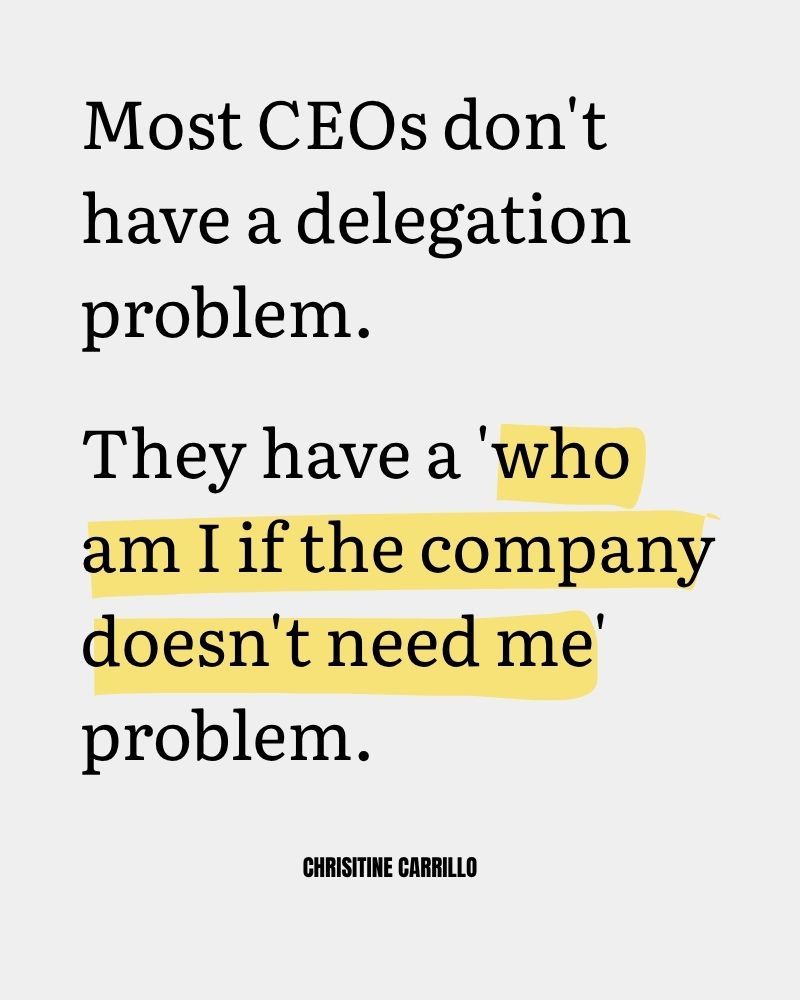
In a recent LinkedIn post, Christine Carrillo challenges leaders to confront a common misconception: the idea that delegation is merely a skill deficit. Instead, Carrillo argues that the root of delegation struggles often lies within the leader themselves, describing it as a “you problem.” She posits that every hour a leader spends on tasks their team could handle is a direct indicator of this underlying issue.
“And every hour you spend doing your team’s work proves it.”
Carrillo recounts a personal turning point, a concussion that forced her to re-evaluate her leadership style when she was managing a highly successful company. Despite a $28 million revenue and 96% margins, she recognized herself as the primary bottleneck, preventing the company from scaling effectively.
The Fear Behind the Bottleneck
Carrillo identifies several self-deceptive narratives that prevent leaders from delegating effectively. She highlights that often, what appears to be a lack of delegation skill is, in fact, an unwillingness to face deeper fears and insecurities.
She lists common justifications leaders tell themselves:
- “I called letting go losing.”
- “I called control leadership.”
- “I called doing it myself faster.”
- “I called perfectionism a standard.”
- “I called being needed being valuable.”
According to Carrillo, these internal lies allow leaders to remain “in the work,” thereby avoiding the more profound question of their identity and value beyond their immediate operational involvement.
“Each one let me stay in the work. And staying in the work let me avoid the real question: Who am I if the company doesn’t need me?”
Shifting from Bottleneck to Architect
Carrillo outlines the transformative effects that occur when leaders confront these internal barriers and embrace true delegation. This shift, she explains, moves the leader from being a constant operational participant to a strategic architect of the business.
As Christine Carrillo notes, the positive outcomes include:
- The team becomes more autonomous, stopping the need to seek constant permission for decisions.
- The leader transitions from being a bottleneck to becoming the architect of the business’s growth.
- The company’s reliance on the leader for every detail diminishes, allowing for broader scalability.
- The leader can focus on building the business’s future rather than merely running its present operations.
“Your business doesn’t need a better delegator. It needs you to face what you’re holding on to.”
Carrillo concludes by emphasizing that the core issue is not a lack of delegation proficiency but rather the leader’s internal resistance to letting go. By addressing these personal fears, leaders can unlock both their own potential and that of their teams, fostering a healthier and more scalable business environment.
📝 About This Content
This article is based on insights shared by Christinecarrillo on LinkedIn.
📅 Originally posted on May 27, 2026 | View original post on LinkedIn →