
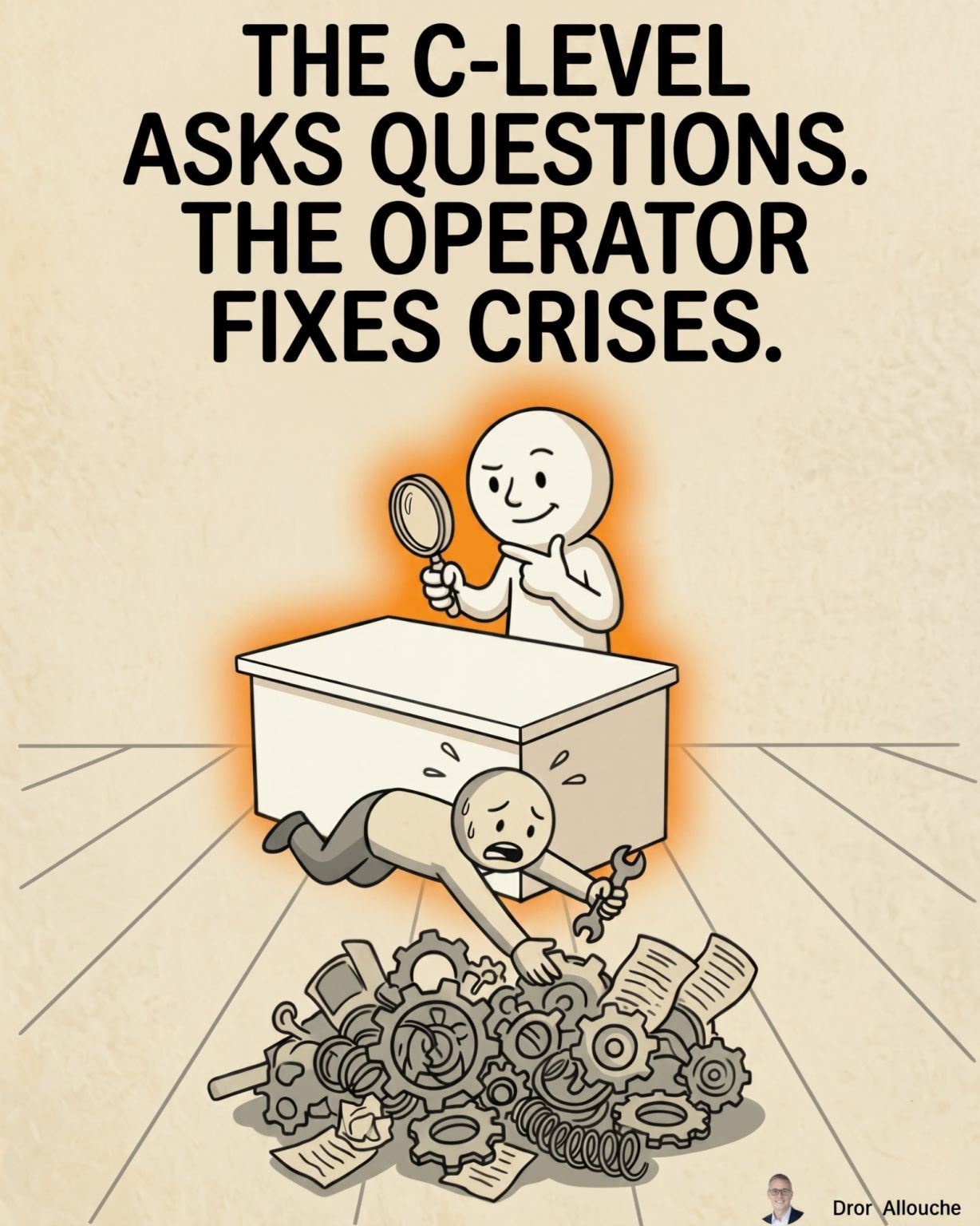
In a recent LinkedIn post, Drorallouche discusses a critical transition many professionals face when moving into executive roles: the shift from being a direct problem solver to empowering their team to do so. Drorallouche argues that while problem-solving skills lead to promotion, relying solely on them at the executive level can be detrimental.
The core of Drorallouche’s message revolves around a potential “Chief Problem Solver blind spot” that executives can fall into. This occurs when leaders continue to personally investigate and solve issues, rather than guiding their teams to do the execution. As Drorallouche states:
“The transition to the executive team requires a shift in methodology. You investigate the issue. The team handles the execution.”
Moving Beyond Direct Intervention
Drorallouche outlines a three-step framework designed to help leaders navigate this blind spot and foster greater accountability within their teams. The first step, termed “The Mirror Strategy,” emphasizes using questions to guide team members toward understanding and solving problems themselves.
The Mirror Strategy: Empowering Through Questions
According to Drorallouche, executives should act as facilitators, prompting their teams to reflect on situations. The post suggests specific action prompts:
“Executives use questions as mirrors. You prompt the team to view the situation. 🛠️ The Action: Begin the dialogue with prompts like ‘Walk me through the timeline’ or ‘Help me understand the bottleneck.'”
This approach, Drorallouche explains, shifts the focus from the leader providing answers to the team discovering them, thereby building their problem-solving capacity.
Fostering Clarity and Accountability
The second and third steps in Drorallouche’s framework, “The Clarity Phase” and “The Accountability Transfer,” are designed to solidify the team’s ownership of the problems and their solutions.
The Clarity Phase: Isolating the Root Cause
Drorallouche highlights the importance of questioning to remove confusion and pinpoint the exact nature of a problem. The advice is to repeatedly ask “what” and “how” until the team can clearly articulate the issue.
The Accountability Transfer: Assigning Ownership
The final step involves transferring the execution of the solution back to the team. Drorallouche notes that once a problem is clearly understood, accountability naturally follows. The post suggests asking questions like:
“What steps will you take by tomorrow?”
This final step ensures that the team is not only responsible for understanding the problem but also for implementing the solution, thereby fostering a culture of execution and accountability.
In essence, Drorallouche’s insights on LinkedIn underscore a fundamental principle of effective leadership at the executive level: empowering the team through guided questioning and clear accountability structures, rather than remaining the primary problem solver.
📝 About This Content
This article is based on insights shared by Drorallouche on LinkedIn.
📅 Originally posted on May 26, 2026 | View original post on LinkedIn →