
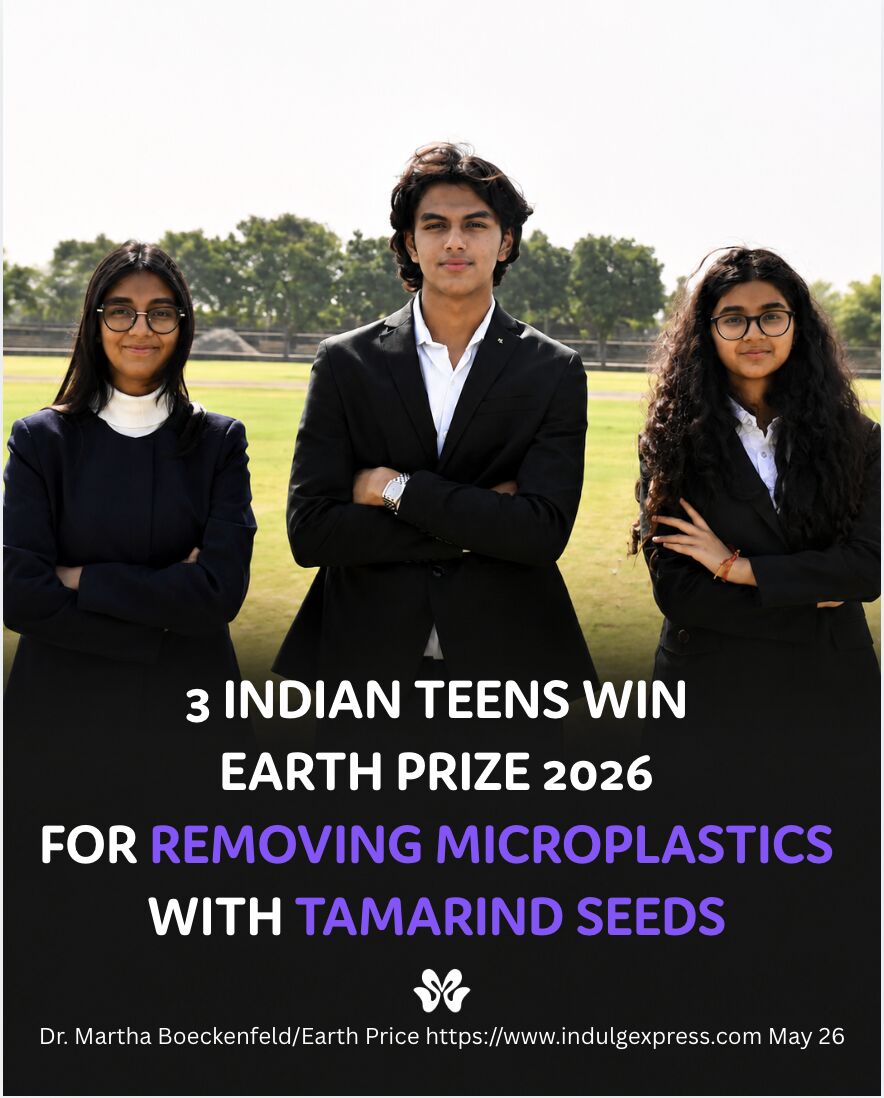
In a recent LinkedIn post, Dr. Martha Boeckenfeld highlights the remarkable innovation of three teenagers who developed a novel solution for microplastic contamination in water. Dr. Boeckenfeld introduces the story of Vivaan Chhawchharia, Ariana Agarwal, and Avyana Mehta, who were inspired to action after witnessing firsthand the challenges of accessing clean drinking water in rural India.
The core of their solution, Plas-Stick, was born from a simple observation and a powerful question. Dr. Boeckenfeld shares:
“They watched families drink from shared containers. No filters. No backup plan.
Vivaan Chhawchharia, Ariana Agarwal, and Avyana Mehta were 16 when they visited rural communities in India. The water looked clear. Microplastics don’t.”
Dr. Boeckenfeld emphasizes the elegance and accessibility of the Plas-Stick concept, detailing how it utilizes a plant-based powder derived from tamarind seed. This powder causes microplastics to clump together, allowing them to be easily skimmed from the water. As Dr. Boeckenfeld points out, the innovation avoids the need for harsh chemicals or expensive filtration systems, making it a viable solution for communities with limited resources.
A Solution Rooted in Simplicity and Accessibility
The genius of Plas-Stick, as presented by Dr. Boeckenfeld, lies in its design philosophy. It was conceived to be produced and implemented without the need for advanced infrastructure, a critical factor for widespread adoption in developing regions. Dr. Boeckenfeld notes the thoughtful approach to its creation:
“Plant-based, made from a material people already have
↳ Works where there’s no advanced filtration
↳ Built to be produced and used without a factory”
This focus on readily available materials and low-tech application underscores the project’s potential for significant impact. Dr. Boeckenfeld highlights that the solution is not only effective but also sustainable, leveraging natural ingredients that are already familiar in many cultures.
Recognition and Future Potential
The significance of this youth-led initiative was recognized by The Earth Prize 2026, which named the trio as Asia winners. Dr. Boeckenfeld shared this achievement, noting that each winner received $12,500 to further develop their groundbreaking work. This recognition serves as a testament to the power of young minds identifying pressing global issues and developing practical, scalable solutions.
Dr. Boeckenfeld uses the story to prompt reflection on overlooked solutions, asking her audience:
“What’s a fix you’ve seen hiding in plain sight?”
The narrative, as shared by Dr. Boeckenfeld, is a powerful reminder of how innovation can emerge from unexpected places. It took ten months of dedicated testing and refinement, driven by a question the young innovators couldn’t ignore, to potentially bring cleaner water to millions. Dr. Boeckenfeld’s post serves as an inspiring account of how a village visit can spark a world-changing idea, demonstrating that impactful solutions can indeed be found in plain sight with the right perspective and determination.
📝 About This Content
This article is based on insights shared by Dr. Martha Boeckenfeld on LinkedIn.
📅 Originally posted on May 30, 2026 | View original post on LinkedIn →