
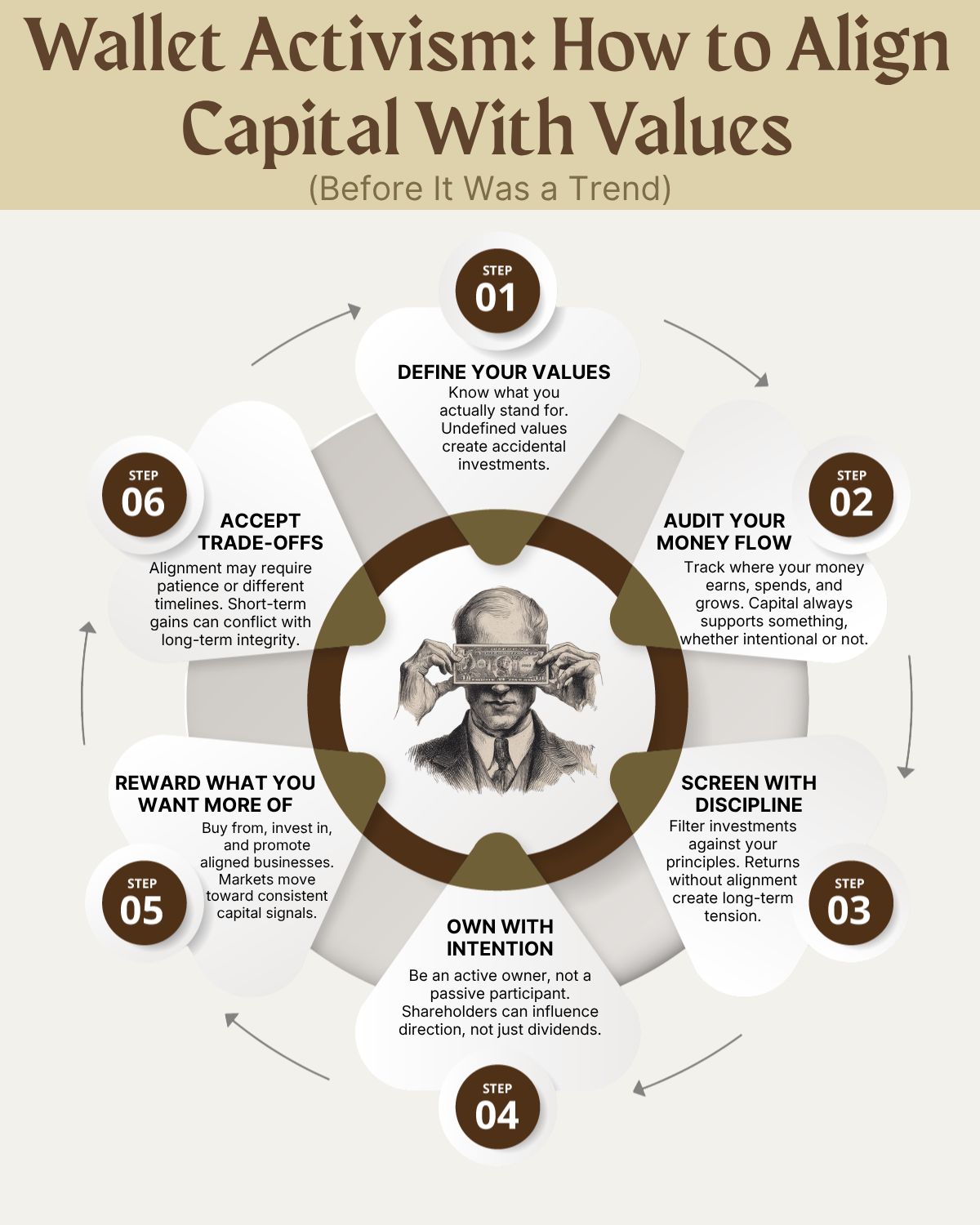
In a recent LinkedIn post, Michael Merlin explores the concept of “Wallet Activism,” a practice of aligning financial decisions with personal values. Merlin emphasizes that capital is never neutral, and every financial transaction implicitly supports a system or future, whether intentionally or not.
Merlin introduces the core idea by stating:
Money is never neutral.
Every dollar supports a system, a behavior, a future.
The only difference is whether you’re intentional about it.
The Seven Steps to Conscious Financial Alignment
The post outlines a seven-step framework for practicing “Wallet Activism” consciously. Merlin argues that intentionality is key, transforming passive financial behavior into an active expression of one’s principles.
1. Defining Values
Merlin stresses the importance of clearly defining personal values as the foundational step. According to Merlin, “Undefined values lead to accidental investments.” Without a clear understanding of what one stands for, financial decisions can inadvertently contradict personal beliefs.
2. Auditing Money Flow
The second step involves tracking where money is earned, spent, and invested. As Merlin points out, “Capital always supports something, whether you notice or not.” This audit provides a clear picture of current financial allegiances.
3. Disciplined Screening
Merlin advocates for filtering investment and spending opportunities through established principles. He notes that “Returns without alignment create long-term tension,” suggesting that financial gains alone are insufficient if they come at the cost of ethical compromise.
4. Intentional Ownership
Beyond simply holding assets, Merlin encourages active engagement with them. “Ownership can influence direction, not just dividends,” he argues, highlighting the potential for shareholders and consumers to drive change.
5. Rewarding Desired Outcomes
The practice involves actively investing in and patronizing businesses that align with one’s values. Merlin believes that “Markets respond to consistent capital signals,” meaning that directing funds towards preferred businesses can shape market trends.
6. Accepting Trade-Offs
Merlin acknowledges that aligning finances with values may not always yield the quickest or highest returns. “Integrity often requires patience,” he suggests, framing alignment as a commitment that may involve accepting certain trade-offs for the sake of principle.
7. Review and Realignment
Finally, Merlin emphasizes that values can evolve, making ongoing review and adjustment crucial. “Alignment is a practice, not a one-time decision,” he concludes, underscoring the dynamic nature of conscious financial engagement.
The Conscious Choice in Financial Activity
Merlin reiterates his central theme that capital is never neutral, framing every dollar as a form of vote. The fundamental question, according to Merlin, is not whether one practices wallet activism, but whether it is done consciously. He prompts readers to consider where they see the most significant disconnect between values and capital today.
Merlin also directs readers to his book, “Financial Longevity: Increase Your Wealth Span, Spend Money Guilt-Free, and Gain the Confidence to Enjoy Your Bigger Future,” for further exploration of these concepts.
📝 About This Content
This article is based on insights shared by Michael Merlin on LinkedIn.
📅 Originally posted on June 19, 2026 | View original post on LinkedIn →