
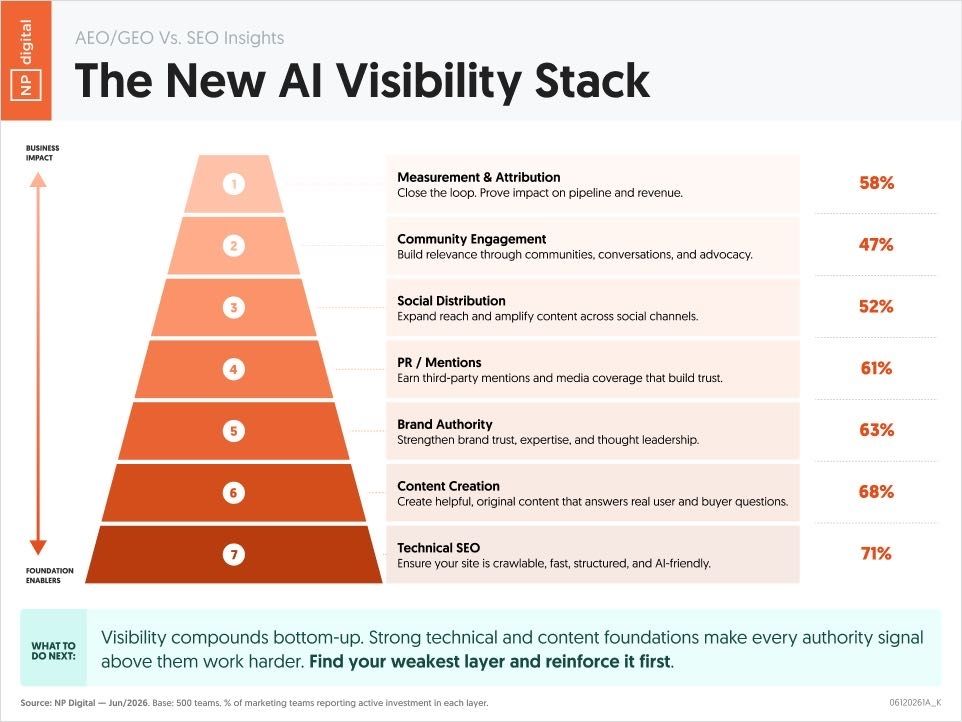
In a recent LinkedIn post, Neil Patel discusses the evolving landscape of digital marketing visibility, emphasizing a crucial element often overlooked by professionals: measurement. Patel argues that while many marketers concentrate on foundational aspects like technical SEO, they neglect the higher-level strategies that translate visibility into tangible business results.
Patel challenges the conventional pursuit of mere visibility, posing a critical question about its ultimate value. He states:
Everyone wants more visibility, but if the visibility never drives any revenue, does it really matter?
This rhetorical question underscores Patel’s central thesis: visibility without a clear link to revenue is an inefficient use of marketing resources. He advocates for a more holistic approach to the “AI visibility stack,” a term he uses to describe the comprehensive set of tools and strategies marketers employ to gain and maintain online presence in the age of artificial intelligence.
The Overlooked Top of the Visibility Stack
According to Neil Patel, the common pitfall for marketers is an excessive focus on the lower tiers of the visibility stack. These typically include technical SEO elements such as site speed, mobile-friendliness, and crawlability. While these are undoubtedly important for search engine rankings, Patel suggests they are only part of a larger equation.
He explains that the top of this stack, which encompasses crucial areas like performance measurement and conversion tracking, is frequently neglected. This oversight can lead to significant wasted effort and budget, as campaigns may generate traffic but fail to achieve their intended business objectives.
The Critical Role of Measurement
Patel strongly advocates for prioritizing measurement as a key component of any successful visibility strategy. He asserts:
This is why things like measurement are important.
In Patel’s view, robust measurement practices allow marketers to understand the true impact of their visibility efforts. By tracking key performance indicators (KPIs) that directly correlate with revenue, such as lead generation, customer acquisition cost, and return on investment (ROI), businesses can optimize their strategies for maximum effectiveness.
He implies that the integration of AI in marketing tools, while powerful for enhancing visibility, further necessitates strong measurement frameworks. AI can optimize content, targeting, and ad spend, but without diligent tracking of the outcomes, the benefits of these AI-driven enhancements remain largely theoretical. Neil Patel’s insights serve as a timely reminder for marketers to look beyond surface-level metrics and focus on the bottom-line impact of their digital strategies.
📝 About This Content
This article is based on insights shared by Neil Patel on LinkedIn.
📅 Originally posted on June 21, 2026 | View original post on LinkedIn →