
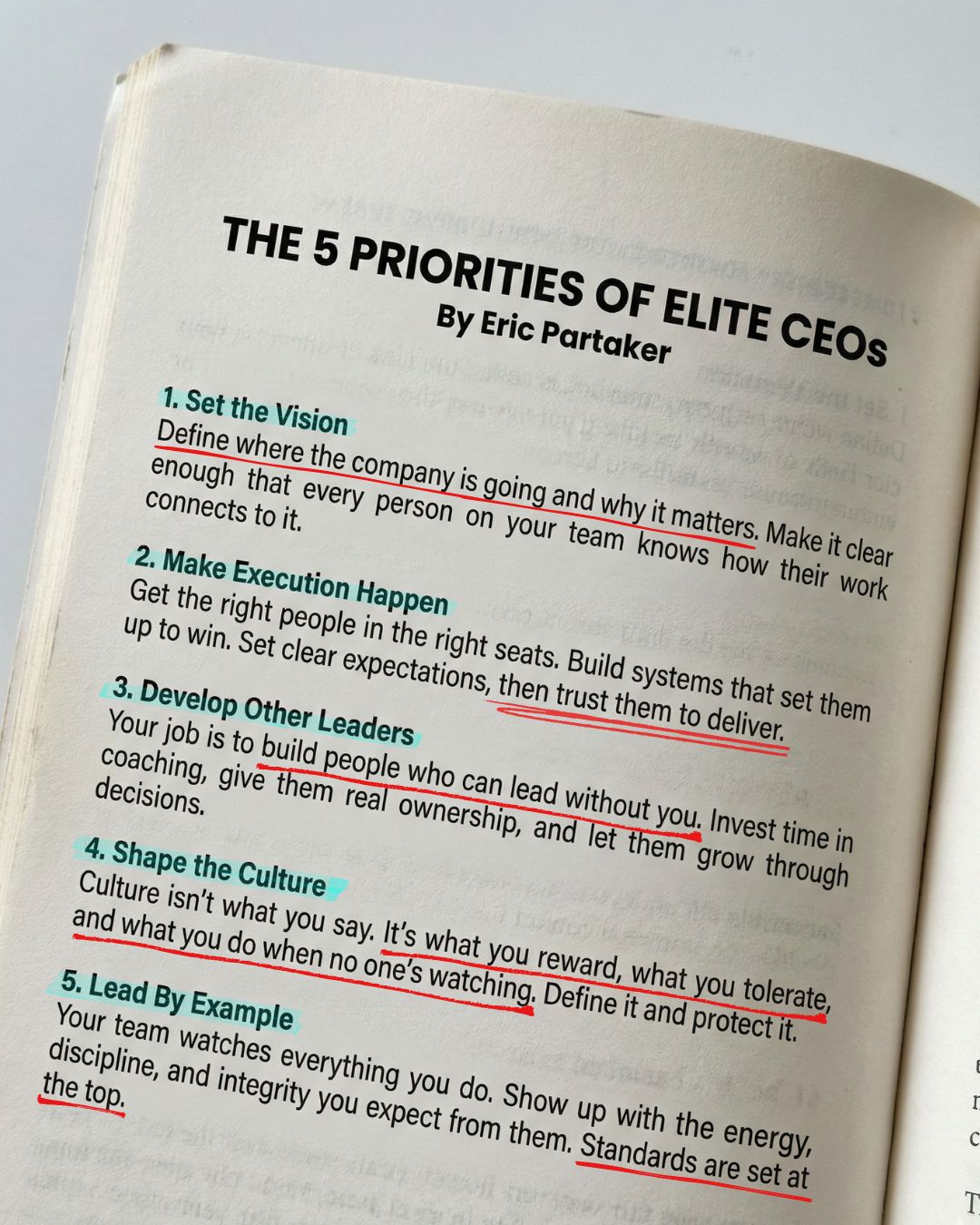
In a recent LinkedIn post, Eric Partaker challenges conventional notions of what it means to be a CEO, shifting the focus from command-and-control to cultivating people and culture. Partaker recounts his own early-career missteps, where he believed leadership equated to being the ultimate decision-maker and overseer of every detail.
He states:
“I used to think being a CEO meant being the boss. (I was wrong.) It’s not about sitting in your corner office making decisions. Or barking orders from the top. Or micromanaging every move your team makes.”
This initial approach, as Partaker describes, led to exhaustion and frustration for both himself and his team, with mediocre results to show for it. The pivotal realization, he explains, was a fundamental redefinition of a CEO’s role.
The Shift from Boss to Builder
Partaker argues that the most effective leaders do not merely build businesses; they build the people who, in turn, build successful businesses. This perspective underscores a move towards empowerment and development as core leadership functions.
Five Pillars of World-Class Leadership
According to Eric Partaker, becoming a world-class leader involves several key responsibilities:
1. Setting the Vision
Partaker emphasizes the importance of creating a clear and compelling vision that resonates with every team member, ensuring they understand the company’s direction and the significance of their individual contributions.
2. Enabling Execution
This involves strategically placing the right individuals in the right roles and establishing effective systems that facilitate success. Crucially, Partaker advises leaders to then step back and allow their teams to operate.
3. Developing Future Leaders
A critical aspect of leadership, as highlighted by Partaker, is the intentional effort to develop other leaders within the organization. He advocates for coaching, granting genuine ownership, and empowering team members to make decisions, effectively working oneself out of a job.
“Your job is to work yourself out of a job. Coach them. Give them real ownership. Let them make decisions.”
4. Shaping Culture
Partaker posits that culture is not defined by words but by actions and consequences. He notes that culture is demonstrated through what is rewarded, what is tolerated, and how individuals behave when unobserved.
“Culture isn’t what you say. It’s what you reward. What you tolerate. What you do when no one’s watching.”
5. Leading by Example
The final pillar stresses the impact of a leader’s personal conduct. Partaker reminds readers that teams observe their leaders closely, and thus, leaders must embody the energy and integrity they expect from their staff.
The Ultimate Measure of Leadership
In conclusion, Eric Partaker suggests that the true measure of a leader is their ability to build a team that can thrive independently. He reiterates that standards are established not merely through pronouncements but through personal character and actions.
“Standards are set at the top. Not by what you say. By who you are.”
Partaker invites further discussion on what constitutes effective leadership, encouraging others to share their perspectives and learn from collective experience.
📝 About This Content
This article is based on insights shared by Eric Partaker on LinkedIn.
📅 Originally posted on July 1, 2026 | View original post on LinkedIn →