
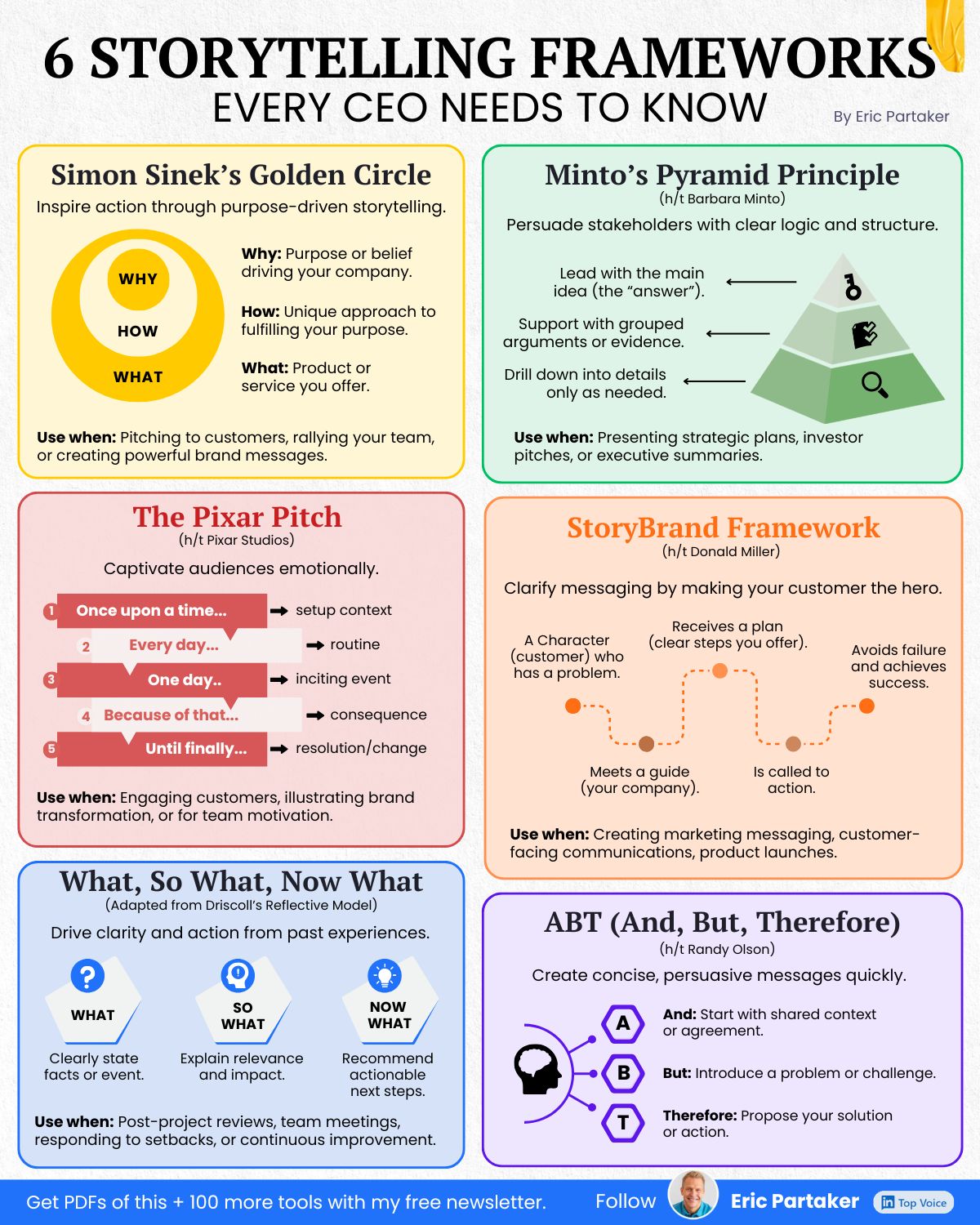
In a recent LinkedIn post, Eric Partaker delves into the critical role of storytelling in achieving business objectives, arguing that while numbers are important, it’s the narrative that truly connects and persuades stakeholders.
Partaker, who has spent two decades advising CEOs, observes a recurring pattern among successful leaders. He posits that those who effectively gain buy-in from their teams, boards, partners, and customers possess a mastery of storytelling – knowing not just how to tell a story, but crucially, when to tell it.
“A spreadsheet informs. A story persuades.”
This core assertion sets the stage for Partaker’s exploration of how to translate data-driven insights into actionable support from various business constituencies. He emphasizes that a well-crafted narrative is the bridge between raw data and human motivation.
The Power of Narrative in Leadership
According to Eric Partaker, the ability to move people to act on numerical data stems from the stories that accompany them. He contrasts the informing nature of spreadsheets with the persuasive power of narratives, introducing the idea that a structured approach can make this persuasive capability repeatable.
Partaker highlights that the leaders who excel are those who understand this distinction. He writes:
“The leaders who win buy-in from their – Team – Board – Partners – Customers – know how to tell the story, and when.”
This insight underscores his belief that strategic storytelling is not merely an art form but a fundamental leadership skill essential for alignment and progress across an organization.
Six Essential Storytelling Frameworks for CEOs
To operationalize this, Partaker outlines six distinct storytelling frameworks that he believes every CEO should have readily available. These frameworks offer structured approaches to communication, catering to different scenarios and objectives.
Framework Breakdown:
- Simon Sinek’s Golden Circle: Partaker explains this framework, which begins with ‘WHY,’ then ‘HOW,’ and finally ‘WHAT.’ He suggests its utility for rallying teams or pitching a brand’s essence.
- Minto’s Pyramid Principle: This method, according to Partaker, involves leading with the main answer and supporting it with evidence, making it ideal for board decks and investor pitches.
- The Pixar Pitch: Described as “Once upon a time. Every day. Until finally,” this framework is presented as perfect for illustrating transformation.
- StoryBrand Framework: Partaker notes this approach makes the customer the hero and positions the business as the guide, which he believes sharpens marketing messages.
- What, So What, Now What: He identifies this as the cleanest way to conduct a post-mortem, involving stating the fact, explaining its impact, and recommending action.
- ABT (And, But, Therefore): Partaker suggests this is the fastest way to land a point concisely, structured around agreement, problem, and solution.
Partaker encourages leaders to actively practice one of these frameworks during the week, predicting that they will see a marked increase in engagement from their teams, boards, and customers.
As Eric Partaker concludes:
“Pick one. Practice it this week. Watch how quickly your team, board, and customers lean in.”
His post also includes resources for those seeking further guidance, including a PDF of his Storytelling Cheat Sheet and information on his upcoming Founder & CEO Accelerator cohort, reinforcing his commitment to developing world-class leadership through practical, repeatable frameworks.
📝 About This Content
This article is based on insights shared by Eric Partaker on LinkedIn.
📅 Originally posted on July 2, 2026 | View original post on LinkedIn →