
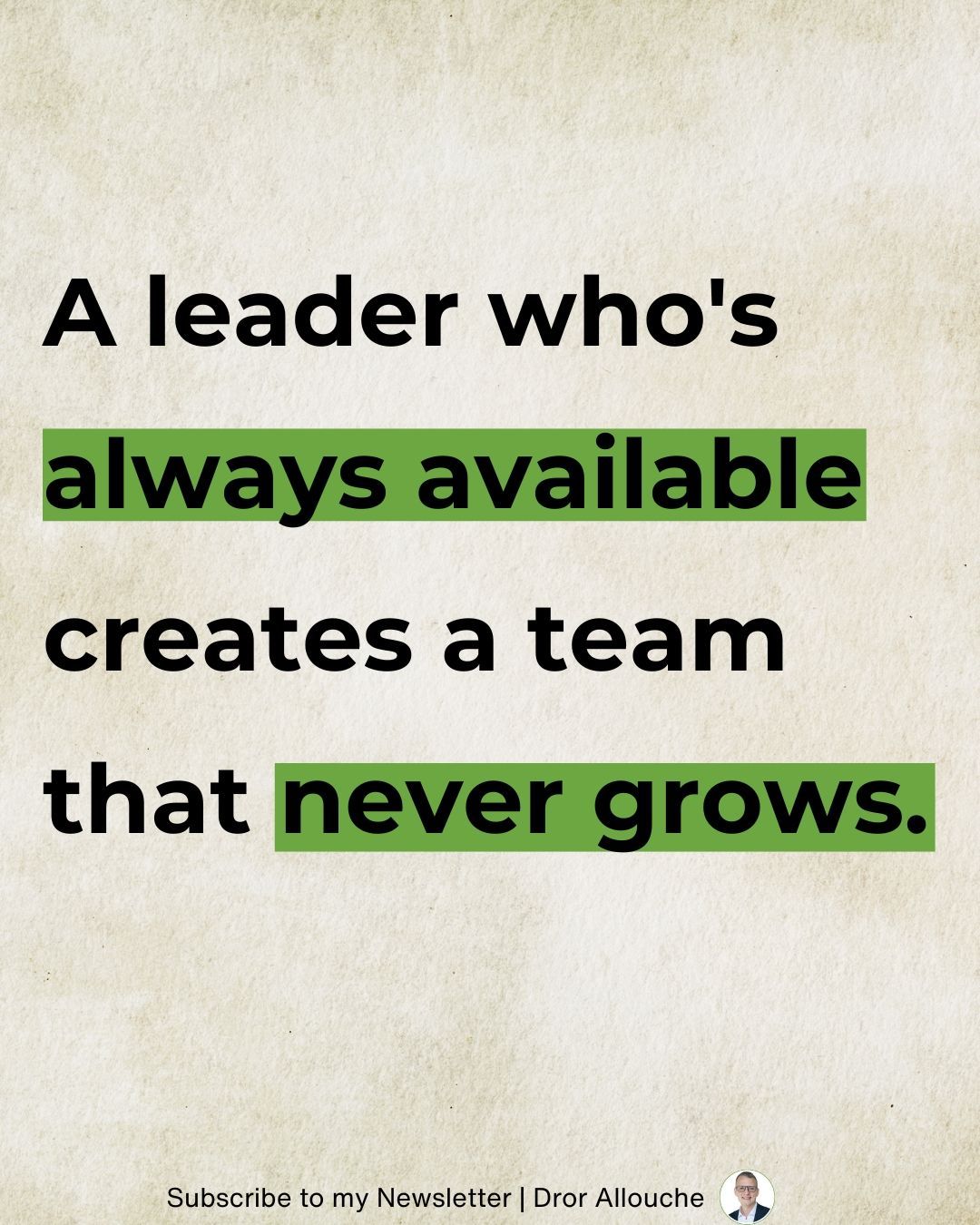
In a recent LinkedIn post, Dror Allouche tackles the pervasive issue of “always available” leadership, arguing that this unsustainable style ultimately harms both leaders and their organizations. Allouche contends that the higher one climbs the corporate ladder, the more detrimental a lack of personal boundaries becomes, impacting not just the individual but the entire company culture.
The Downside of Constant Availability
Dror Allouche challenges the notion that 24/7 availability equates to better leadership. Instead, the post posits that this constant accessibility actually degrades a leader’s decision-making capabilities and fosters a “toxic always-on culture” within teams. Allouche highlights the paradox: what may seem like dedication is, in reality, a path to burnout and diminished effectiveness.
“Your ‘always available’ leadership style is destroying your company”
According to Allouche, the perception of being constantly reachable can lead to a subtle erosion of focus and strategic thinking. The pressure to respond immediately can prevent leaders from engaging in the deep work necessary for critical decision-making.
Strategies for Reclaiming Boundaries
To combat this cycle of burnout, Dror Allouche proposes a series of practical strategies for leaders to implement personal boundaries. These are framed not as limitations, but as essential components of effective, sustainable leadership.
Shifting Response Paradigms
Allouche suggests moving away from immediate responses towards more structured engagement. Instead of thinking “I’ll get to it tonight,” leaders are encouraged to reframe their approach with statements like:
“I’ll review this tomorrow morning when I’m fresh”
or
“Let’s schedule this for my next decision-making block.”
This mental shift, as Dror Allouche explains, allows for more thoughtful consideration and prevents the constant interruption of deep work. Similarly, when faced with new requests, Allouche advises against immediate acceptance. Options include saying:
“Let me check my commitments and get back to you in an hour”
or questioning the necessity of personal involvement by asking, “Who else could handle this effectively?”
Calendar Non-Negotiables and Modeling Behavior
The post outlines concrete calendar management tactics, emphasizing the importance of protecting focused work time. Allouche recommends:
- Blocking 90-minute deep work sessions before 11 am.
- Setting phones to Do Not Disturb during these crucial periods.
- Creating 15-minute buffers between meetings to allow for transitions.
- Establishing a hard stop at 6 pm at least twice a week.
Crucially, Dror Allouche stresses the importance of leaders modeling these boundaries openly for their teams. By communicating intentions, such as blocking specific times for strategic work and managing expectations around response times, leaders set a precedent for healthy work habits across the organization. Allouche asserts that “Your team doesn’t need a burned-out superhero. They need a clear-thinking leader who demonstrates sustainable performance.”
Ultimately, Dror Allouche’s message is a call to action for leaders to prioritize energy management as a strategic imperative, fostering an environment where sustainable performance, rather than constant availability, defines effective leadership.
📝 About This Content
This article is based on insights shared by Dror Allouche on LinkedIn.
📅 Originally posted on July 7, 2026 | View original post on LinkedIn →