
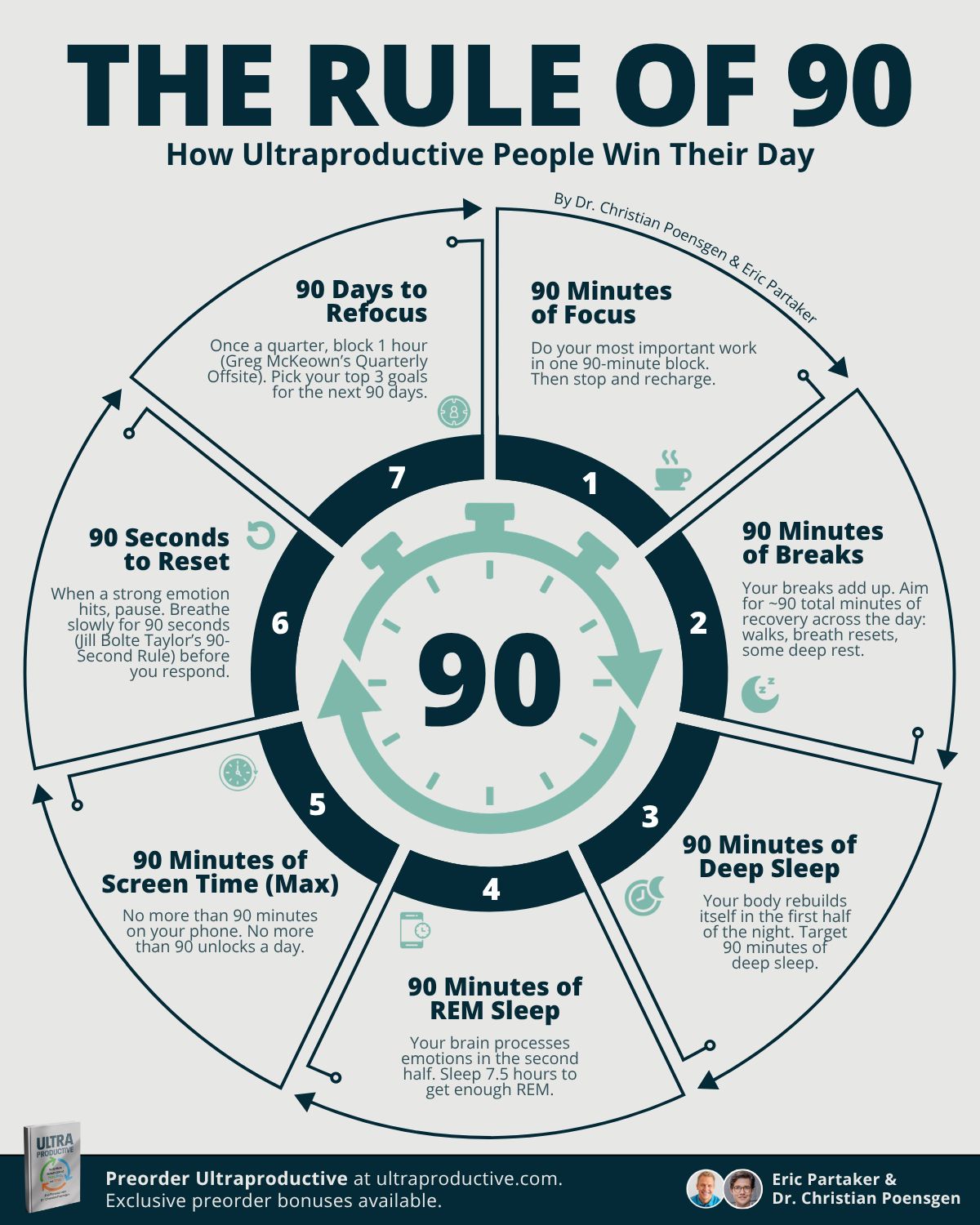
In a recent LinkedIn post, Eric Partaker shares findings from his 15 years of research into the daily routines of high achievers, highlighting a recurring numerical pattern: 90. This number, according to Partaker, appears across various critical aspects of productivity and well-being, influencing everything from focus duration to emotional regulation and sleep cycles.
Partaker identifies seven key areas where this ’90’ figure manifests:
Deep Focus and Strategic Breaks
Partaker suggests that optimal deep work sessions should be structured around 90-minute blocks. This approach emphasizes doing the most important work in a single, focused period before taking a necessary reset. Following these intense work sessions, he recommends a break of 5 to 20 minutes. As Eric Partaker notes:
Do your most important work in one focused block
Then stop. Your brain needs the reset
This period of rest, which can involve walking, deep breathing, or simple relaxation, is crucial for maintaining cognitive sharpness. Partaker argues that working within these natural attentional rhythms allows individuals to return to tasks with renewed focus.
The Importance of Sleep Cycles
The ’90’ phenomenon extends significantly into sleep, a critical component of recovery and cognitive function. Partaker points out that the body undergoes significant rebuilding during the first 90 minutes of sleep. He further elaborates on the role of sleep cycles, stating that approximately 7.5 hours of sleep is beneficial for completing the full REM cycle, which is essential for emotional processing.
Your body rebuilds itself in the first half of the night
Protect those minutes. They’re when recovery happens
He also advocates for a 90-minute screen-free period before bedtime, advising readers to disconnect from digital devices to allow their brains to wind down naturally. This practice, according to Partaker, helps to avoid digital noise that can disrupt the natural sleep process.
Emotional Regulation and Quarterly Planning
Beyond work and sleep, Partaker applies the ’90’ principle to emotional well-being and strategic planning. He suggests that strong emotions often pass within a 90-second window if one takes a moment to pause and breathe. This simple technique, he implies, can be a powerful tool for managing emotional responses effectively.
When a strong feeling hits, pause and breathe slowly
90 seconds is all it takes for the wave to pass
Furthermore, Partaker recommends a quarterly reset of priorities, dedicating an hour every 90 days to define the top three goals for the upcoming period. This practice encourages strategic thinking and ensures consistent progress towards long-term objectives. In Eric Partaker’s view:
Every 90 Days, Reset Your Priorities
Once a quarter, block 1 hour
Pick your top 3 goals for the next 90 days
Partaker concludes by urging readers to become more aware of these natural rhythms, asserting that aligning one’s activities with these ’90’ cycles can lead to greater accomplishment and improved well-being. He notes that the scientific basis and detailed protocols behind this ’90’ principle are further explored in his new book, ‘Ultraproductive,’ co-authored with Dr. Christian Poensgen.
📝 About This Content
This article is based on insights shared by Eric Partaker on LinkedIn.
📅 Originally posted on July 8, 2026 | View original post on LinkedIn →