
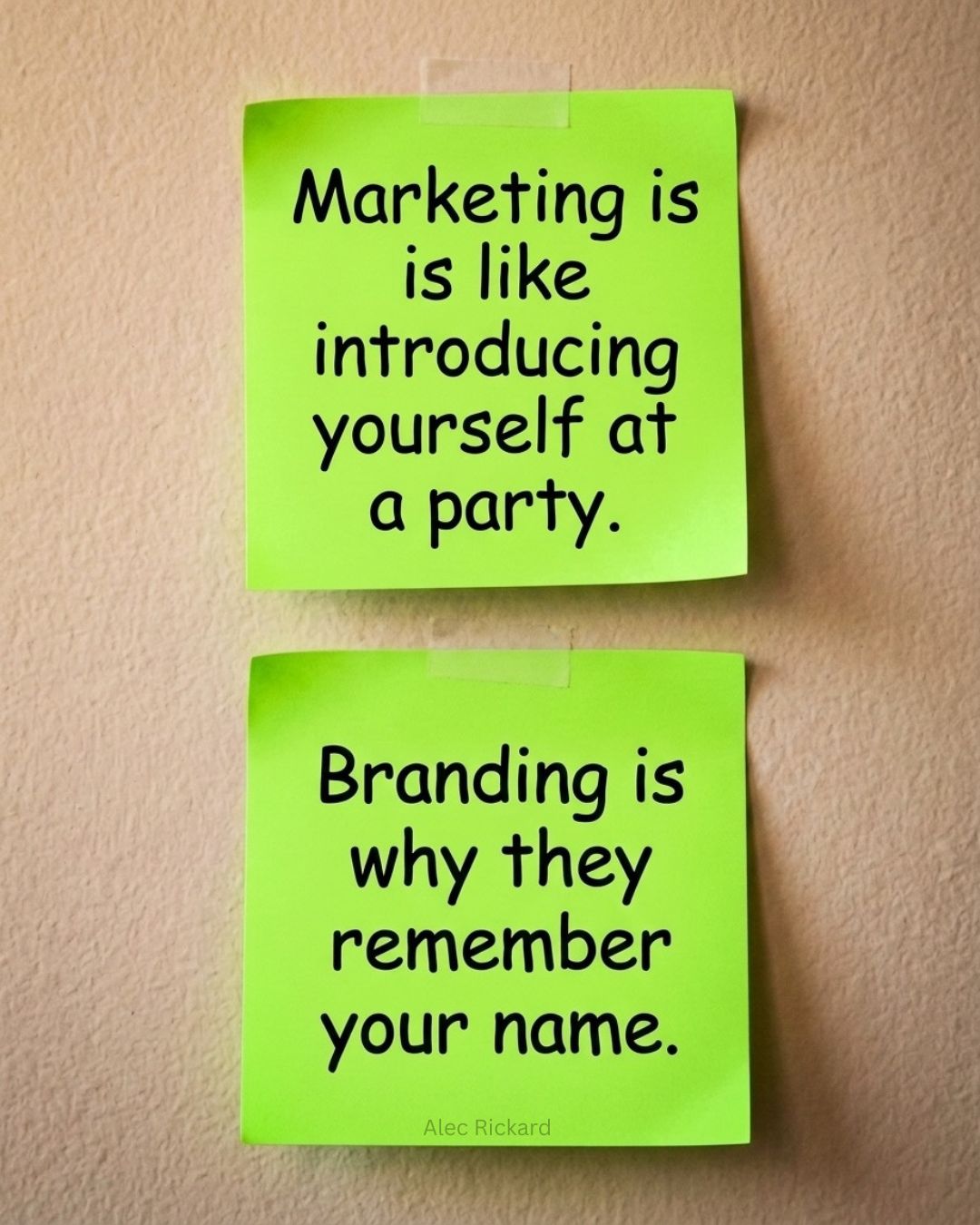
In a recent LinkedIn post, Alec Rickard offers a compelling analogy to differentiate between marketing and branding, likening the former to introducing oneself at a party and the latter to why people remember your name. Rickard emphasizes that while capturing attention is no longer the primary challenge, retaining it is where true difficulty lies. He posits that if a business cannot be clearly described after a single interaction, its branding requires significant attention.
The Core Distinction: Marketing vs. Branding
Rickard’s central argument revolves around the fundamental difference between fleeting marketing efforts and enduring branding. He states that marketing is the initial act of making a presence known, akin to the initial handshake or introduction. However, branding is the lasting impact, the reason an interaction remains in someone’s memory long after the initial encounter. Rickard elaborates on this by saying:
Marketing gets people to notice you.
Branding gives them a reason to remember you.
This distinction is crucial for businesses aiming for long-term success, as Rickard points out the downstream benefits of strong branding. Businesses that are easily remembered, he argues, face less resistance when trying to convert prospects into customers.
Actionable Steps for Strengthening Brand Identity
Beyond the conceptualization, Rickard provides a practical, five-point framework for businesses to immediately begin improving their brand identity. These steps are designed to ensure consistency and clarity across all customer interactions.
1. Focus on One Message
Rickard advises businesses to identify a single, core promise and ensure its repetition across every single customer touchpoint. This reinforces a clear and unwavering message, preventing confusion and strengthening recall.
2. Explain Your Difference Simply
A key element of strong branding, according to Rickard, is the ability to articulate what makes a business unique in a single, easily repeatable sentence. This simplicity ensures that the core value proposition is accessible and memorable.
3. Use a Consistent Voice
Rickard stresses the importance of a unified tone and voice. Whether it’s an email, a social media post, or a formal proposal, maintaining a consistent voice helps build a recognizable personality for the brand.
4. Create One Memorable Moment
To foster positive word-of-mouth and lasting impressions, Rickard suggests creating a single, unexpectedly delightful customer experience. Such moments are not only appreciated by the customer but are also more likely to be shared.
5. Review Every Customer Touchpoint
Finally, Rickard advocates for a thorough review of all customer interactions. The goal is to identify and eliminate anything that deviates from or contradicts the core brand promise, ensuring a cohesive brand experience.
Rickard concludes by posing a question to his audience, prompting reflection on memorable brands and further engaging them with the concept of distinct brand voices. As he puts it:
If people can’t describe your business after one interaction, your branding needs work.
His insights underscore the idea that in today’s crowded marketplace, a well-defined and consistently applied brand is not just beneficial, but essential for sustainable business growth. The business people remember spend less time convincing people to buy.
📝 About This Content
This article is based on insights shared by Alec Rickard on LinkedIn.
📅 Originally posted on July 10, 2026 | View original post on LinkedIn →