
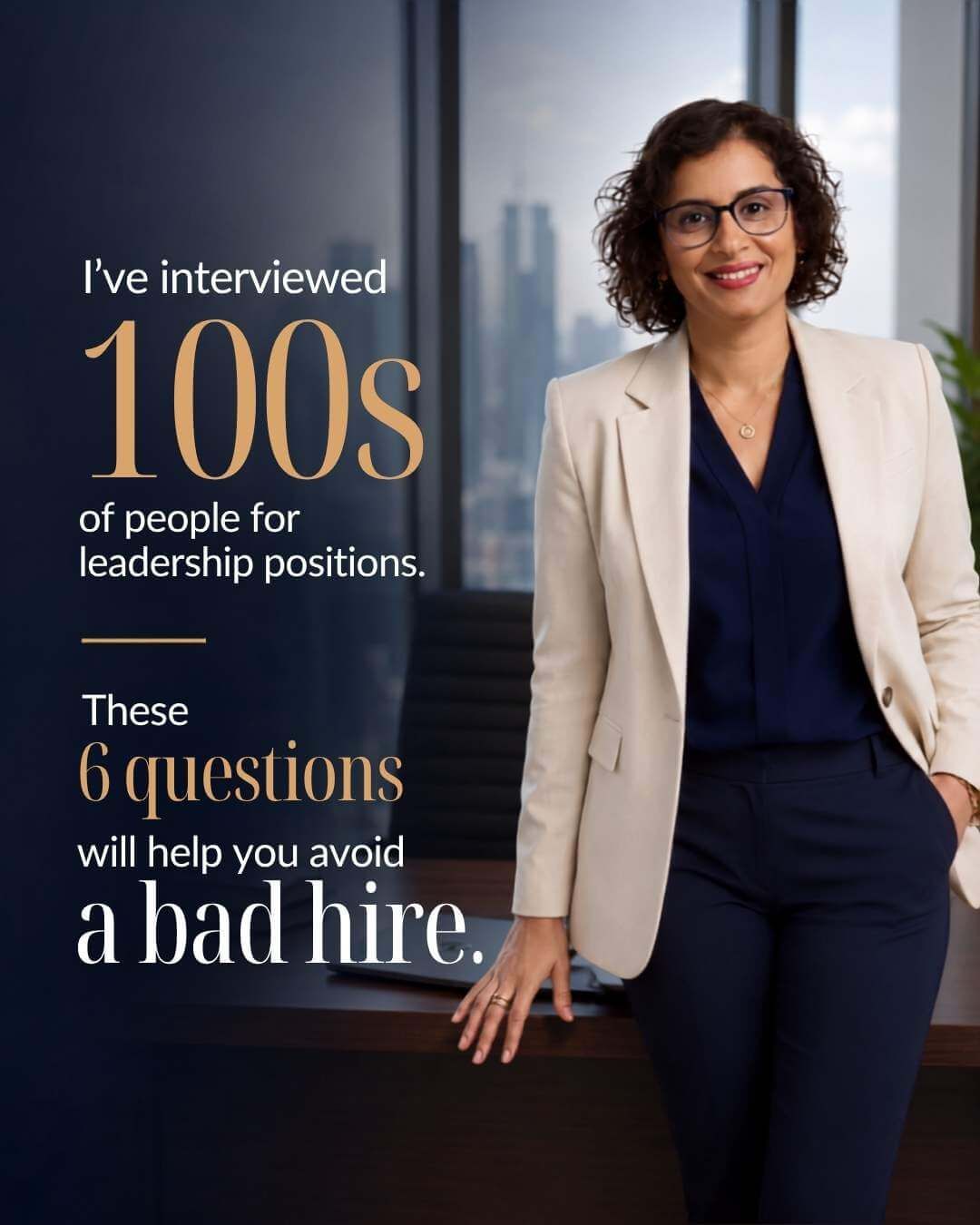
In a recent LinkedIn post, Surabhi Shenoy shares profound insights gleaned from over two decades and two businesses, emphasizing a fundamental shift in how interviews should be conducted, particularly for leadership roles. Shenoy, who led a tech company where her leadership team had been with her for 7–13 years, argues that the traditional interview format often misses the mark by treating the process as a performance rather than a genuine exploration of fit.
Shenoy asserts that the core purpose of an interview is not merely to assess qualifications but to foster a collaborative environment where both the interviewer and candidate can determine mutual suitability. This is especially crucial when hiring for leadership positions, where assessing judgment is as vital as evaluating experience.
“An interview is not a performance. It is a collaboration to find fit.”
Rethinking the Interview as a Collaborative Discovery
Shenoy’s approach challenges the conventional view of interviews as a one-sided evaluation where candidates strive to impress. Instead, she advocates for a dialogue that uncovers how a potential leader thinks, prepares, communicates, and manages teams both above and below their position. This deeper understanding, she suggests, is key to making hires that contribute positively to the company’s future.
As Surabhi Shenoy notes, the goal is to understand not just what a candidate knows, but how they operate. “You are not just checking experience but also judgment,” Shenoy writes, highlighting the need to probe qualities like decision-making ability and strategic thinking.
Key Questions for Assessing Leadership Potential
To facilitate this collaborative discovery, Shenoy shared six questions she frequently used, along with a bonus question. These questions are designed to elicit responses that reveal a candidate’s preparation, ownership, self-awareness, curiosity, values, and understanding of performance metrics.
Assessing Preparation and Ownership
One of Shenoy’s core questions probes a candidate’s diligence:
“How did you prepare for this interview?”
According to Shenoy, this question reveals a candidate’s seriousness, research capabilities, and attention to detail. Another question delves into their willingness to be hands-on:
“Tell me about a time when you went deep into the details and got your hands dirty.”
This, Shenoy explains, helps assess ownership, problem-solving skills, and whether they are leaders who delegate or actively participate in the work.
Gauging Self-Awareness and Curiosity
Shenoy also emphasizes the importance of understanding how candidates perceive themselves and interact with others. She often asked:
“What do your direct reports like about you? What does leadership like about you?”
Shenoy points out that the answers to this question provide insight into a candidate’s self-awareness and their ability to navigate relationships both upwards and downwards within an organization. To test intellectual agility and communication skills, she posed:
“What have you learned deeply recently? Explain it to me in 3 minutes.”
This question, as Shenoy highlights, is a direct test of curiosity, the ability to distill complex information, and clarity in communication.
Understanding Values and Performance Orientation
Shenoy also seeks to understand what candidates look for in a work environment and their grasp of performance:
“What can I tell you about working here?” reveals what they value, fear, and seek in a workplace. Similarly, asking, “What metrics and activities do you track every day?” helps determine if they focus on tangible results or speak in generalities.
The Ultimate Interview Goal
The bonus question, “What have I not asked you that I should have?” is designed by Shenoy to assess a candidate’s ability to think critically and proactively during the interview itself. Ultimately, Shenoy concludes that the answers derived from these types of questions help determine if a candidate truly fits the role, the team, and the future vision of the company.
“The answers reveal whether they fit the work, the people, and the future you are building,” Shenoy states. “That is the real purpose of the interview.” Her insights offer a valuable framework for leaders aiming to build stronger, more cohesive teams through more effective hiring practices.
📝 About This Content
This article is based on insights shared by Surabhi Shenoy on LinkedIn.
📅 Originally posted on July 10, 2026 | View original post on LinkedIn →