
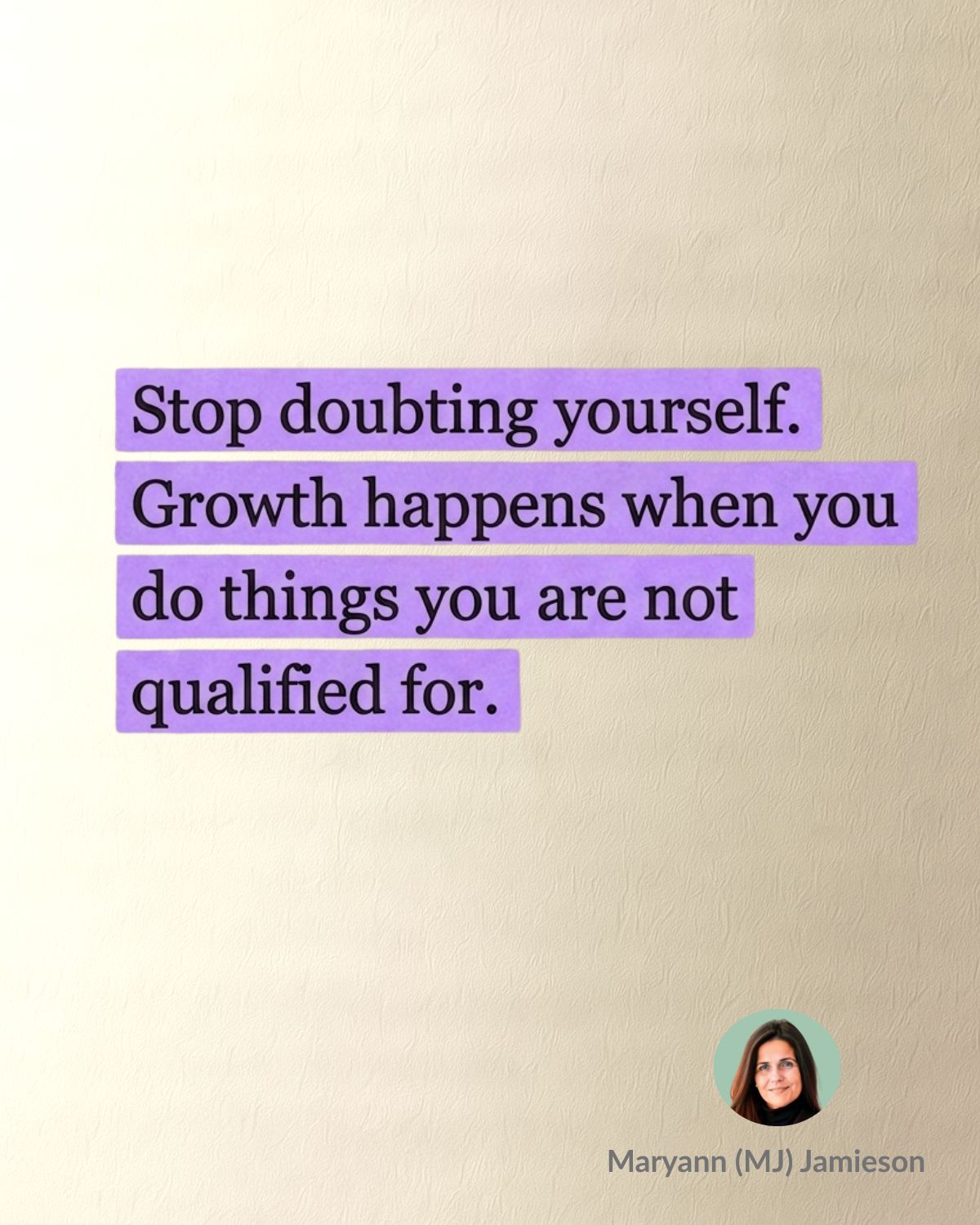
In a recent LinkedIn post, Maryann (MJ) Jamieson discusses the common trap of waiting for the perfect moment to act, arguing that inaction often stems from fear and overthinking rather than genuine external barriers. Jamieson highlights how many individuals find themselves “stuck in almost,” perpetually on the verge of taking a significant step but never quite committing.
Jamieson opens by identifying common excuses for delaying action, such as timing, finances, or fear. However, she counters these by emphasizing the importance of personal agency and the value of one’s own life and growth. She writes:
“There will always be a reason to do nothing: Timing, money, fear. But there’s also a reason to act: you. Your energy, your growth, your one precious life.”
The “Stuck in Almost” Syndrome
According to Jamieson, this state of perpetual near-action prevents individuals from moving forward. She describes this phenomenon as being “stuck in almost,” illustrating it with examples like almost writing a first chapter, thinking about pitching an idea, or nearly sending a crucial message. This hesitation, Jamieson points out, is often fueled by a fear of making the wrong choice or a belief that action should only be taken when all circumstances are perfectly aligned.
Jamieson contrasts this with the reality of those who achieve their goals. She observes:
“Meanwhile: Someone else launches the product you’ve been overthinking. Someone else writes the post and learns on the fly.”
This highlights the opportunity cost of prolonged indecision, where others who embrace imperfection and learn through doing often surpass those who are paralyzed by the need for certainty.
Embracing Imperfection to Build Momentum
A core theme in Jamieson’s post is the necessity of embracing imperfection as a prerequisite for progress. She shares a key insight gained from those who have taken significant leaps:
“None of them felt ready. 📌 They started by being willing to be bad at something new.”
This willingness to be a beginner, Jamieson argues, is more critical than feeling fully prepared. She outlines a four-step process for building momentum:
- Taking the first small step, even with uncertainty.
- Using action, not thoughts, as the primary learning environment.
- Adjusting the plan based on acquired knowledge.
- Establishing a consistent rhythm that can be relied upon even during difficult times.
Jamieson asserts that a slow start is fundamentally better than no start at all, as confidence is cultivated through the process of learning and doing. She concludes with a direct challenge to the reader:
“You can wait another year. Or you can start now and let momentum do the rest.”
By reframing action as the path to readiness and highlighting the power of incremental progress, Jamieson encourages readers to break free from the inertia of waiting and embrace the potential of starting now.
📝 About This Content
This article is based on insights shared by Maryann (MJ) Jamieson on LinkedIn.
📅 Originally posted on July 12, 2026 | View original post on LinkedIn →