
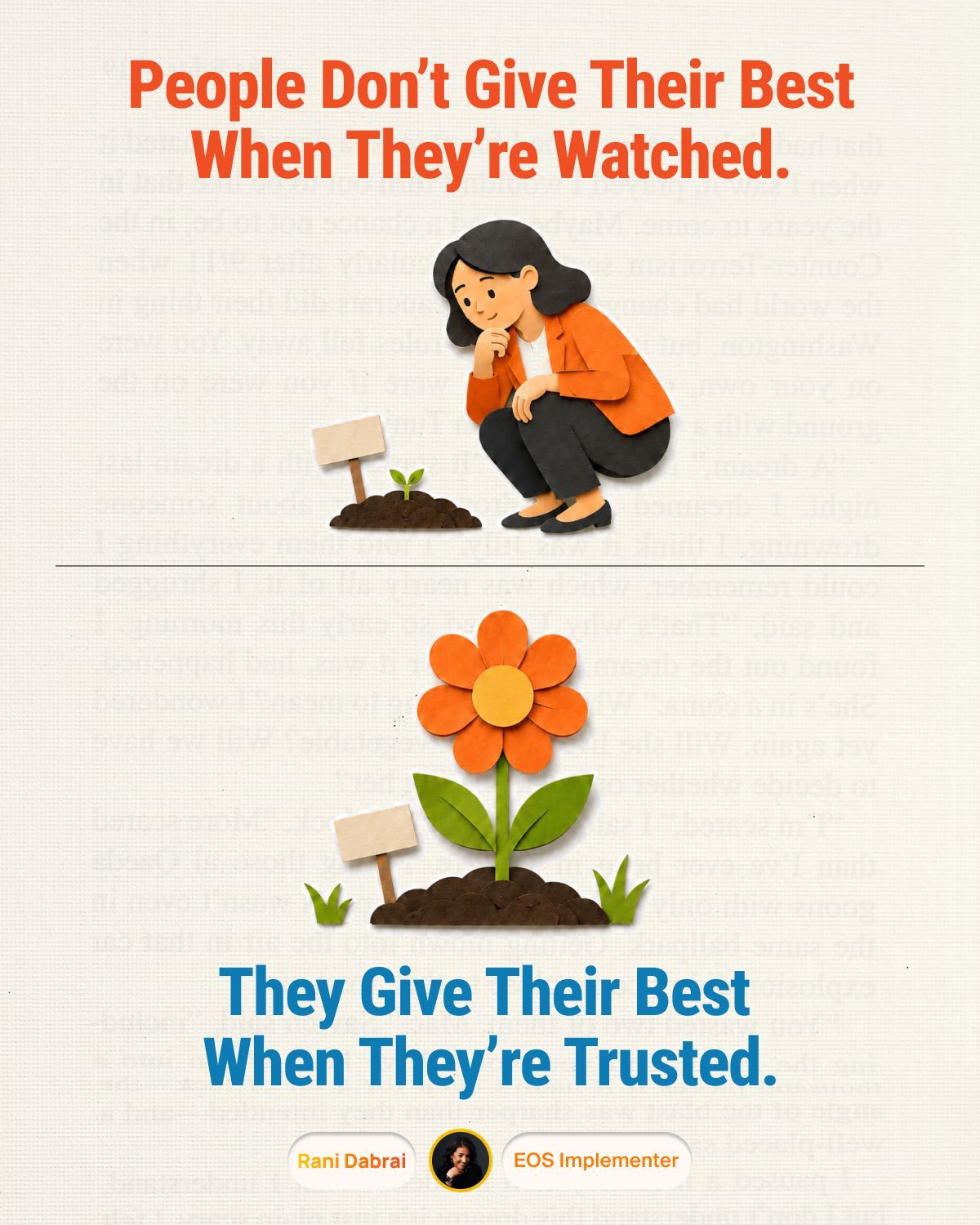
In a recent LinkedIn post, Mark O’Donnell challenges a common instinct among founders: the need for constant supervision. O’Donnell argues that instead of more oversight, teams often require less, a perspective he illustrates with insights from Rani Dabrai, one of their Implementers.
The Pitfalls of Over-Supervision
O’Donnell observes a disconnect between founders’ stated desire for accountability and their actual management practices. He notes that many founders, despite wanting accountable team members, end up becoming bottlenecks themselves.
“Every founder I talk to says they want accountable people. Then I watch the same leaders approve every decision, sit in every meeting, answer every question, and ultimately become the backup plan for all of it.”
This pattern, according to O’Donnell, leads to an unsustainable situation where the founder becomes the sole operational pillar, rather than a leader fostering an independent team. He emphasizes the detrimental effect this has on both the founder and the employees.
The Conditions for Optimal Performance
A core tenet of O’Donnell’s argument is that people perform best when they are empowered and clear on expectations. He identifies four crucial conditions that enable individuals to do their best work:
- What’s expected of them
- What success looks like
- What they own
- That they’re trusted to run it
As O’Donnell explains, fulfilling these conditions can unlock potential within team members. He highlights the transformative effect of trust, suggesting that when these elements are in place, previously reserved employees may become more vocal, and hesitant individuals more decisive.
“A good employee turns into a great one. They didn’t suddenly get better; it’s just that they finally got the room to show it.”
Embracing Trust for Growth
O’Donnell acknowledges that relinquishing control can be counterintuitive for founders. However, he strongly advocates for providing team members with the necessary space and autonomy.
The Founder’s Instinct vs. Team Development
The tendency for founders to micromanage often stems from a desire for control and a fear of errors. O’Donnell suggests this instinct, while understandable, ultimately hinders team growth and founder sustainability.
“People don’t do their best work with someone standing over their shoulder. Most of us get worse under that kind of watching, not better.”
By shifting from a supervisory role to one of trust and clear expectation-setting, founders can foster an environment where employees are motivated to take ownership and excel. O’Donnell concludes by encouraging leaders to embrace this approach, promising surprising positive outcomes.
📝 About This Content
This article is based on insights shared by Mark O'Donnell on LinkedIn.
📅 Originally posted on July 12, 2026 | View original post on LinkedIn →