
In a recent LinkedIn post, Lise Kuecker discusses the inevitable challenges founders face when their businesses demand more than they can realistically give, particularly during busy personal periods like summer. Kuecker shares her own experience of hitting this “wall” and outlines practical strategies for prioritizing and delegating to maintain business growth without sacrificing personal life.
Lise Kuecker opens by describing the common founder dilemma: the business needs grow beyond the founder’s capacity. “Every founder hits this wall eventually. The business needs more than what you can give,” she writes. This sentiment resonates particularly strongly during periods of high personal demand, such as the summer months when family commitments compete with work responsibilities.
Navigating Growth Demands with Strategic Prioritization
Kuecker details how the current summer season has prompted her to re-evaluate her capacity and approach to work. Faced with the need to balance her children’s summer activities with her entrepreneurial endeavors at Studio Grow, she turned to her “trusty paper planner.” This shift led to a significant adjustment in her goal-setting strategy.
According to Lise Kuecker, a key change has been limiting her focus to fewer objectives. “For the first time, I’ve limited myself to three goals for the summer instead of my usual five,” she states. This deliberate reduction in scope, coupled with increased delegation to her team, has been instrumental in clarifying where her most valuable time should be invested.
“It’s been tough, but it’s also helped me get clearer on where my time matters most.”
Kuecker emphasizes that founders don’t necessarily need to revert to old-school methods like paper planning, though she acknowledges its effectiveness for her. Instead, she highlights several established frameworks designed to help entrepreneurs regain control over their time and focus.
Proven Frameworks for Enhanced Productivity
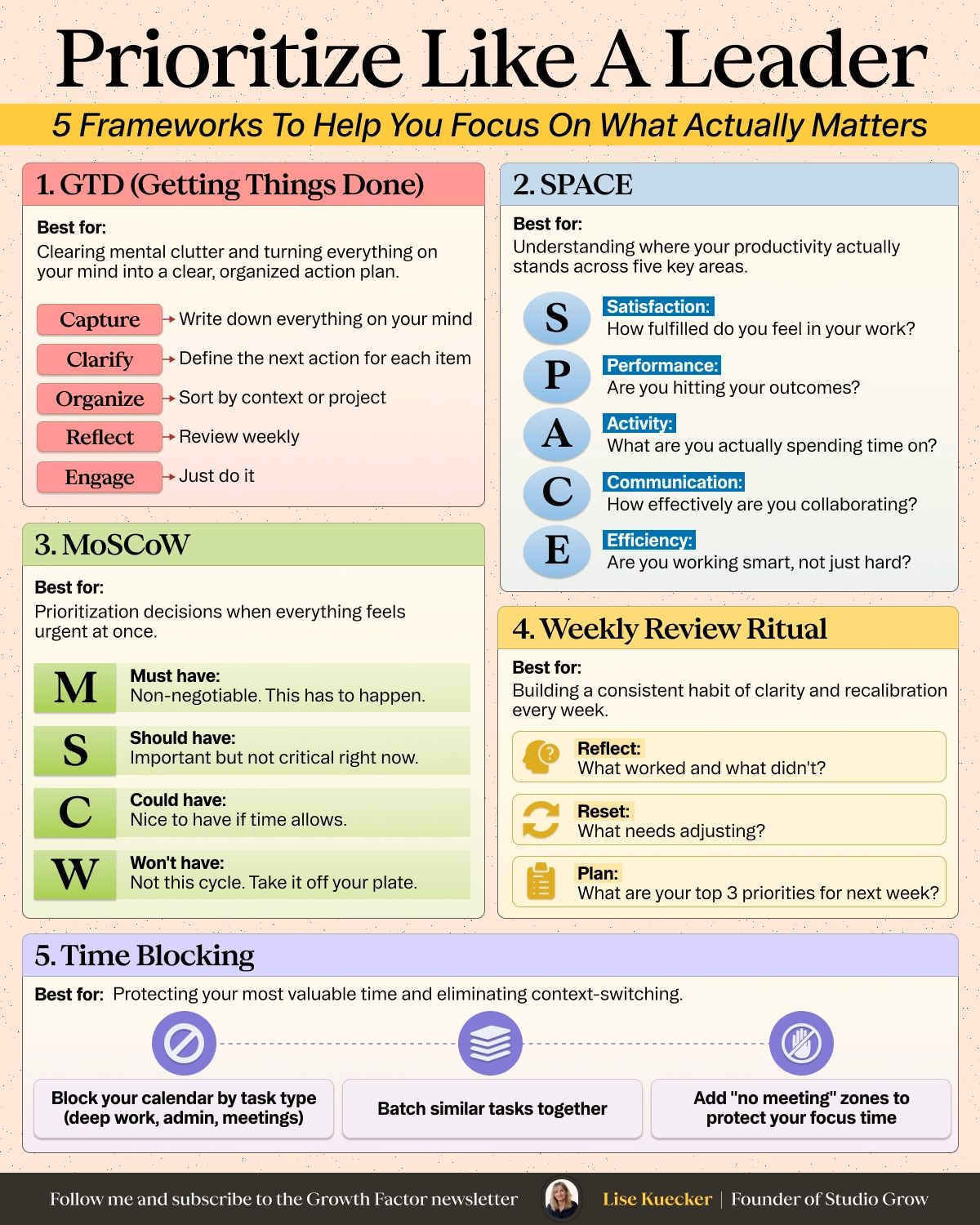
Lise Kuecker outlines five productivity frameworks that can aid founders in managing their workload and priorities:
- GTD (Getting Things Done): This method involves writing down all tasks and then clarifying the “next action” for each item.
- SPACE: This framework suggests scoring oneself across five productivity areas weekly to guide focus.
- MoSCoW: Tasks are categorized as Must, Should, Could, or Won’t, with a focus on completing only the “Must” and “Should” items.
- Weekly Review Ritual: This involves reflecting on the past week’s successes and failures to set clear priorities for the upcoming week.
- Time Blocking: Assigning specific time slots for different types of tasks on a calendar, including dedicated no-meeting blocks.
As Kuecker points out, the underlying principle is to ensure that business endeavors serve life goals rather than dominate them. “We’re building businesses to support our lives, not take them over,” she asserts. This perspective shift, she argues, makes it easier to identify and concentrate on the activities that truly demand a founder’s attention.
“When you remember that, it becomes much easier to look at what truly needs your attention.”
Kuecker encourages readers to save her post for future reference and invites engagement by asking about their own busy summers and business goals. The post serves as a valuable resource for founders feeling overwhelmed, offering actionable advice and a reminder of the importance of strategic focus and delegation.
📝 About This Content
This article is based on insights shared by Lise Kuecker on LinkedIn.
📅 Originally posted on July 13, 2026 | View original post on LinkedIn →