
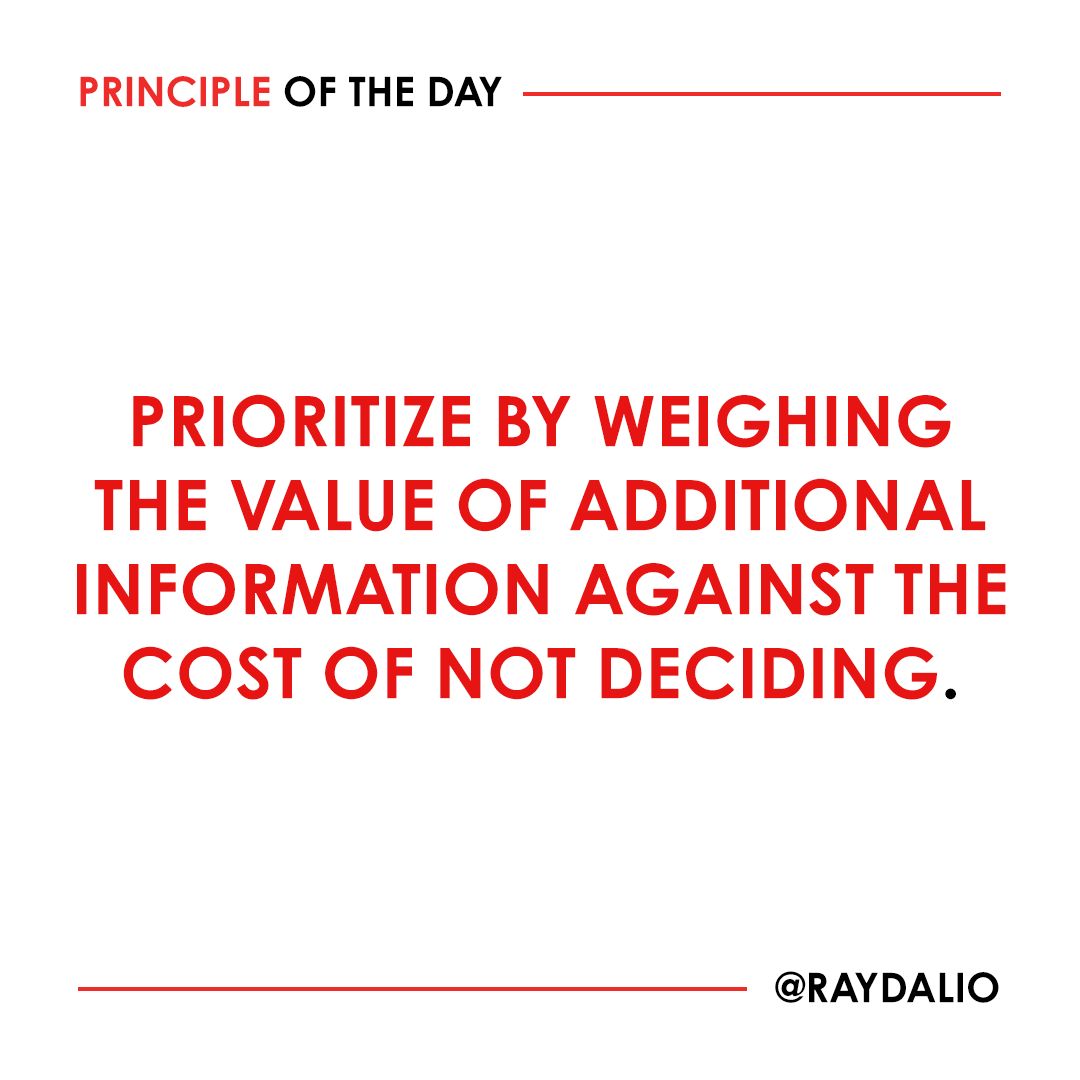
In a recent LinkedIn post, Ray Dalio explores the critical balance between acquiring more information and making timely decisions. The legendary investor and founder of Bridgewater Associates shared his perspective on how leaders can effectively navigate the complexities of choice, emphasizing the need for continuous evaluation of the costs and benefits associated with gathering further data.
Dalio highlights that not all decisions benefit from prolonged deliberation. Some require immediate action, while others are best served by a more thorough information-gathering process. He posits that this discernment is a key skill for effective leadership.
“Some decisions are best made after acquiring more information; some are best made immediately.”
As Dalio notes, the ability to differentiate between these two types of decisions is paramount. He draws an analogy to synthesizing information about the broader environment, suggesting that leaders must constantly sort the significant from the trivial.
Evaluating the Marginal Benefit of Information
Dalio’s core argument centers on the concept of marginal analysis applied to decision-making. He suggests that leaders must continually assess the trade-off between the value gained from additional information and the cost incurred by delaying a decision.
According to Dalio, this involves a dynamic process: “you need to constantly evaluate the marginal benefit of gathering more information against the marginal cost of waiting to decide.” This ongoing evaluation prevents analysis paralysis while also mitigating the risks associated with premature choices. In Dalio’s view, this principle is fundamental to effective strategy and execution.
The Importance of Context in Decision-Making
The principle shared by Dalio underscores the contextual nature of decision-making. What might be a situation demanding immediate action for one leader could, in another context, warrant further investigation. The key, as Dalio implies, is the leader’s capacity to accurately gauge the specific circumstances.
He further elaborates on the need for discerning what is truly important amidst a sea of data. “Just as you need to constantly sort the big from the small when you are synthesizing what’s going on, you need to constantly evaluate the marginal benefit of gathering more information against the marginal cost of waiting to decide,” he states. This dual focus—on both the immediate situation and the long-term implications of information gathering—is crucial for robust decision-making.
Applying Dalio’s Principle in Practice
For business leaders, Dalio’s insights offer a practical framework for enhancing their decision-making processes. The principle encourages a more deliberate yet agile approach, moving away from rigid adherence to either speed or thoroughness.
Instead, leaders are prompted to cultivate a mindset of continuous assessment. This means asking critical questions at each decision point: What is the potential upside of waiting for more data? What is the potential downside of delaying? And crucially, how does this potential gain stack up against the cost of inaction or the potential negative consequences of a hasty decision?
In essence, Ray Dalio’s advice, shared via his LinkedIn post, serves as a potent reminder that effective leadership hinges not just on making decisions, but on making the *right* decisions at the *right* time, informed by a judicious approach to information acquisition.
📝 About This Content
This article is based on insights shared by Ray Dalio on LinkedIn.
📅 Originally posted on July 15, 2026 | View original post on LinkedIn →