
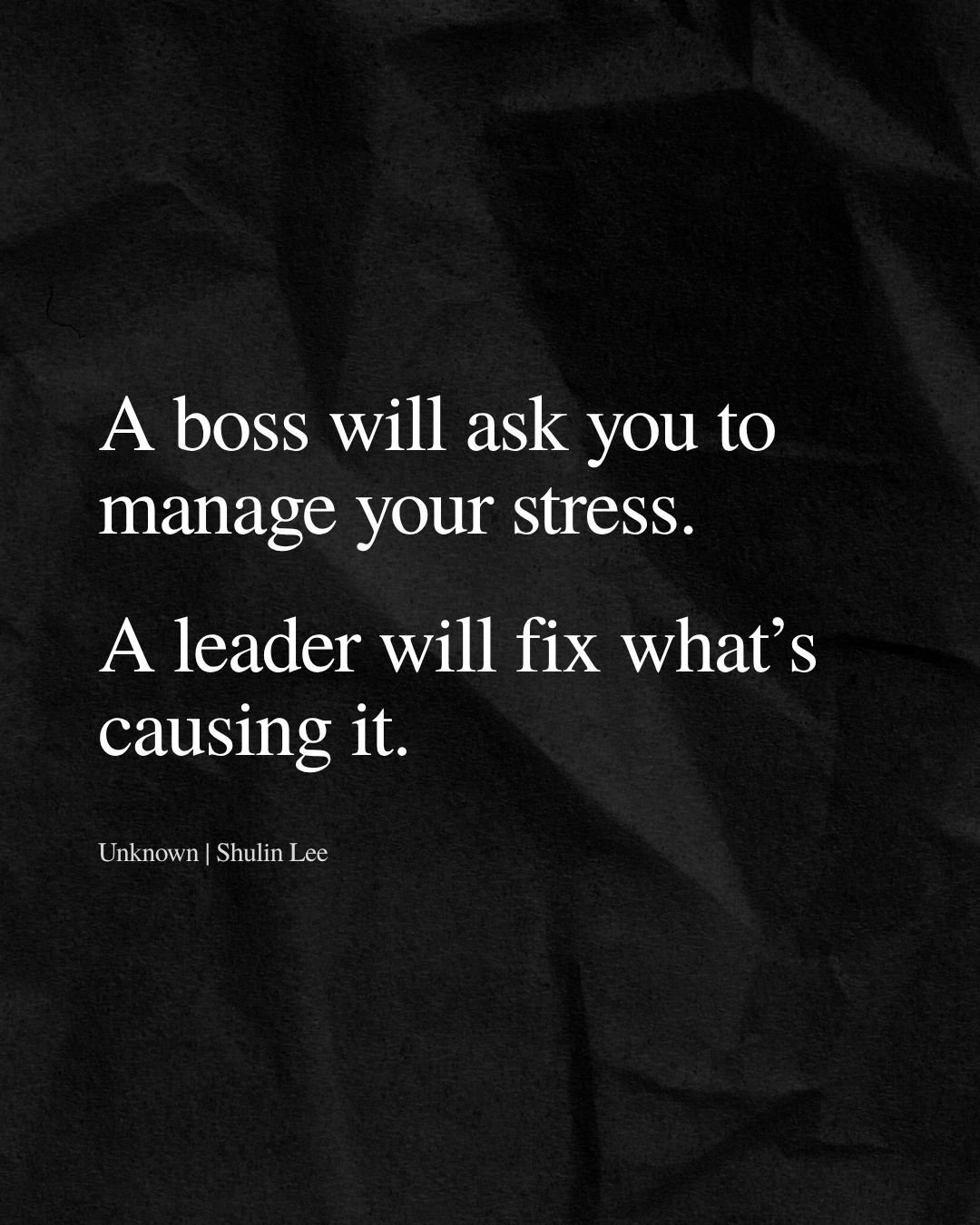
In a recent LinkedIn post, Shulin Lee challenges the conventional approach to employee well-being, arguing that true leadership involves fixing systemic issues rather than merely offering coping mechanisms. Lee contends that authentic leaders address the root causes of workplace stress and fulfill employee needs, fostering environments where staff not only perform better but also feel motivated to stay and grow.
The post, which has garnered significant attention, contrasts superficial management tactics with genuine leadership. Lee emphasizes the long-term impact of effective leadership on team performance and retention.
“Stop telling your employees to breathe. Fix the problem.”
This stark opening sets the tone for Lee’s critique of what they perceive as inadequate leadership. According to Lee, seasoned professionals have witnessed firsthand the difference between leaders who offer platitudes and those who enact meaningful change.
The Distinction Between Leadership and Deflection
Shulin Lee distinguishes between supportive leadership and what they term “deflection.” Lee argues that leaders who consistently preach self-care without addressing the underlying stressors are not demonstrating effective management but are instead avoiding responsibility.
“Real leaders don’t just hand you coping strategies. They look at the broken system and change it. They ask what you need, and actually follow through.”
This perspective suggests that a leader’s commitment is measured by their willingness to reform dysfunctional systems and actively respond to team member requirements. Lee, drawing on over 15 years of experience in recruiting, asserts that this proactive approach yields tangible benefits.
The Impact of Authentic Leadership on Retention and Performance
According to Shulin Lee, teams led by individuals who embody these principles of genuine leadership experience more than just superior performance metrics. Lee highlights the profound effect such leadership has on employee loyalty and engagement.
“The teams with real leaders don’t just perform better. They stay. They grow. They want to show up.”
In Lee’s view, fostering an environment where employees feel valued and supported through systemic improvements leads to a more committed and motivated workforce. This contrasts sharply with environments where employees are encouraged to manage stress individually without systemic support.
Identifying True Leadership Qualities
Shulin Lee concludes their post by urging professionals to recognize the difference between genuine leadership and mere deflection. Lee posits that a leader’s true effectiveness is revealed in their actions to rectify workplace problems rather than their ability to offer coping advice.
“If your boss keeps preaching self-care but won’t touch what’s breaking you, that’s not leadership. That’s deflection.”
This critical distinction, as articulated by Lee, serves as a call for greater accountability and action from those in leadership positions. By focusing on systemic change, leaders can cultivate environments where employees thrive, leading to sustained success and a more positive workplace culture.
📝 About This Content
This article is based on insights shared by Shulin Lee on LinkedIn.
📅 Originally posted on July 16, 2026 | View original post on LinkedIn →