
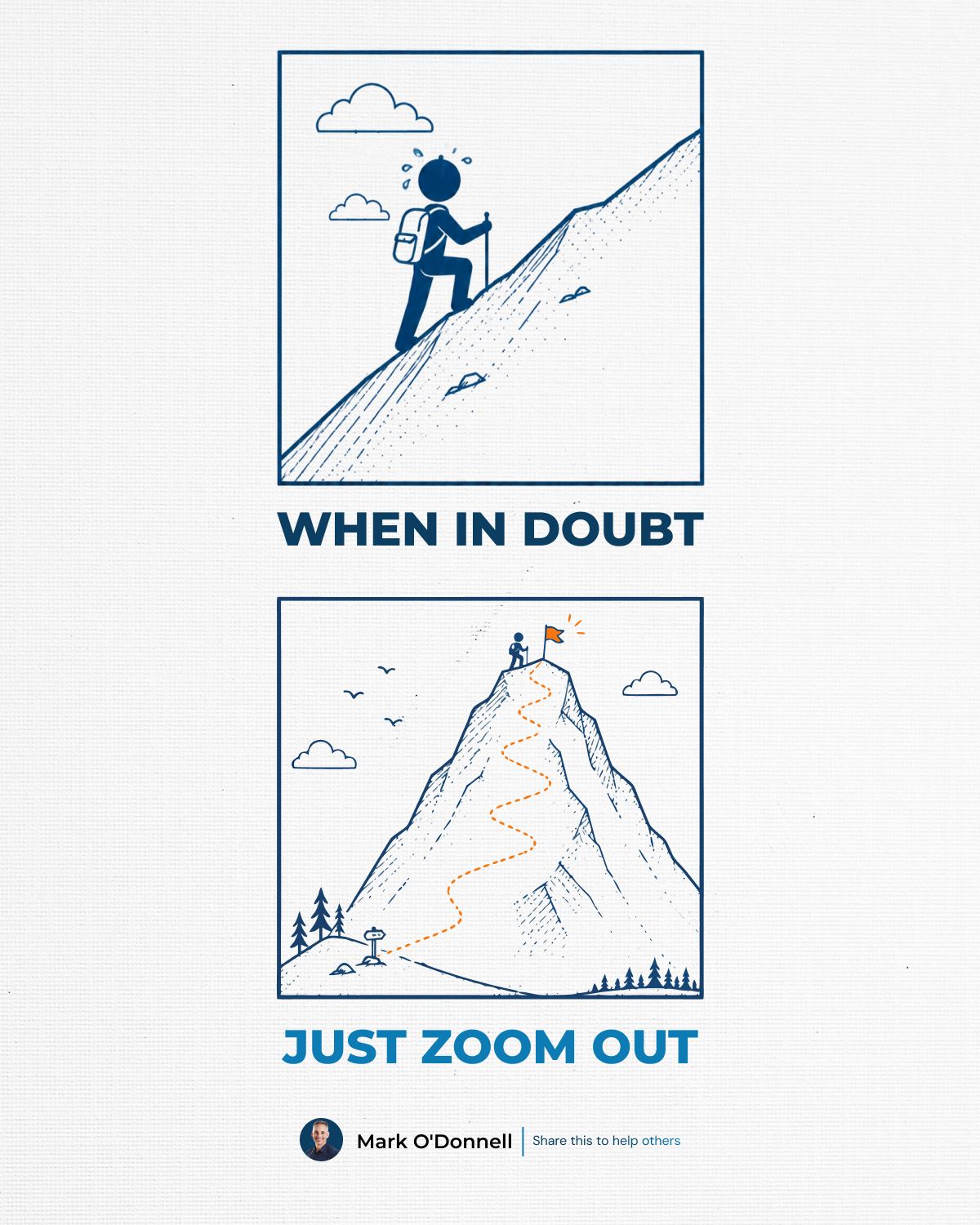
In a recent LinkedIn post, Mark O’Donnell discusses the critical importance of maintaining a long-term perspective, especially during challenging times within a business. O’Donnell, who holds the title of Visionary at EOS Worldwide, emphasizes that his role is to focus on the ten-year outlook while others manage the immediate quarterly demands. He argues that this dedicated focus on the future is essential for companies of all sizes.
The Role of the ‘Visionary’ in Business
O’Donnell explains that the Visionary’s job, while sounding grand, is fundamentally about providing a consistent, long-range view. This contrasts with the day-to-day operational pressures that most leaders face. He posits that having someone solely dedicated to the ten-year picture offers significant advantages.
“Every company needs someone sitting in that seat. Five people or five hundred, it doesn’t matter.”
According to O’Donnell, a clear, shared long-term vision simplifies several key aspects of running a business. He highlights that when the destination is known, the journey becomes more straightforward, leading to more efficient decision-making and fewer internal conflicts.
Mitigating the Impact of ‘Bad Weeks’
One of the primary benefits O’Donnell outlines is the ability to weather difficult periods more effectively. He contends that a long-term perspective reframes immediate setbacks, making them appear less catastrophic.
“Bad weeks lose their teeth. A rough patch measured against ten years is a blip. That same patch with nothing behind it feels like proof you’re failing.”
As O’Donnell notes, the emotional weight of a bad week is directly tied to the perceived future of the company. Without a clear vision, a short-term struggle can feel like an existential threat. However, when viewed against a decade-long trajectory, the same difficulties are contextualized as temporary obstacles rather than indicators of fundamental failure.
Vision as a Guiding Force for Strategy
Furthermore, O’Donnell argues that a well-defined vision acts as a powerful filter for strategic choices, preventing companies from being constantly sidetracked by fleeting opportunities.
“A real vision is mostly a list of what you’ll say no to.”
This perspective suggests that clarity about the long-term goals inherently defines what is off-limits, thereby streamlining efforts and resources. O’Donnell emphasizes that this clarity is not an abstract concept but a practical tool that must be documented and communicated proactively.
The Challenge and Necessity of Externalizing Perspective
O’Donnell acknowledges that stepping back to gain perspective is counterintuitive when one is deeply involved in the daily operations and stresses of running a business. He stresses the importance of having the long-term vision documented and shared before crises hit.
“You can’t find perspective in the middle of a panic.”
He concludes by advising that when individuals feel overwhelmed or full of doubt, the first step should be to examine the timeframe against which they are measuring their progress. In O’Donnell’s view, the temporal frame of reference is often the root cause of undue self-criticism or organizational anxiety. He encourages leaders to save this principle for future difficult periods, reminding them that a bad week is rarely the end.
📝 About This Content
This article is based on insights shared by Mark O'Donnell on LinkedIn.
📅 Originally posted on July 19, 2026 | View original post on LinkedIn →