
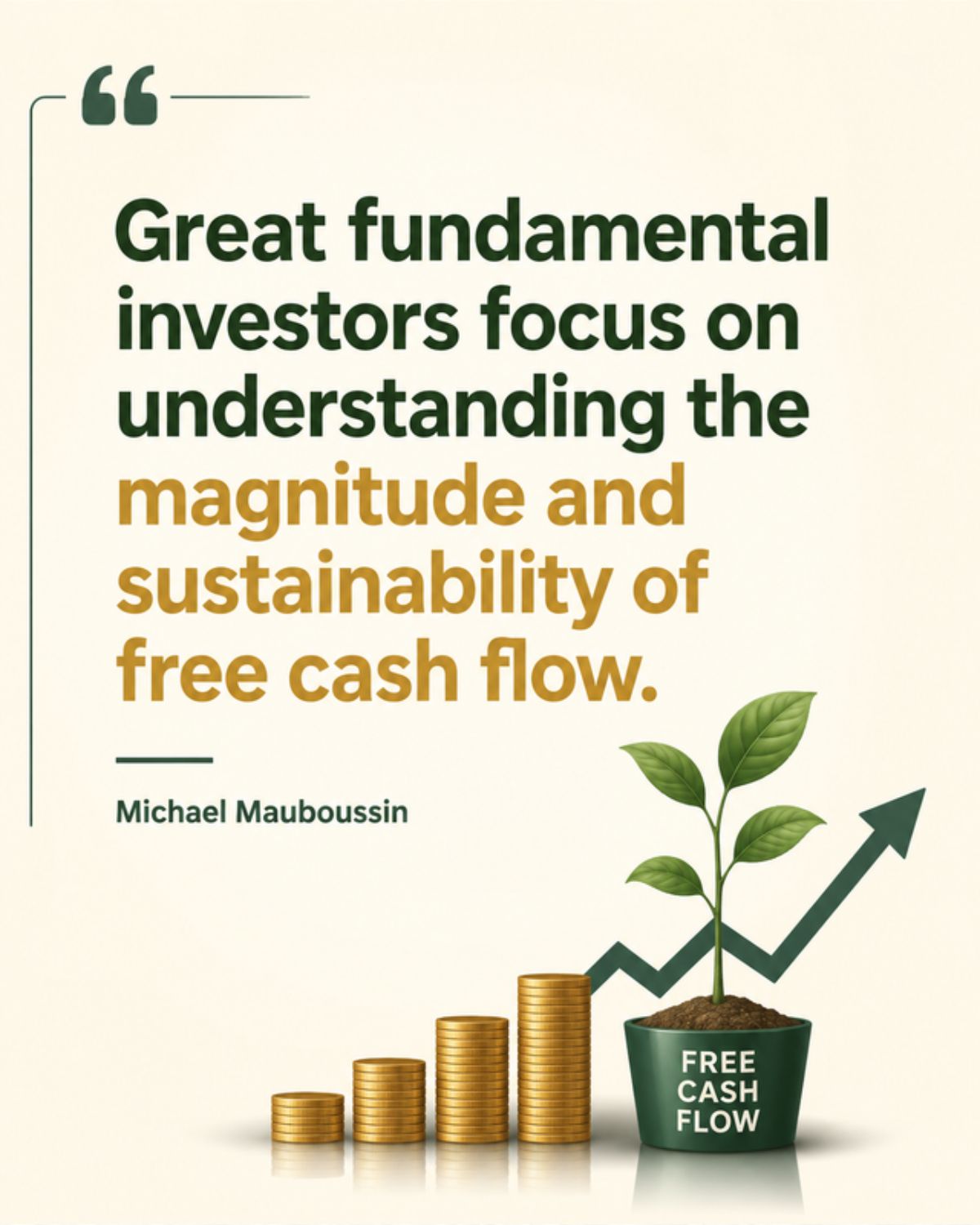
In a recent LinkedIn post, Marc Henn discusses a fundamental principle for discerning investors: the critical importance of free cash flow over traditional earnings reports. Henn, a licensed Investment Adviser, argues that while reported profits can be manipulated, actual cash in hand is a more reliable indicator of a business’s financial health and long-term viability.
The post, aimed at helping individuals understand investing better, emphasizes that astute investors look beyond the surface-level figures. Henn highlights that profits can be a result of accounting practices, whereas free cash flow represents the tangible financial strength of a company. He breaks down key metrics, stating:
Revenue shows demand.
Earnings show accounting results.
Free cash flow shows financial strength.
Growth attracts attention.
Cash flow sustains the business.
The Investor’s Core Questions
According to Marc Henn, the most successful fundamental investors focus on two pivotal questions when evaluating a business. These questions are designed to cut through the noise and identify companies with genuine, sustainable value. Henn posits:
How much free cash flow does the business generate?
Can it keep generating it for years to come?
Henn asserts that the answers to these questions reveal where true long-term value is created. This focus on sustained cash generation is what differentiates superficial performance from enduring financial strength.
Key Metrics for Evaluating Free Cash Flow
Marc Henn outlines four critical areas that sophisticated investors pay close attention to when assessing free cash flow. These elements provide a comprehensive view of a company’s financial engine and its ability to weather market fluctuations.
1. Magnitude
As Marc Henn notes, the sheer volume of cash a business generates is significant. Strong cash generation provides a company with the essential flexibility to pursue various strategic initiatives, including investing in innovation, reducing debt burdens, or returning capital directly to shareholders. This financial leeway is a hallmark of a robust enterprise.
2. Sustainability
In Marc Henn’s view, a single exceptional year of cash flow is insufficient for long-term investment. He emphasizes that the true test lies in a company’s ability to maintain its cash flow generation through diverse market conditions. Sustainability, rather than a one-off performance, is key to reliable investment potential.
3. Capital Allocation
Henn argues that generating cash is only half the battle; deploying it wisely is equally crucial. Great businesses, according to his analysis, not only produce substantial free cash flow but also exhibit prudence and strategic foresight in how they allocate these funds. This includes reinvesting in the business, strategic acquisitions, or shareholder returns.
4. Business Quality
The underlying quality of a business is a significant predictor of its cash flow. Marc Henn points out that companies possessing durable competitive advantages are often best positioned to achieve consistent cash flow over extended periods. These advantages act as a protective moat, ensuring ongoing financial performance.
The Ultimate Financial Storyteller
Marc Henn concludes his analysis with a powerful reminder: while revenue might grab headlines and earnings can attract attention, it is free cash flow that truly underpins a business’s success. He states:
Revenue grabs headlines.
Earnings attract attention.
But free cash flow is what ultimately funds growth, creates resilience, and drives long-term shareholder value.
Following the cash, Henn advises, often reveals the most accurate and enduring story of a company’s financial health and future prospects. His insights underscore a disciplined, cash-centric approach to fundamental investing.
📝 About This Content
This article is based on insights shared by Marc Henn on LinkedIn.
📅 Originally posted on July 21, 2026 | View original post on LinkedIn →