
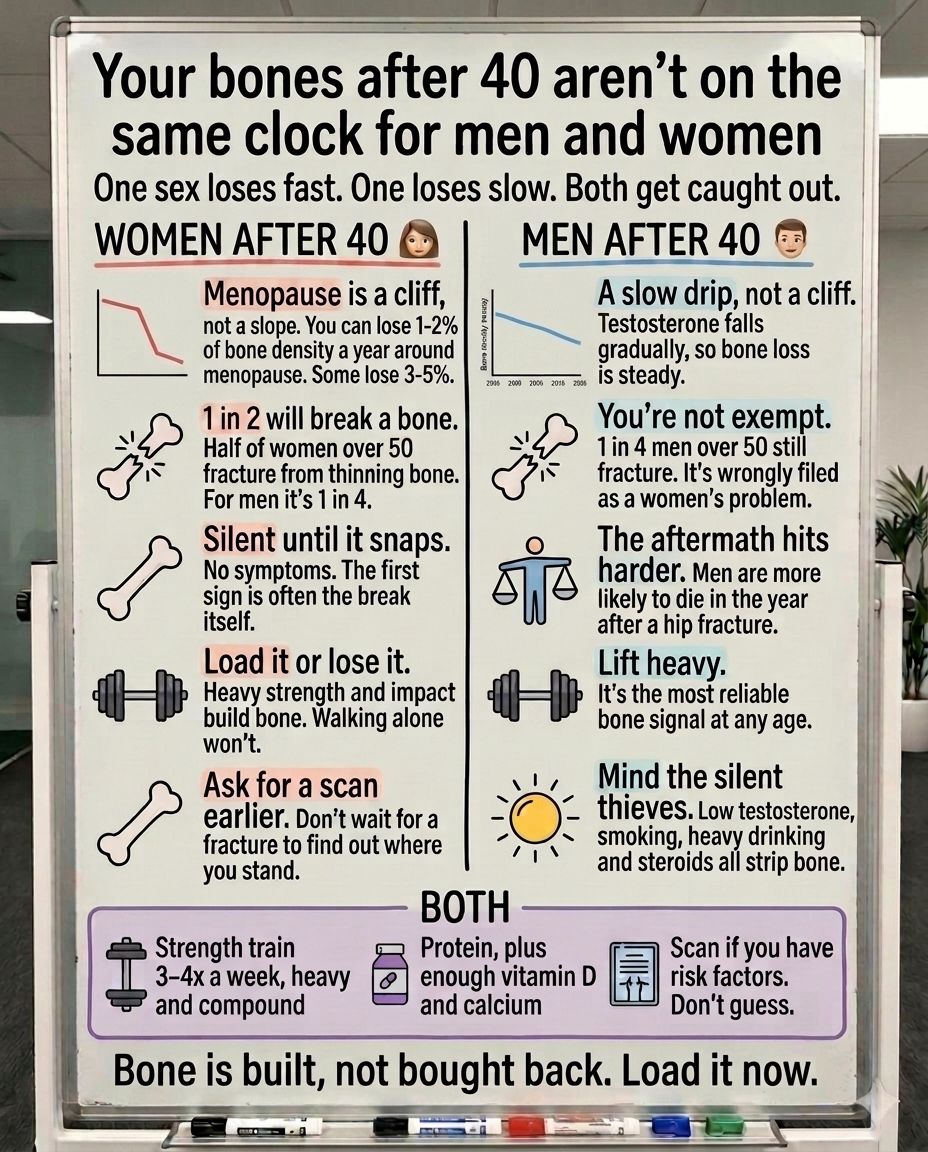
In a recent LinkedIn post, Liz Bradford discusses the critical, often overlooked, issue of bone density loss during menopause and advocates for a proactive, strength-focused approach to mitigate its effects. Bradford emphasizes that the transition around menopause can lead to significant bone density reduction without any immediate warning signs, often only discovered when a fracture occurs.
She highlights the physiological mechanism behind this loss, explaining that the decline in estrogen during menopause removes a crucial brake on the cells responsible for bone resorption. As Bradford notes:
“You can lose up to a fifth of your bone density in the few years around menopause. No ache. No warning. Nothing.”
This silent loss can have profound long-term consequences. Bradford points out that approximately half of women over 50 will experience a fracture due to osteoporosis, a stark contrast to the approximately one in four men. She stresses that such fractures, particularly later in life, are not minor inconveniences but can be life-altering events, often leading to a loss of independence.
Challenging Conventional Wisdom on Bone Health
Bradford critiques common approaches to bone health in midlife, suggesting that the prevailing wellness advice is often inadequate. She argues that bone health requires more than gentle exercises or supplements.
“This is where the wellness world gets it wrong. Bone doesn’t respond to gentle movement and a calcium chew. It responds to load. Real load.”
According to Bradford, the skeleton is a vital component of long-term health and longevity, and the menopausal transition is a pivotal period where its strength can either be preserved or significantly diminished, depending on the actions taken.
The Prescription for Stronger Bones: Prioritizing Load and Awareness
To counteract bone density loss, Bradford outlines three key strategies that she believes are effective in strengthening bone structure:
1. Embrace Heavy Lifting
Bradford advocates for incorporating compound lifts with challenging weights into a regular fitness routine, suggesting this should be done a few times per week. This approach directly stimulates bone adaptation through mechanical stress.
2. Incorporate Impact Training
Where joints permit, Bradford recommends adding impact exercises. She explains the principle behind this, stating:
“Bone strengthens when you tell it it matters.”
This implies that the body’s systems, including bone, respond and adapt to signals of importance, such as the stress of impact.
3. Get a Baseline DEXA Scan
As a crucial preventative measure, Bradford strongly advises women to obtain a baseline bone density scan, specifically recommending a DEXA scan. She frames this as a valuable investment in future health, underscoring the adage that it is better to be proactive than to deal with the consequences of neglect.
“Get a baseline scan – DEXA is a good investment in your future health. Sooner beats sorry.”
In conclusion, Liz Bradford’s insights on LinkedIn serve as a powerful call to action for women navigating midlife. By emphasizing the need for robust strength training, appropriate impact, and proactive health monitoring, she empowers individuals to take control of their skeletal health and view their skeleton as a key asset for a long and independent life.
📝 About This Content
This article is based on insights shared by Liz Bradford on LinkedIn.
📅 Originally posted on July 23, 2026 | View original post on LinkedIn →