
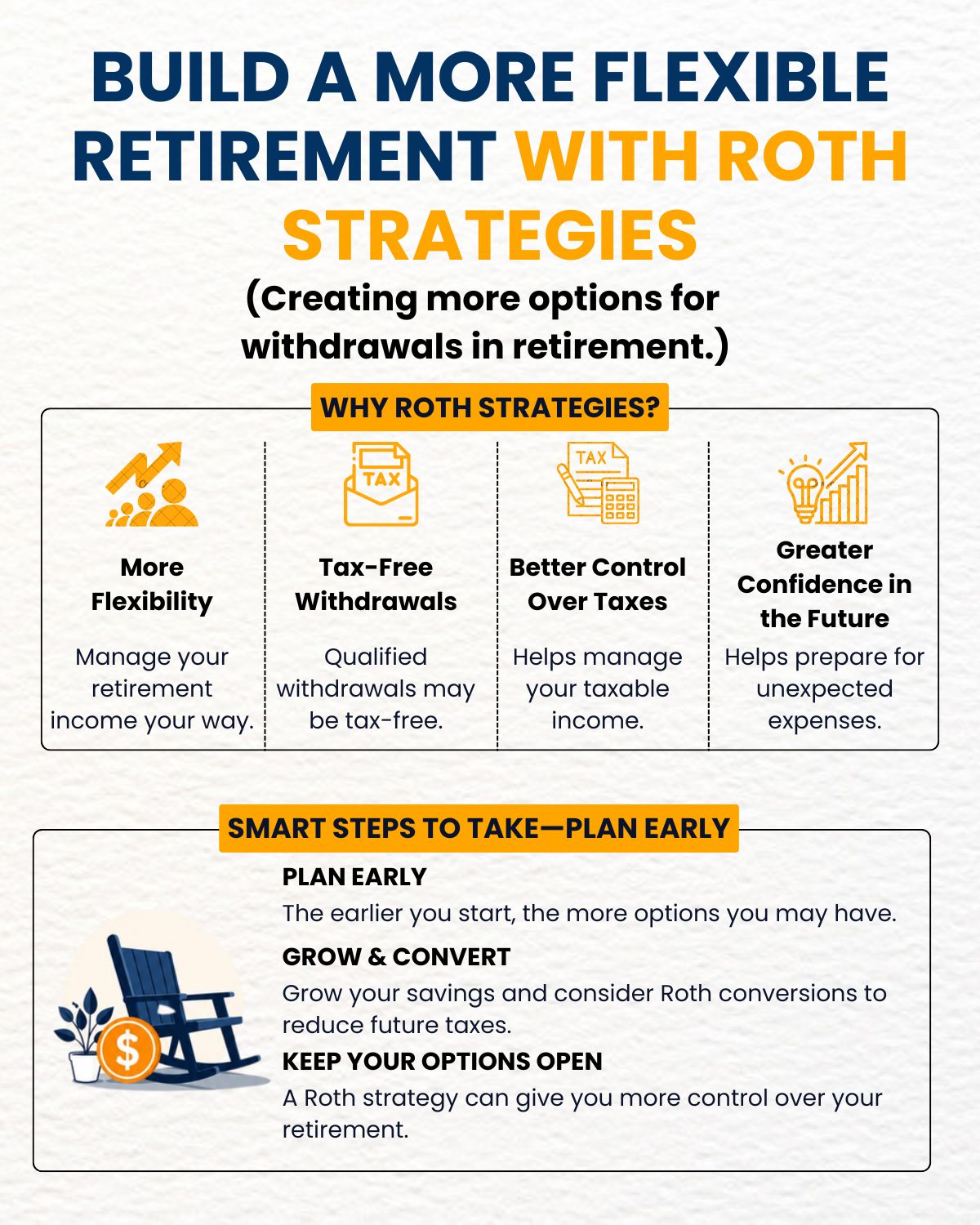
In a recent LinkedIn post, Marc Henn delves into the crucial distinction between accumulating wealth and building flexibility for retirement. Henn emphasizes that true retirement readiness hinges not just on the size of one’s savings, but on the strategic choices made long before the retirement date arrives. He argues that flexibility, often born from smart financial strategies, can be more valuable than a large account balance alone.
The Strategic Advantage of Roth Accounts
Henn highlights the significant role of Roth strategies in achieving this desired flexibility. He points out that while saving builds wealth, it is the strategy behind that saving that truly creates options. According to Henn, the nature of withdrawals plays a key role.
“Taxable withdrawals limit choices. Tax-free withdrawals expand them.”
As Henn elaborates, qualified Roth withdrawals can offer individuals greater control over their retirement income stream. This is particularly important as income needs and tax planning become more critical closer to and during retirement. Henn suggests that Roth assets can be instrumental in managing overall taxable income throughout the retirement years, providing a buffer against unexpected tax liabilities.
Addressing Future Uncertainty with Flexibility
The post also touches upon the psychological aspect of retirement planning, noting that future uncertainty can be a significant source of stress. Henn posits that flexibility, on the other hand, fosters confidence.
“Future uncertainty creates stress. Flexibility creates confidence.”
He explains that tax diversification, a component often facilitated by strategies like those involving Roth accounts, prepares individuals for unforeseen expenses. Waiting to implement these strategies, Henn warns, inherently reduces the number of available options. “Waiting reduces options. Early planning expands them,” he states, underscoring the importance of timely action.
The Power of Conversions and Diversification
Henn further elaborates on the efficiency gained through strategic conversions. He argues that gradual Roth conversions can potentially lower future tax exposure. Moreover, he advocates for a diversified approach to retirement accounts, moving beyond a single account type.
“One account limits flexibility. Multiple tax buckets create control.”
In Henn’s view, maintaining multiple ‘tax buckets’ allows for greater control over withdrawal strategies over time. This balanced approach, he suggests, provides more choices and ultimately leads to a more adaptable retirement.
Actionable Steps for Enhanced Flexibility
To put these strategic principles into action, Henn outlines several key steps:
- Start early: Time is presented as a fundamental element in creating flexibility.
- Grow consistently: Building retirement savings requires discipline.
- Convert strategically: Roth conversions should be considered when they align with an individual’s tax situation.
- Keep options open: The overarching theme is that increased flexibility today leads to greater freedom tomorrow.
Concluding his post, Marc Henn reiterates that effective retirement planning is about more than just maximizing monetary accumulation; it’s about creating choices that align with the desired lifestyle. He challenges readers to consider whether their current retirement savings will provide them with mere income or with the invaluable options that true flexibility affords.
📝 About This Content
This article is based on insights shared by Marc Henn on LinkedIn.
📅 Originally posted on July 28, 2026 | View original post on LinkedIn →