
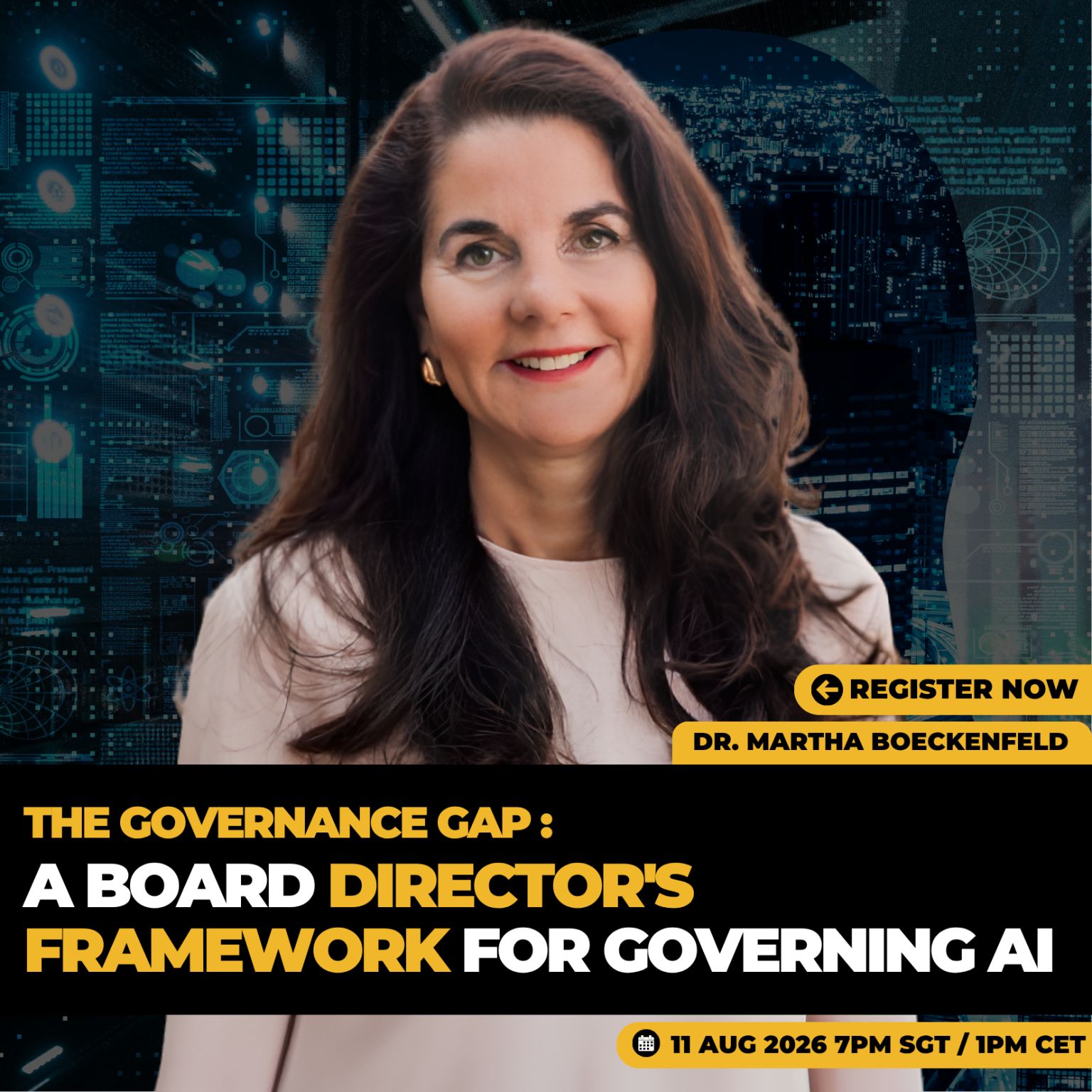
In a recent LinkedIn post, Dr. Martha Boeckenfeld delves into a critical issue she terms the “Governance Gap,” examining the chasm between rapidly advancing technological capabilities and the lagging readiness of institutions to oversee them. Dr. Boeckenfeld uses the personal and harrowing experience of Sid Sijbrandij, CEO of GitLab, as a powerful case study to illustrate her framework.
The narrative begins by recounting Sijbrandij’s battle with a rare and aggressive cancer. Facing limited standard treatment options by early 2025, Sijbrandij took an extraordinary, self-directed approach to his care. He compiled an extensive dossier and amassed a significant volume of medical data, far exceeding that of typical clinical trials. Crucially, he then publicly shared his search for treatment, actively inviting input from researchers and the broader community.
“He stayed inside the medical system but refused to move at its pace. He took charge of his care, built the systems he needed, and shared what he learned with anyone who could use it.”
Dr. Boeckenfeld highlights this proactive stance as a direct response to what she identifies as the Governance Gap. She explains that the necessary tools and data often exist, but institutional protocols and human understanding have not kept pace with technological evolution. This gap, she posits, is not confined to healthcare.
The Pervasiveness of the Governance Gap
According to Dr. Boeckenfeld, the Governance Gap manifests across various sectors, including finance and artificial intelligence. She observes a common pattern where technical capabilities surge ahead, leaving the people and systems responsible for governance struggling to catch up. This leads to situations where:
- Boards approve AI deployments without the capacity for effective supervision.
- Hospitals possess vast amounts of genomic data but lack the processes to utilize it meaningfully.
- Regulators develop frameworks for technologies that are already several generations old.
As Dr. Boeckenfeld states:
“The capability is there. The readiness is not.”
She argues that this disparity creates significant risks and inefficiencies, hindering the responsible adoption and deployment of powerful new technologies.
Introducing the Human Parity Principle
To address the Governance Gap, Dr. Boeckenfeld proposes the “Human Parity Principle.” This principle advocates for a proactive and balanced approach to technological integration. Dr. Boeckenfeld defines it as:
“for every unit of technical capability an organization deploys, it must build a matching unit of human readiness. Not after the rollout. Not when something breaks. Before.”
This readiness, she elaborates, means that the individuals closest to the decision-making process must possess a clear understanding of the system’s functions, the rationale behind its choices, and the procedures for managing failures. It is about embedding human understanding and oversight at the core of technological deployment, rather than treating it as an afterthought.
Sid Sijbrandij as a Model of Human Parity
Dr. Boeckenfeld returns to Sid Sijbrandij’s journey, presenting it as a real-world embodiment of the Human Parity Principle. Despite his critical health battle and leadership responsibilities, Sijbrandij did not wait for the medical system’s inherent slowness to adapt. Instead, he personally cultivated the necessary understanding, ensuring that every specialist involved could comprehend his case and the proposed treatments. He effectively forced the system to accelerate by ensuring human readiness kept pace with the complex technical and medical data involved.
In Dr. Boeckenfeld’s view, Sijbrandij’s actions demonstrate that closing the Governance Gap is achievable when human readiness is intentionally matched with technical capability. She notes that this patient’s experience serves as a compelling proof of concept.
Dr. Boeckenfeld is scheduled to elaborate on this framework in a free keynote address on August 11th, titled “The Governance Gap: A Board Director’s Framework for Governing AI.” The session is designed for executives, board members, and advisors seeking to navigate the complexities of governing emerging technologies like AI.
📝 About This Content
This article is based on insights shared by Dr. Martha Boeckenfeld on LinkedIn.
📅 Originally posted on August 4, 2026 | View original post on LinkedIn →