
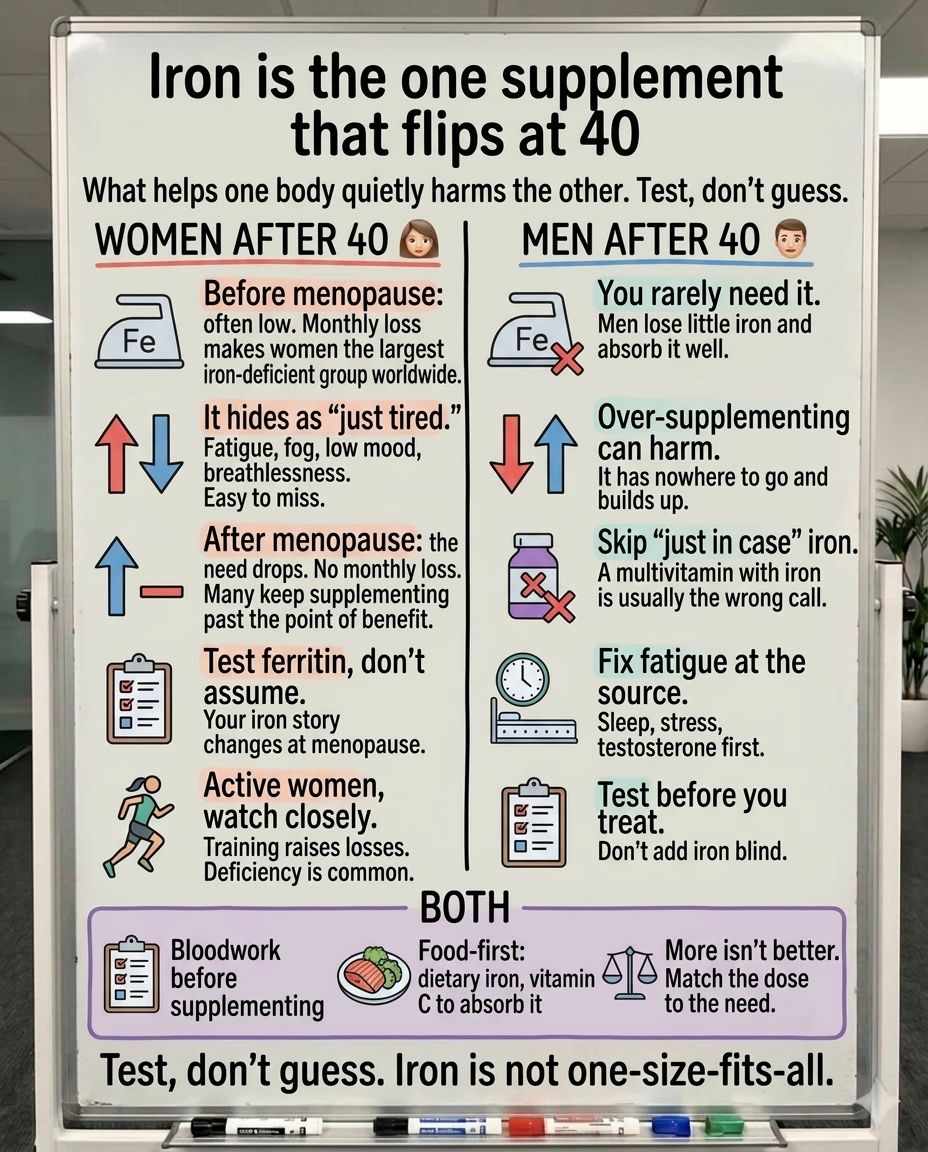
In a recent LinkedIn post, Liz Bradford explores the often-overlooked complexities of iron supplementation for women, particularly during midlife. Bradford highlights how common assumptions about iron needs can lead to both deficiency and potential harm, emphasizing the critical need for personalized health strategies over generalized advice.
Bradford begins by pointing out the widespread practice of taking iron supplements without proper testing. “Most people are taking it on a guess,” she states, setting the stage for her argument that this approach is flawed and potentially detrimental.
“If you’re a woman, your iron story isn’t fixed. It flips at menopause.”
The post details how iron needs fluctuate significantly throughout a woman’s life. Before menopause, monthly blood loss is a primary driver of iron deficiency, affecting a substantial portion of the female population, especially active women. Bradford notes that the symptoms of low iron—fatigue, brain fog, low mood, and breathlessness—are often dismissed as consequences of a busy lifestyle rather than indicators of a solvable health issue.
The Menopause Shift: A Critical Turning Point
A key focus of Bradford’s post is the dramatic shift in iron requirements that occurs with menopause. As menstrual bleeding ceases, the body’s need for iron decreases sharply. However, many women continue their supplementation routines out of habit, unaware that what was once beneficial can become harmful.
“Plenty of women keep taking the same supplement out of habit, past the point it helps, and after menopause the risk tips the other way, toward holding too much,” Bradford explains. She identifies this as a significant information gap, stating, “[side note: this is the bit nobody updates you on.]”
“The rule is simple. Test, don’t guess.”
Bradford advocates for a proactive, data-driven approach to managing iron levels. She outlines three essential steps for women to take:
- Request a ferritin test before purchasing new supplements.
- Prioritize iron-rich foods, consumed with Vitamin C to enhance absorption.
- Re-evaluate iron needs around menopause, recognizing that requirements change with age.
Personalized Health for Midlife Women
Bradford stresses that the body’s needs are dynamic and require ongoing attention. “Your body keeps changing the rules. The fix is to keep reading the scoreboard, not to keep taking the pill you bought a decade ago,” she argues. This underscores her central thesis: health management, particularly during midlife, must be personalized and responsive to individual biological changes.
The insights shared by Liz Bradford on LinkedIn serve as a vital reminder for women to approach supplementation with informed caution. By emphasizing testing and adapting strategies to life stages like menopause, women can better navigate their health and avoid the pitfalls of guesswork.
📝 About This Content
This article is based on insights shared by Liz Bradford on LinkedIn.
📅 Originally posted on August 6, 2026 | View original post on LinkedIn →