
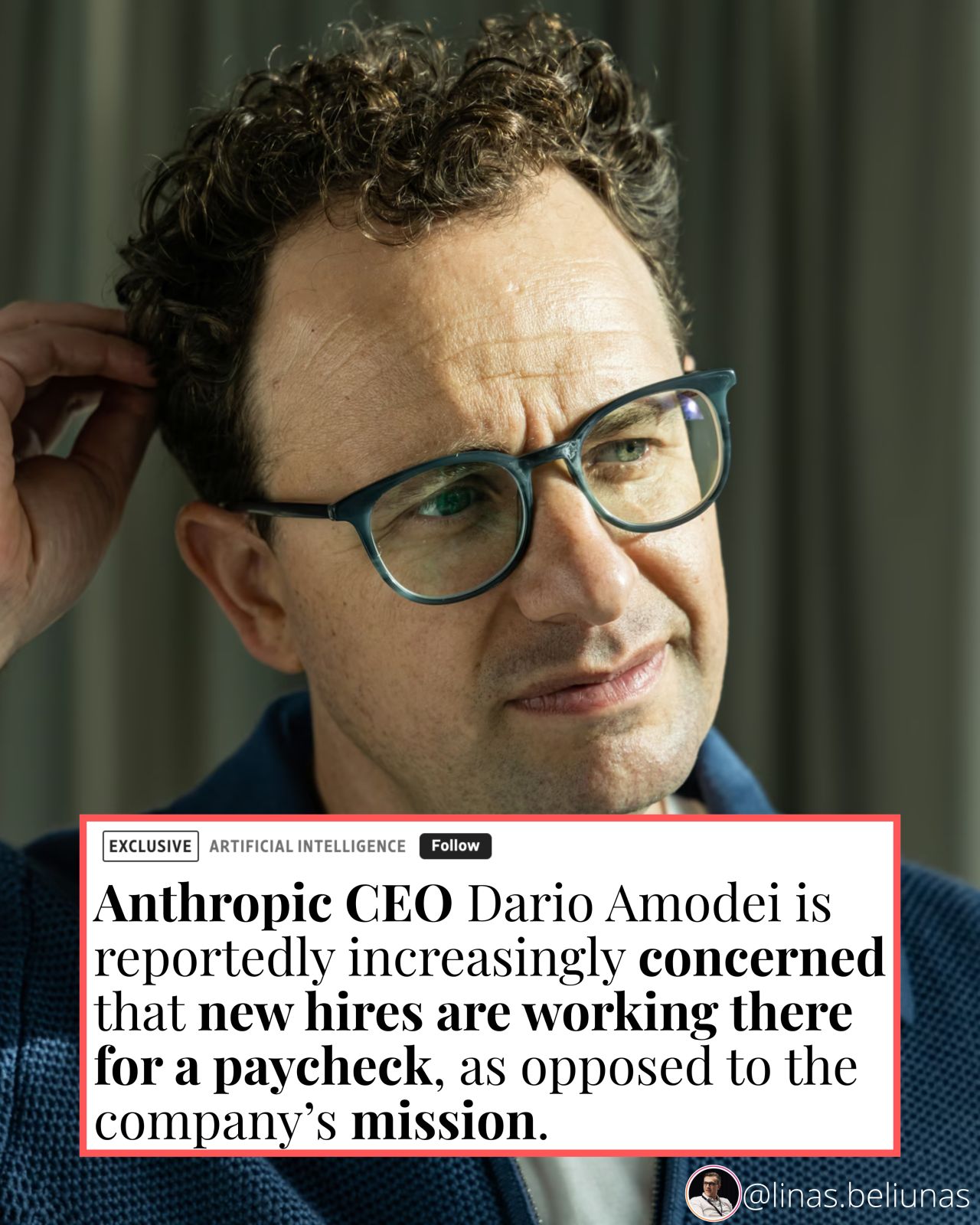
In a recent LinkedIn post, Linas Beliūnas offers a sharp analysis of the dynamics at play in the high-stakes talent market for artificial intelligence, particularly highlighting the apparent surprise from Anthropic’s leadership regarding employee motivations.
Beliūnas frames the situation with a pointed observation, suggesting a disconnect between lofty company missions and the practical financial realities faced by employees.
“BREAKING: Anthropic’s billionaire CEO just discovered that employees pay their bills with money, not company mission statements 😳”
The core of Beliūnas’s argument centers on the rational behavior of employees operating within an economic system heavily influenced by the very companies they join. He contends that when tech giants, especially those in the AI space like Anthropic, offer compensation packages rivaling those on Wall Street, it is predictable that financial incentives will be a significant draw for potential hires.
The Incentive System in AI Talent Acquisition
Linas Beliūnas highlights the immense financial scale of Anthropic’s operations and funding, noting its recent significant funding round and the substantial net worth of its CEO. This context, he argues, underscores the inherent tension between mission-driven recruitment and market-driven compensation.
As Beliūnas puts it:
“You cannot build a nearly trillion-dollar company, pay like Wall Street, and then expect people to behave like monks.”
He suggests that this approach creates an expectation of high financial reward, and employees responding to these incentives are not acting disloyally but rather rationally.
Mission vs. Money: A Dual Motivation
Beliūnas acknowledges that the motivations of employees in the AI sector are often multifaceted. While some individuals are undoubtedly driven by a passion for AI safety and the company’s mission, others are equally swayed by the substantial financial opportunities presented.
“So yes, some employees care deeply about AI safety. Some care about the mission and the money. And some may have noticed that landlords still do not accept ‘responsible scaling policies’ as rent,” Beliūnas writes, emphasizing the practical considerations that coexist with idealistic goals.
The analysis suggests that the intense competition for AI talent, coupled with the astronomical compensation being offered, has inevitably led to a situation where money is a primary, not secondary, consideration for many.
Rationality in a Competitive Market
According to Linas Beliūnas, attributing a lack of loyalty to employees motivated by compensation is a misinterpretation of their actions within the established incentive structure.
“That does not make them disloyal. It makes them rational participants in the incentive system Anthropic helped create.”
He concludes that the companies contributing to this hyper-competitive and high-paying environment for AI talent should anticipate and accept that financial remuneration will be a key factor in attracting and retaining employees. Expecting otherwise, in Beliūnas’s view, is an unrealistic expectation given the market conditions these companies themselves have helped to foster.
📝 About This Content
This article is based on insights shared by Linas Beliūnas on LinkedIn.
📅 Originally posted on August 6, 2026 | View original post on LinkedIn →