
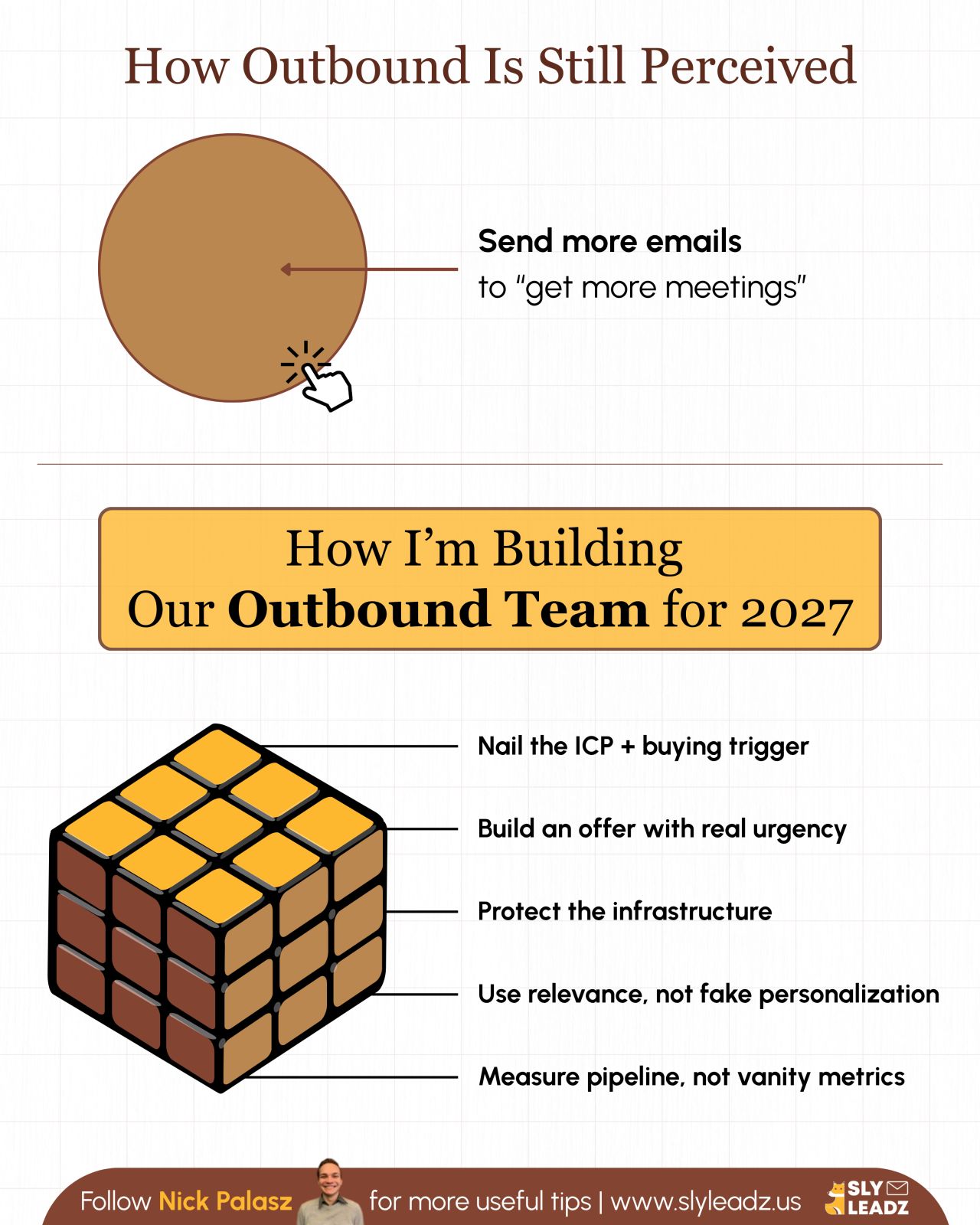
In a recent LinkedIn post, Nick Palasz discusses a significant shift he foresees in outbound sales strategies, moving away from a pure volume-based approach towards a more targeted and quality-driven methodology. Palasz argues that the long-standing practice of simply increasing outreach volume to fill a slow pipeline is becoming increasingly ineffective.
He highlights that past strategies often relied on adding more leads, activating more inboxes, and launching additional sequences with the hope that sheer numbers would eventually yield results. However, Palasz observes that the effectiveness of such high-volume campaigns is contingent on foundational elements being in place.
“If the ICP is loose, the offer is forgettable, the timing is wrong, Or the infrastructure is shaky, more volume just gives you a bigger version of the same problem.”
The Limitations of Pure Volume
Palasz contends that blindly increasing outbound volume without addressing underlying issues is a flawed strategy. According to him, a loosely defined Ideal Customer Profile (ICP), an uninspired offer, poor timing, or weak operational infrastructure will only amplify existing problems when coupled with increased sending volume. He elaborates on this by stating:
“I think outbound got a little too obsessed with volume.”
This observation suggests a critical re-evaluation is needed within sales teams that have historically equated higher output with better performance, regardless of the quality of that output.
A New Focus for 2027: Strategic Outreach
Looking ahead, Palasz indicates a change in his team’s approach for 2027, emphasizing a more discerning method for initiating contact. As Nick Palasz notes, the focus is shifting towards having a genuine, timely reason to engage with a prospect.
Key Pillars of Effective Outreach
Palasz outlines several critical factors that will define successful outbound efforts:
- Relevance: Ensuring there is a valid and current reason to contact a company.
- Offer Strength: Crafting an offer compelling enough to capture a prospect’s attention amidst their busy day.
- Infrastructure Readiness: Verifying that the technical setup and inbox management can adequately support the campaign’s demands.
- Pipeline Generation: Measuring the actual conversion of replies into tangible sales pipeline.
He contrasts this refined approach with the superficial appeal of high-volume metrics, admitting:
“The funny thing is, none of that looks as exciting on a dashboard as sending another 10,000 emails.”
This implies that the more impactful, yet less visually dramatic, metrics of quality outreach are being prioritized over vanity metrics associated with mass communication.
Winning the Outbound Game: Efficiency Over Volume
In Palasz’s view, the future of outbound sales success will not be determined by the sheer number of messages sent. Instead, he posits that the teams that excel will be those that minimize wasted efforts.
“But I’d take 1,000 well-timed emails to the right people over 10,000 emails sent because the volume target looked lonely. 😅”
This sentiment underscores a move towards efficiency and effectiveness, where every send must have a strategic purpose and a higher probability of resonating with the intended audience. According to Nick Palasz, the ultimate measure of success in outbound sales is evolving from quantity to the intelligent and strategic deployment of resources, ensuring that each outreach effort is purposeful and impactful.
📝 About This Content
This article is based on insights shared by Nick Palasz on LinkedIn.
📅 Originally posted on August 10, 2026 | View original post on LinkedIn →