
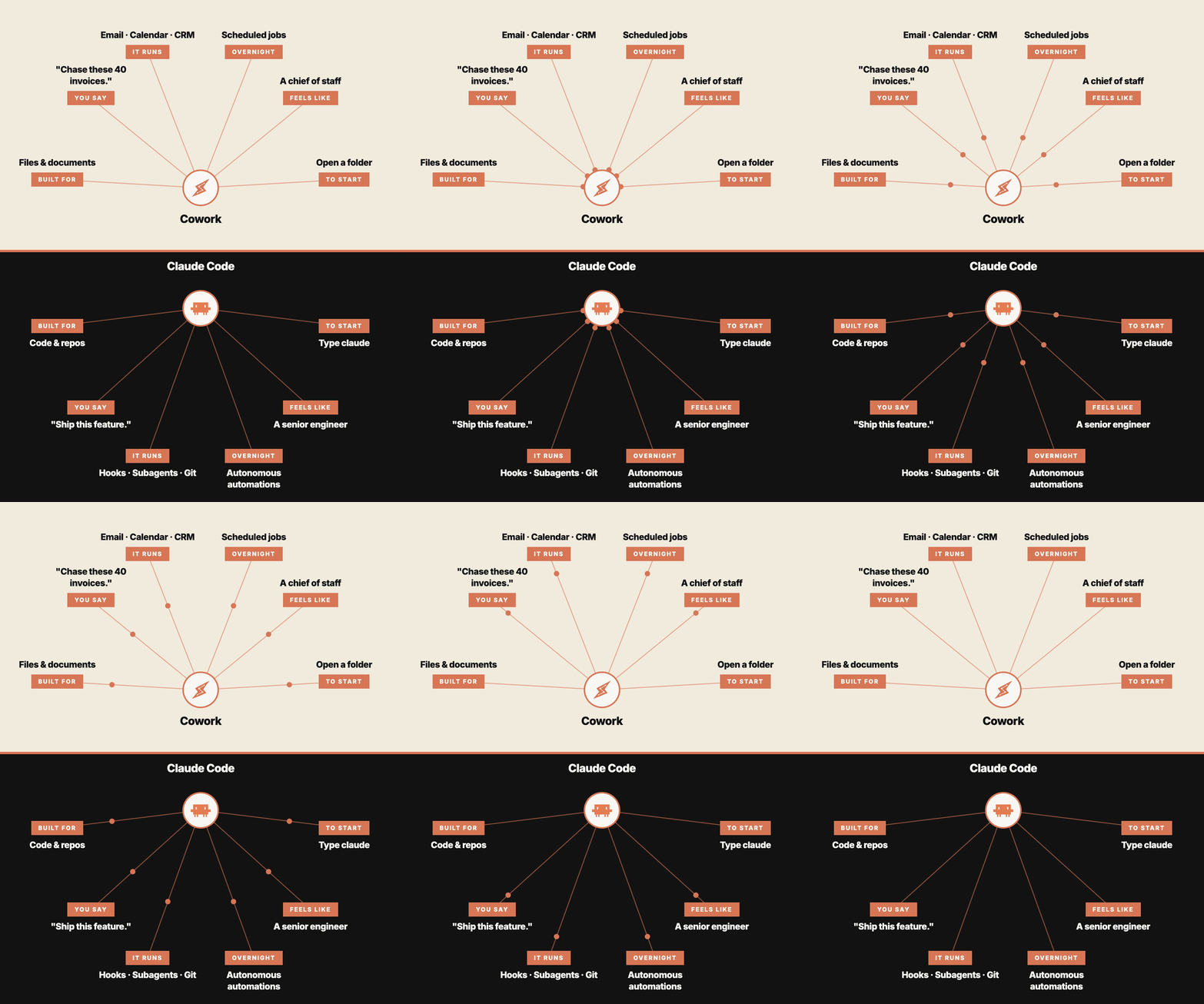
In a recent LinkedIn post, Yonathan Cohen clarifies the distinct functionalities and use cases of two powerful AI tools: Cowork and Claude Code. Cohen emphasizes that understanding the difference is crucial for users to avoid frustration and effectively leverage these technologies. He points out that the primary reason many individuals abandon AI tools is selecting the wrong one for their specific needs.
Understanding the Core Differences
Cohen breaks down the applications of Cowork and Claude Code, highlighting their separate yet complementary roles within the same application interface. He explains that the choice hinges on the fundamental nature of one’s work.
For professionals whose work is primarily composed of files, Cohen directs them to Cowork. He elaborates on its capabilities:
Cowork
→ point it at a folder: your leads, your invoices, that report due Friday.
→ it works your real tools (email, calendar, CRM) and runs scheduled jobs while your laptop sleeps.
→ if you can open a folder, you’re in.
This suggests that Cowork is designed for managing and automating tasks related to documents, data, and existing business workflows, integrating seamlessly with tools like email and CRMs.
Focusing on Code-Centric Workflows
Conversely, Yonathan Cohen positions Claude Code as the tool for those whose work revolves around software development. He details its advanced features:
Claude Code
→ full features, refactors, architecture. It ships software.
→ plus the power tools: hooks, subagents, automations that fire on their own.
According to Cohen, Claude Code is built for the complexities of software engineering, including handling codebases, performing refactoring, and managing architectural decisions, while also offering sophisticated automation capabilities.
Shared Architecture, Different Applications
Despite their distinct purposes, Cohen notes that the underlying technology powering both tools is similar. He references Anthropic’s own descriptions, stating that Cowork utilizes the same architecture as Claude Code, eliminating the need for a terminal interface for its specific functions.
Cowork runs the same architecture as Claude Code, no terminal required.
→ same Skills, same connectors. Build a Skill in one, it runs in the other.
This shared foundation means that functionalities built in one tool can be leveraged in the other, offering a degree of interoperability and a consistent user experience across different tasks.
The “Honest Test” for Tool Selection
To help users make the right choice, Yonathan Cohen proposes a straightforward test. He advises:
you sell, run a team, or push paper all day? Start with Cowork.
you ship code, or want automations that fire on their own? Claude Code.
→ and if you pick wrong? You switch tabs. That’s the whole cost.
In essence, Cohen argues that if your primary activities involve sales, team management, or administrative tasks, Cowork is the appropriate choice. If your focus is on software development or advanced, self-executing automations, Claude Code is recommended. He downplays the risk of making an incorrect choice, suggesting the only cost is a simple switch between tabs within the application.
Yonathan Cohen concludes by summarizing the core distinction: Claude Code is for building the machine (software), while Cowork is for running the business (operations and file management). His insights aim to empower users to select the AI tool that best aligns with their professional objectives, thereby maximizing efficiency and minimizing potential confusion.
📝 About This Content
This article is based on insights shared by Yonathan Cohen on LinkedIn.
📅 Originally posted on August 10, 2026 | View original post on LinkedIn →