
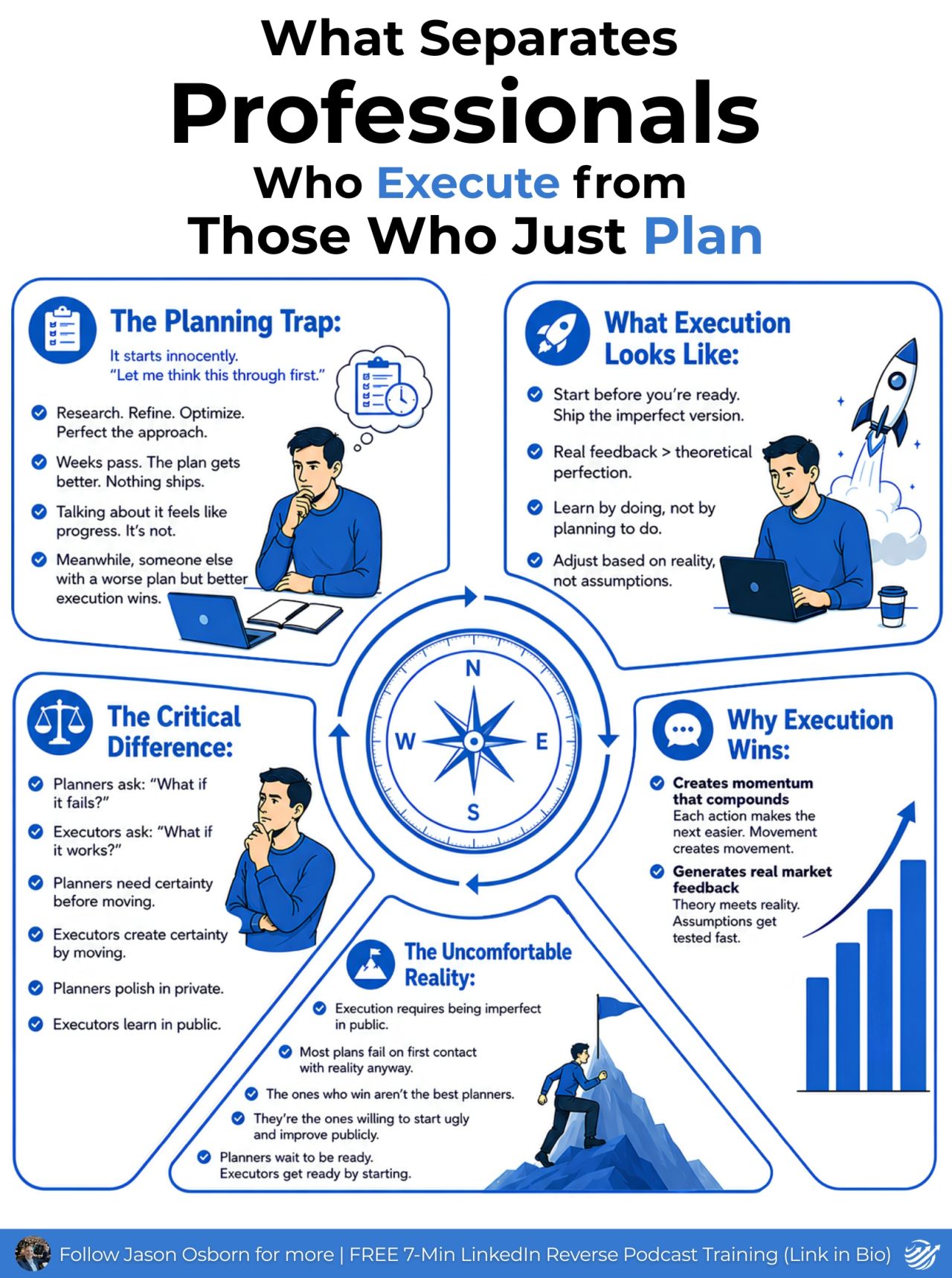
In a recent LinkedIn post, Jason Osborn delves into the critical distinction between professionals who execute and those who merely plan. Osborn challenges the common perception that extensive planning equates to progress, arguing that it can often become a comfortable trap that hinders actual achievement.
Osborn highlights the deceptive nature of planning, stating:
Planners Wait to Be Ready. Executors Get Ready by Starting.
He elaborates on this by explaining that many individuals mistake the act of planning for tangible progress. The process of researching, refining, and optimizing an approach can consume weeks, leading to an ever-improving plan that never sees the light of day. Osborn points out that the perceived productivity of discussing a plan can be misleading, as it doesn’t result in shipped work or real-world impact.
The Perils of the Planning Trap
According to Osborn, the planning phase can become a self-perpetuating cycle because it *feels* like work. The time invested in refining details and making revisions can seem justified, creating a sense of accomplishment without any actual output. However, Osborn emphasizes that a perfect plan, no matter how well-organized, is ultimately just an idea if it never leaves the document.
Osborn further differentiates between the mindset of planners and executors:
Planners ask “what if it fails?”
Executors ask “what if it works?”
This fundamental difference in perspective shapes their approach to action. Planners seek certainty before taking a step, while executors actively create certainty through their actions. As Osborn notes, planners tend to “polish in private,” whereas executors “learn in public.” This willingness to engage with the real world, even with an imperfect plan, is a key differentiator.
Why Execution Ultimately Wins
The author outlines several reasons why execution consistently triumphs over prolonged planning:
- Momentum: Each executed action builds momentum, making subsequent steps easier.
- Real Feedback: Execution forces a rapid confrontation between theory and reality, generating invaluable feedback.
- Confidence Building: Successfully completing tasks, even imperfectly, builds confidence and demonstrates the ability to handle challenges.
Osborn stresses that these critical developmental aspects are absent during the planning stage. He acknowledges that execution requires a degree of discomfort, particularly the willingness to be imperfect publicly and to receive feedback that might be difficult to hear. This involves shipping work that isn’t fully polished and adjusting based on actual outcomes rather than assumptions.
The Reality of Market Response
The core of Osborn’s argument is that most plans, when tested against reality, would have failed anyway. The individuals who succeed are not necessarily the best planners, but rather those who are willing to start imperfectly and iterate publicly. He concludes with a stark observation:
Every day spent planning is a day someone else is learning from execution.
In Osborn’s view, the market does not reward the most sophisticated plan but the most effective response to reality. He encourages readers to consider what they might still be planning that they should have already begun executing, underscoring the urgency of taking action.
📝 About This Content
This article is based on insights shared by Jason Osborn on LinkedIn.
📅 Originally posted on August 12, 2026 | View original post on LinkedIn →