
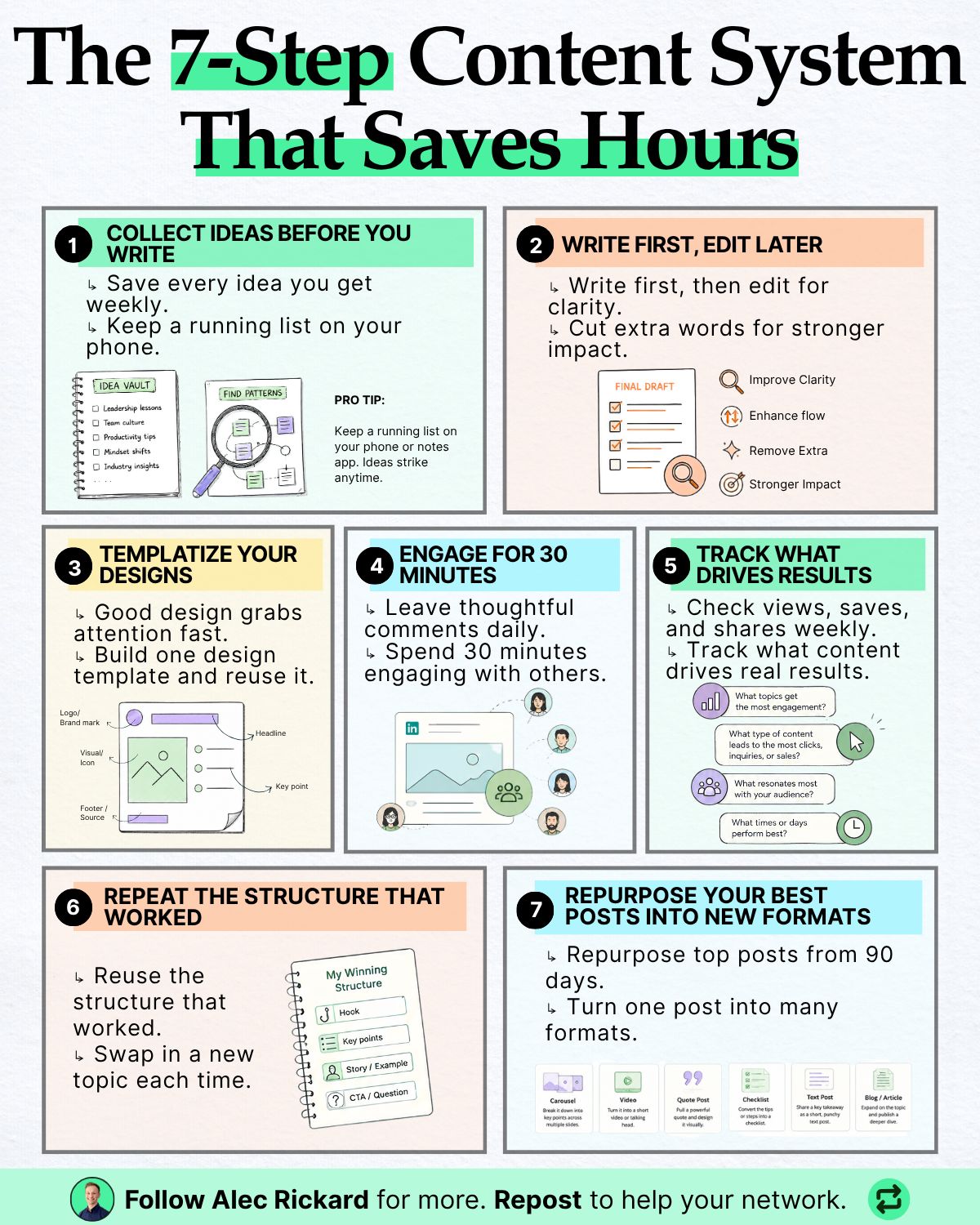
In a recent LinkedIn post, Alec Rickard discusses the common misconception that LinkedIn post reach diminishes significantly after 24 hours, arguing instead that users often unknowingly stunt their own content’s long-term visibility. Rickard proposes a comprehensive seven-step content system designed to maximize reach and engagement over time, emphasizing that publishing is merely the third stage in a much longer process.
According to Rickard, many creators stop their efforts after hitting the publish button, neglecting the crucial steps that follow. He highlights the importance of a structured approach to content creation and distribution. Rickard states:
“Your LinkedIn reach doesn’t die after 24 hours. You kill it unknowingly. Publishing is stage three of seven. The other six decide if your reach grows.”
Rickard’s framework is built on optimizing each stage of the content lifecycle to save time and amplify results. He breaks down the process into actionable steps, suggesting a systematic way to nurture content from initial idea to repurposed material.
The Foundation: Idea Generation and Efficient Writing
The initial stages of Rickard’s system focus on establishing a robust foundation for content creation. He stresses the importance of proactive idea collection, suggesting that users should maintain a running list of potential topics as they arise.
“Save every idea you get weekly. Keep a running list on your phone,” Rickard advises. This practice ensures a consistent flow of inspiration, preventing content droughts.
Following idea generation, Rickard emphasizes a “write first, edit later” philosophy. This approach allows for uninterrupted creative flow, with editing reserved for refining clarity and impact. He notes that this method helps in cutting unnecessary words, thereby strengthening the message.
Amplifying Reach Through Design and Engagement
Rickard then moves to the visual and interactive elements that significantly influence content performance. He points out that good design is critical for capturing attention quickly in a crowded feed. To streamline this, he recommends:
“Build one design template and reuse it.”
This templating strategy not only saves time but also ensures brand consistency. Beyond design, Rickard dedicates a significant portion of his system to active engagement. He advocates for spending at least 30 minutes daily interacting thoughtfully with other users’ content.
“Leave thoughtful comments daily. Spend 30 minutes engaging with others,” he instructs. This consistent interaction, according to Rickard, is key to building community and increasing visibility within the LinkedIn algorithm.
Sustaining Momentum: Tracking, Repetition, and Repurposing
The latter stages of Rickard’s system are geared towards continuous improvement and long-term content sustainability. He underscores the necessity of data-driven decision-making.
Tracking Performance
Rickard urges users to regularly monitor key metrics such as views, saves, and shares. “Check views, saves, and shares weekly. Track what content drives real results,” he emphasizes. Understanding what resonates with the audience allows for refinement of future content strategies.
Repeating Success and Repurposing Content
Building on performance insights, Rickard suggests repeating successful content structures. “Reuse the structure that worked. Swap in a new topic each time,” he recommends. This iterative process leverages proven formats while introducing fresh perspectives.
Finally, Rickard champions the power of repurposing. He advises revisiting top-performing posts from the past 90 days and transforming them into different formats, such as short videos, infographics, or expanded articles. This strategy maximizes the value of existing content and caters to diverse audience consumption preferences.
By diligently implementing all seven stages, Rickard concludes, users can harness the LinkedIn algorithm to their advantage, ensuring their content maintains relevance and reach well beyond the initial 24-hour window.
📝 About This Content
This article is based on insights shared by Alec Rickard on LinkedIn.
📅 Originally posted on August 14, 2026 | View original post on LinkedIn →