
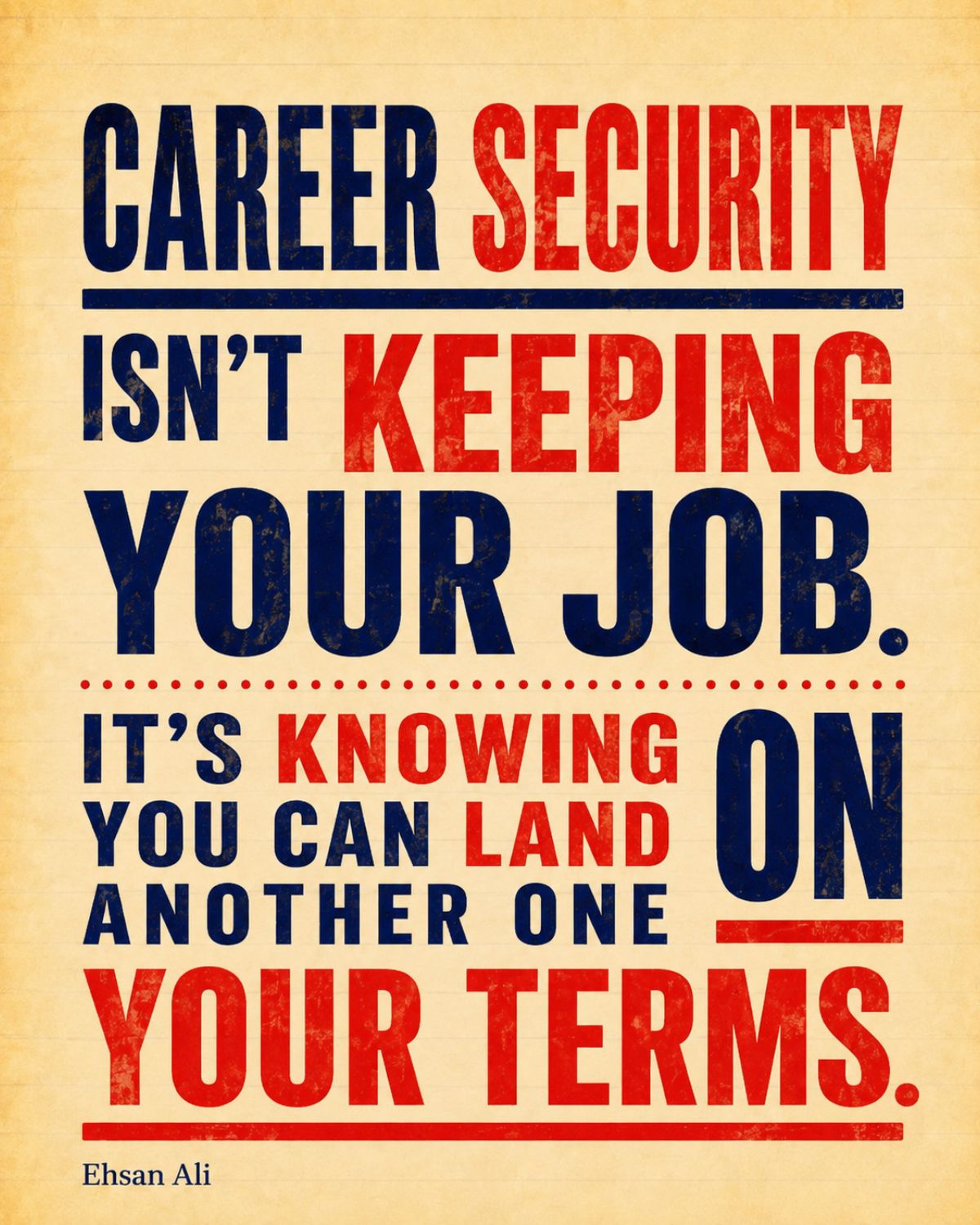
In a recent LinkedIn post, Ehsan Ali explores the precarious nature of corporate employment and advocates for a proactive approach to career management. Ali emphasizes that even long-standing roles can disappear unexpectedly due to corporate changes, highlighting the need for professionals to build resilience and a robust career strategy independent of their current position.
Ali begins by painting a stark picture of corporate volatility:
Your company can love you on Friday. Your role can disappear on Monday. New CEO. New strategy. Acquisition. Divestment. Restructure. One org chart changes and suddenly the title, team and reputation you spent 10 years building are gone.
The author stresses that complacency is a significant risk for professionals at all levels. Ali challenges the common belief, “That won’t happen to me,” asserting that such events can affect anyone. Instead of dwelling on the possibility of job loss, Ali suggests a more constructive question: “If my role disappeared tomorrow, how confident am I that I could land an equal or better one within 60 days?”
Assessing Career Readiness
According to Ehsan Ali, a confident answer to this question stems from a strong sense of self-worth and market value, coupled with a recognized professional network. Ali contrasts two potential responses to this critical self-assessment. The ideal scenario, as described by Ali, is:
“I know my value. The market knows my value. And the right people know my name.”
Conversely, Ali identifies a more vulnerable position for those who would resort to traditional job-seeking methods:
“I’d probably update my résumé, open SEEK, call a few recruiters and start messaging old contacts…”
This latter approach, Ali explains, often leads to prolonged periods of unemployment or underemployment, even for highly competent individuals. Ali notes that many senior professionals, including those in Director, Senior Manager, and VP-level roles, have experienced significant career setbacks, spending months or even over a year trying to regain their previous standing due to a lack of a structured career strategy.
The ‘Career Operating System’ Concept
Ehsan Ali argues that true career security lies not in job longevity but in the ability to transition smoothly when a role ends. This is where the concept of a “Career Operating System” comes into play. Ali defines this system as a comprehensive understanding of one’s professional value, its market demand, effective positioning strategies, existing trusted relationships, and the ability to initiate conversations for future opportunities.
A key point Ali makes is that this system is not built in a crisis but cultivated during periods of stability and success. Ali writes:
You do not build it when you get the restructure email. You build it while things are going well.
By consistently developing this “Career Operating System,” professionals can ensure that their career continues to grow and adapt, regardless of external corporate changes. This proactive approach provides a safety net, ensuring that if one opportunity ends, the individual is well-positioned to secure another, potentially even better, role. Ali concludes by offering to share details about the system he uses to help senior IT professionals navigate strategic career moves, encouraging interested individuals to DM him.
📝 About This Content
This article is based on insights shared by Ehsan Ali on LinkedIn.
📅 Originally posted on August 16, 2026 | View original post on LinkedIn →