
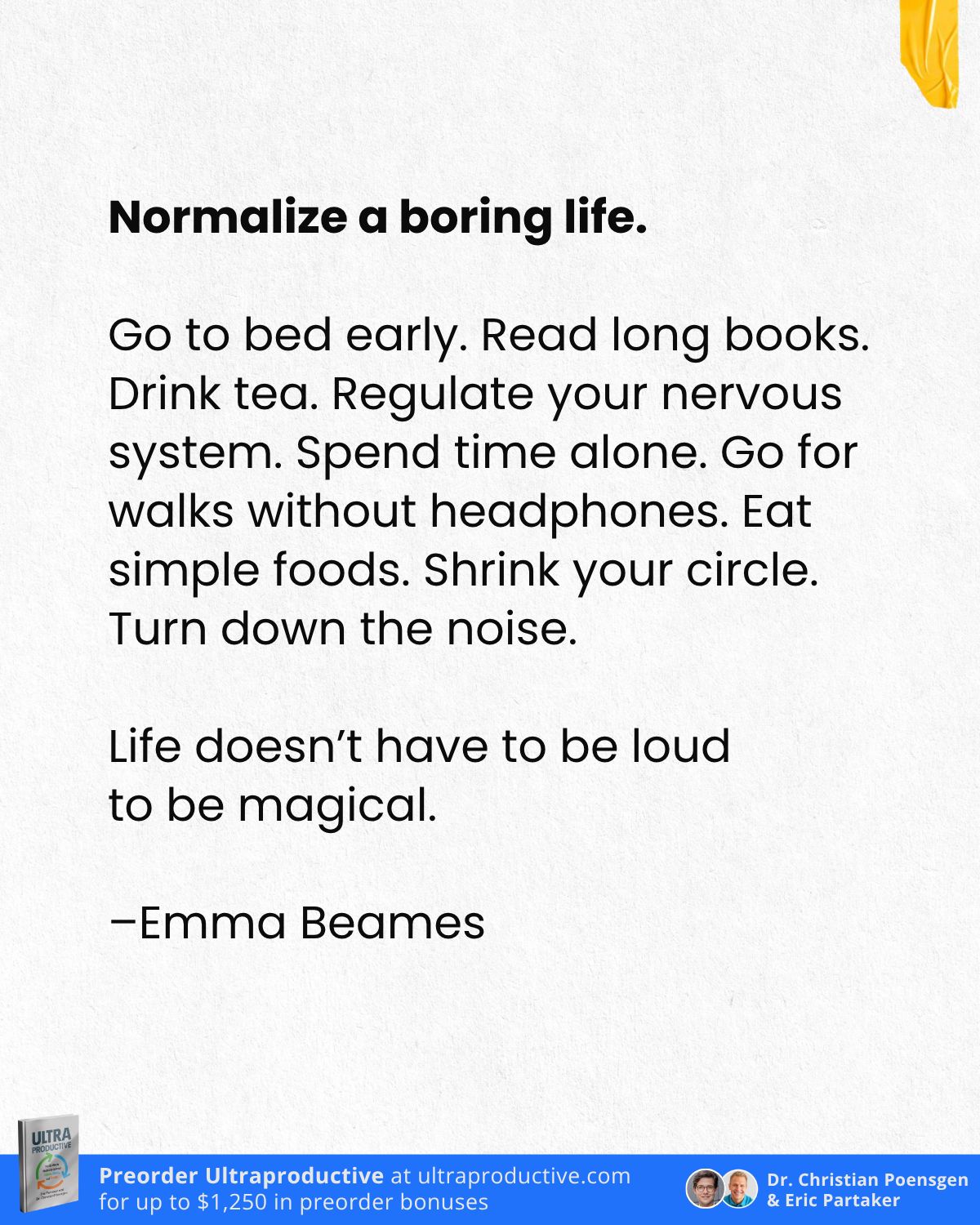
In a recent LinkedIn post, Eric Partaker discusses the critical, yet often overlooked, benefits of embracing a less frenetic pace of life, arguing that a “boring life is an underrated advantage.” Partaker shares a personal anecdote from 2010, detailing a severe health scare that occurred after a decade of relentless business building. This experience led him and Dr. Christian Poensgen to identify and critique what they term “pseudoproductive hustle.”
According to Partaker, this pseudoproductive hustle is characterized by three habits that create an illusion of commitment and progress:
The Illusion of Pseudoproductive Hustle
Constant Activity
Partaker highlights that constant activity, often mistaken for productivity, can be detrimental. He cites data indicating that “half of knowledge workers rarely or never take a real break,” and that skipping breaks increases the likelihood of burnout by 70%. This continuous engagement, even without meaningful progress, contributes to an unsustainable work style.
Constant Availability
Another hallmark of this hustle is the expectation of constant availability. Partaker points out that “more than 3 in 4 Americans check work email outside work hours,” blurring the lines between professional and personal life and leaving individuals perpetually “on call.”
Constant Alertness
The third element discussed is constant alertness, which Partaker links to insufficient rest. He notes that “40% of Americans sleep less than 7 hours a night,” leading to a nervous system that “never gets the all clear.” This state of perpetual readiness, while seemingly a sign of dedication, erodes well-being.
“To go fast in life, you need great brakes.”
Building in Essential ‘Brakes’ for Sustainable Performance
Partaker advocates for integrating specific “brakes” into the daily routine to counteract the effects of pseudoproductive hustle. These are not signs of weakness but essential components for long-term success and well-being. He proposes five key practices:
- Taking a short break every 90 minutes, ideally with a walk.
- Incorporating 10 minutes of Non-Sleep Deep Rest (NSDR) in the afternoon.
- Establishing a shutdown ritual to formally end the workday.
- Putting phones away at least an hour before bed.
- Ensuring 7.5 hours in bed to allow for sufficient deep and REM sleep.
As Eric Partaker emphasizes, “To go fast in life, you need great brakes.” This philosophy challenges the conventional notion that constant, high-intensity work is the only path to success. Instead, Partaker suggests that strategically incorporating periods of rest and disengagement is crucial for maintaining momentum and preventing burnout.
The post concludes by posing a question to his audience: “What’s the most underrated way to switch off?” This invites further discussion on alternative methods for recovery and stress reduction. Partaker also promotes his book, “Ultraproductive,” co-authored with Dr. Christian Poensgen, which is aimed at individuals who feel they have no spare hours to give, offering strategies for sustainable high performance.
📝 About This Content
This article is based on insights shared by Eric Partaker on LinkedIn.
📅 Originally posted on September 12, 2026 | View original post on LinkedIn →