
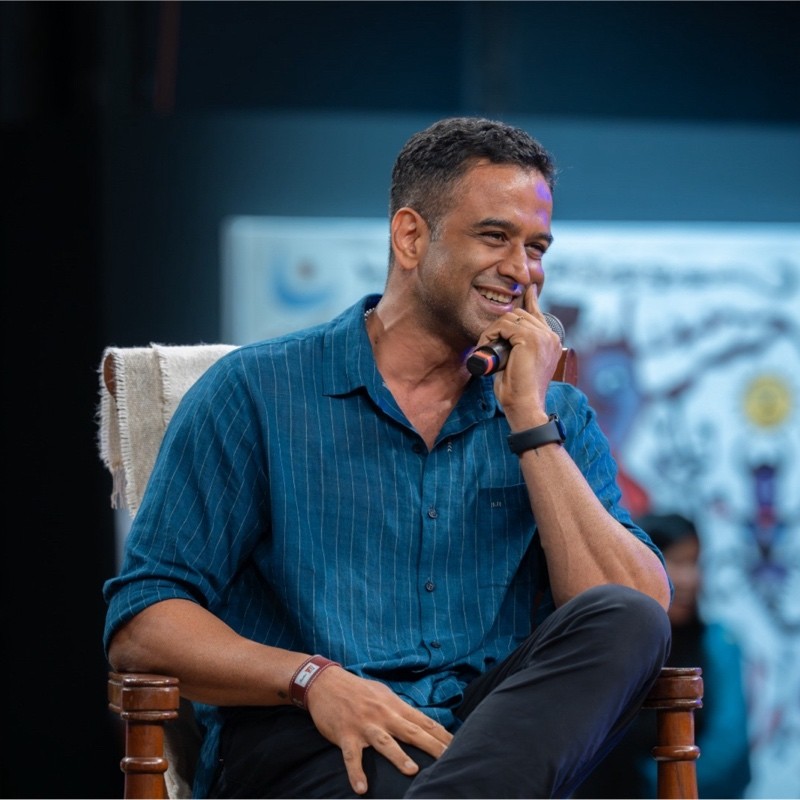
In a recent LinkedIn post, Nithin Kamath discusses the critical issue of waste management in Bengaluru and highlights innovative solutions that are transforming wet waste into valuable resources. Kamath, co-founder of Zerodha, shared insights into the work of two organizations, Hasiru Dala Innovations and Carbon Masters, detailing their collaborative approach to tackling the city’s significant waste generation problem.
Kamath begins by outlining the scale of the challenge, noting that Bangalore produces approximately 7,000 tonnes of waste daily, with a substantial portion being wet waste. He points out the difficulties associated with its collection, segregation, and processing, and the unfortunate reality that much of it still ends up improperly treated or in landfills.
“Bangalore produces around 7,000 tonnes of waste a day, roughly 3,000 tonnes of that is wet waste. All of it has to be collected, segregated, and processed every single day. A lot of it still ends up badly treated or in a landfill.”
The post then introduces Hasiru Dala Innovations, an organization that has dedicated years to the often-overlooked task of collecting and segregating waste at scale. However, Kamath explains that wet waste has traditionally posed a greater challenge due to its quick spoilage and the difficulty in generating revenue from composting it, unlike dry waste which has established buyers.
The Role of Carbon Masters in Wet Waste Transformation
Kamath highlights the crucial role of Carbon Masters in addressing the wet waste problem. According to Kamath, this organization has developed a method to convert wet waste into biogas, a usable fuel for cooking. More significantly, he emphasizes that Carbon Masters has successfully created a viable business model around this process.
“Carbon Masters takes that wet waste and turns it into biogas you can cook with. More importantly, they’ve made a business out of it.”
The synergy between Hasiru Dala Innovations and Carbon Masters is a central theme in Kamath’s post. He explains how their combined efforts create an effective waste management system. Hasiru Dala provides the sorted waste, and Carbon Masters leverages this resource to generate economic value through biogas and organic manure production.
A Step Towards Self-Reliance
Beyond the local impact in Bengaluru, Nithin Kamath connects this waste-to-energy initiative to a broader national goal of self-reliance. He points out that India relies heavily on imports for essential fuels like LPG and natural gas, importing about 60% of its LPG and half its natural gas. In this context, he argues that transforming domestic waste into fuel represents a significant step towards greater energy independence.
“Turning our own waste into fuel is about as self-reliant as it gets.”
Kamath expresses a desire to see more individuals and organizations tackling such complex and essential problems. He reveals that his organization, Rainmatter by Zerodha, has invested in both Hasiru Dala Innovations and Carbon Masters, underscoring his belief in their mission and potential.
Understanding the Process: A Visual Exploration
To offer a deeper understanding of how these operations function, Kamath mentions a visit to the Carbon Masters plant in Harohalli. This visit formed the basis for their latest Rainmatter Original, a video series designed to show viewers the journey of household waste. Kamath encourages those curious about the fate of their waste to watch the full episode, the link for which is provided in the comments of his original post.
📝 About This Content
This article is based on insights shared by Nithin Kamath on LinkedIn.
📅 Originally posted on September 12, 2026 | View original post on LinkedIn →