
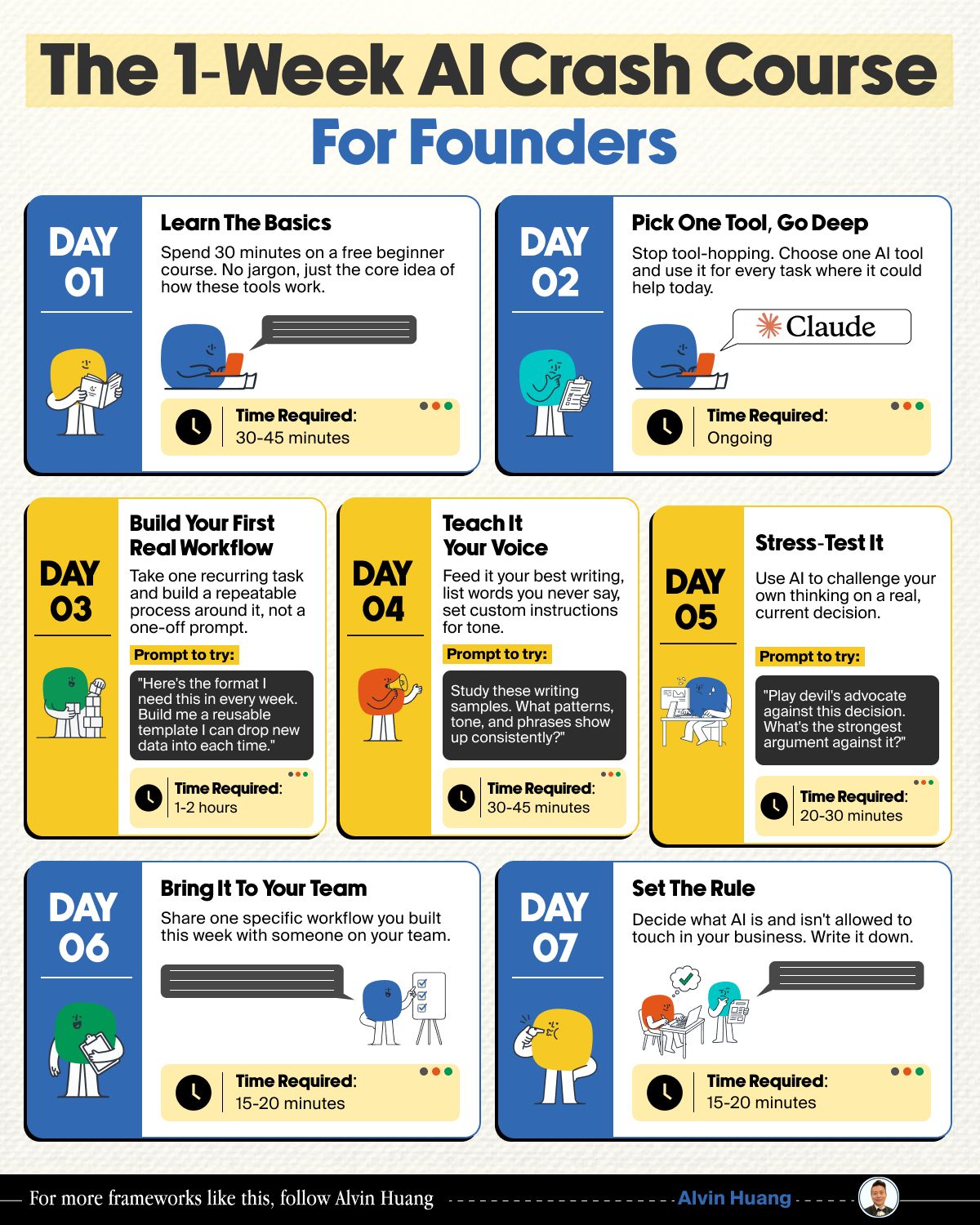
In a recent LinkedIn post, Alvin Huang discusses the critical difference between merely using Artificial Intelligence tools and genuinely building capabilities with them. Huang shares a personal journey and a structured, seven-day framework designed to transform superficial AI interaction into a deeply integrated skill for individuals and teams.
Huang emphasizes that prolonged, impactful use of AI doesn’t happen through sporadic, brief engagements. He recounts his own experience of using AI tools intermittently for over a year without developing a true skill. This realization prompted him to dedicate a focused week to systematically overcome this challenge.
“Most AI use never turns into a skill because it never gets structure.”
The 7-Day Framework for AI Mastery
Alvin Huang outlines a day-by-day approach to building AI proficiency, moving from foundational learning to team-wide implementation. This structured method, as detailed by Huang, aims to move beyond simple prompt engineering to creating sustainable workflows.
Day 1: Grasping the Fundamentals
Huang’s first step involves dedicating 30 minutes to a free beginner course. The goal is to understand the core principles of how AI tools function, providing a necessary base for deeper engagement.
Day 2: Deep Dive into a Single Tool
To combat ‘tool-hopping,’ Huang advises selecting one AI tool and committing to using it for all plausible tasks throughout the day. This focused approach helps solidify understanding and practical application of a chosen technology.
Day 3: Constructing a Workflow
This stage focuses on transforming a recurring business task into a repeatable process. Huang suggests a practical prompt for this phase:
“Here’s the format I need this in every week. Build me a reusable template I can drop new data into each time.”
This emphasizes creating adaptable systems rather than one-off solutions.
Day 4: Infusing Personal Voice and Style
Huang highlights the importance of teaching AI to adopt a specific tone and style. This involves feeding the AI samples of one’s best writing and providing explicit instructions on preferred language and vocabulary. As Huang notes, the process includes:
“Study these writing samples. What patterns, tone, and phrases show up consistently?”
This step is crucial for maintaining brand consistency and personal authenticity when using AI-generated content.
Day 5: Rigorous Testing and Challenge
To ensure AI aids critical thinking rather than replacing it, Huang proposes using AI to challenge existing decisions. By asking AI to play devil’s advocate, users can uncover potential flaws or alternative perspectives.
Day 6: Team Integration and Knowledge Sharing
Huang advocates for sharing a developed AI workflow with a team member. The focus is on demonstrating the process and its utility, fostering wider adoption and understanding within the organization.
Day 7: Establishing Clear Rules
The final day involves defining clear boundaries for AI usage within the business. Huang stresses the importance of documenting these guidelines to ensure consistent application across the team.
From Tool to Skill: The Power of Structure
Alvin Huang argues that the key to unlocking AI’s potential lies in structure. By moving from passive usage to active building and integration, individuals and teams can develop robust workflows that save time and enhance productivity. He concludes:
“But a week of structure is what turns a tool into a workflow, and a workflow into a rule your team can implement and run on.”
Huang’s framework offers a practical roadmap for professionals seeking to move beyond basic AI interaction and establish effective, long-term AI integration within their business operations.
📝 About This Content
This article is based on insights shared by Alvin Huang on LinkedIn.
📅 Originally posted on September 13, 2026 | View original post on LinkedIn →