
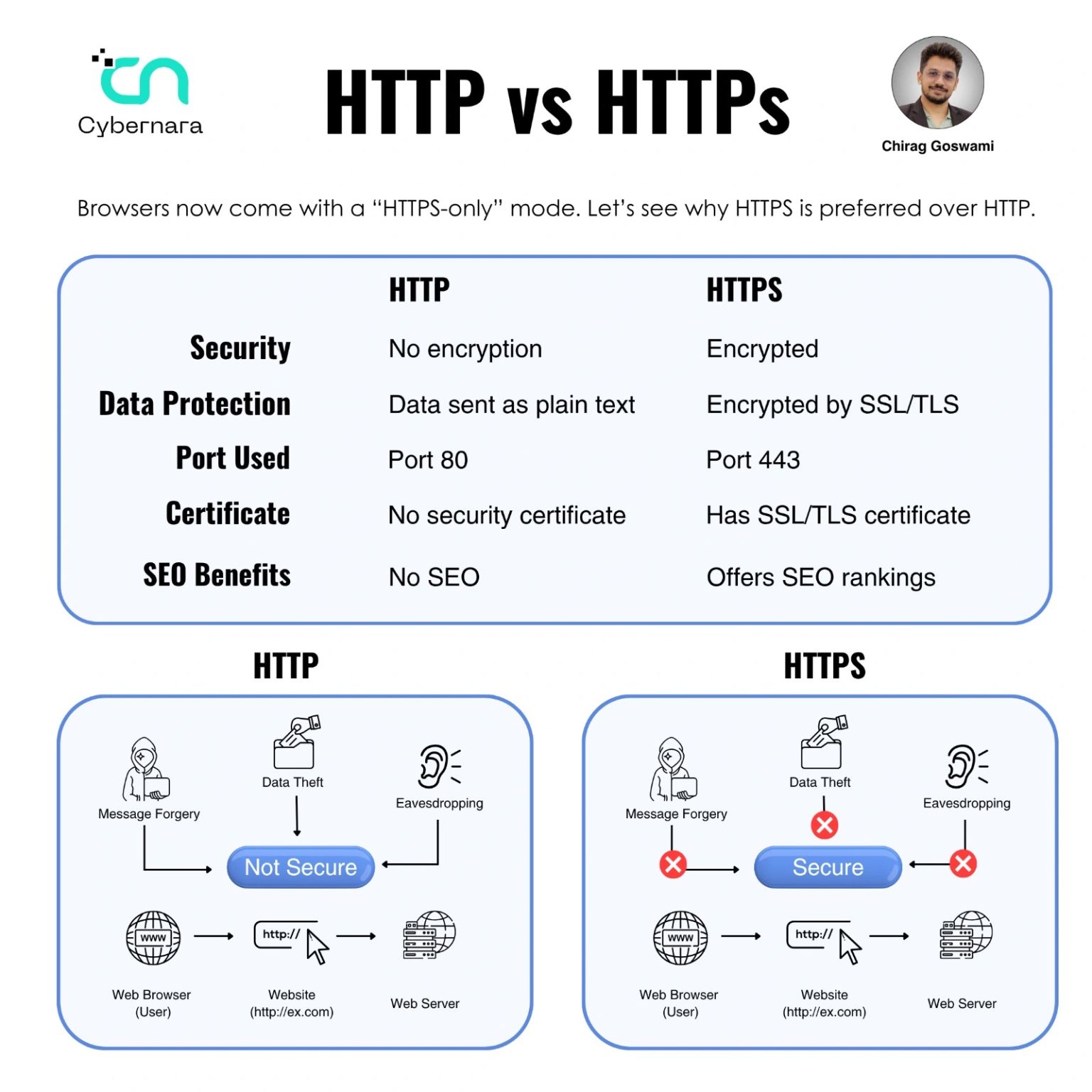
In a recent LinkedIn post, Chirag Goswami highlights the critical differences between HTTP and HTTPS and argues for the essential adoption of the latter for modern businesses. Goswami breaks down the multifaceted benefits of HTTPS, emphasizing its role beyond basic security to encompass search engine optimization, user trust, regulatory compliance, and even website performance.
The core of Goswami’s message revolves around the security implications of using HTTPS. He points out the fundamental vulnerability of HTTP, which transmits data in plain text. This lack of encryption leaves sensitive user information exposed to potential interception by malicious actors.
“HTTP sends data in plain text, making it vulnerable to hackers. HTTPS uses SSL/TLS encryption, protecting sensitive information like passwords and payment details.”
Enhanced Security and User Trust
As Chirag Goswami notes, the security provided by HTTPS is not just a technical advantage but also a significant factor in building user confidence. In an era where data breaches are a constant concern, users are increasingly aware of online security. Goswami explains how the visual cues provided by HTTPS in web browsers directly impact this trust.
“Web browsers flag HTTP sites as “Not Secure,” scaring away visitors. HTTPS displays a padlock icon, reassuring customers that their data is safe,” Goswami writes. This visual indicator, the familiar padlock, serves as an immediate signal to visitors that their connection is secure, fostering a sense of safety and encouraging engagement with the website.
The SEO Advantage of HTTPS
Beyond security and trust, Chirag Goswami also underscores the direct impact of HTTPS on a business’s online visibility. Search engines, particularly Google, actively favor websites that utilize secure connections.
Search Ranking Prioritization
According to Goswami, adopting HTTPS is no longer just a recommendation but a necessity for businesses aiming to rank well in search results. He states,
“Google prioritizes HTTPS websites in search results. Using HTTPS improves SEO, increasing visibility and credibility for your business.”
This prioritization means that businesses still operating on HTTP may find themselves at a disadvantage, potentially losing out on organic traffic and customer reach. The credibility boost mentioned by Goswami is a direct consequence of this SEO advantage, as higher search rankings often correlate with perceived authority and trustworthiness.
Compliance and Performance Benefits
Goswami further elaborates on the regulatory and performance aspects of HTTPS adoption. He highlights that in today’s data-driven landscape, compliance with data protection regulations is paramount.
Meeting Regulatory Requirements
For businesses handling sensitive customer data, such as payment information or personal details, adherence to regulations like GDPR and PCI-DSS is mandatory. Goswami points out that these regulations often explicitly require data encryption, making HTTPS a non-negotiable requirement.
“Many regulations (like GDPR & PCI-DSS) require encryption for data security. Running an HTTP site could put your business at risk of non-compliance and legal penalties.”
The implications of non-compliance, as warned by Goswami, can be severe, ranging from hefty fines to significant damage to a company’s reputation. In addition to these critical considerations, Goswami also touches upon the performance enhancements offered by HTTPS.
Speed and User Experience
He notes that with the advent of protocols like HTTP/2, HTTPS can actually lead to faster website loading times compared to its predecessor. This improvement in speed directly translates to a better user experience, which in turn can reduce bounce rates and increase conversion rates – key metrics for any online business.
In conclusion, Chirag Goswami’s analysis on LinkedIn presents a comprehensive argument for the universal adoption of HTTPS, framing it as a foundational element for secure, visible, trustworthy, compliant, and high-performing business websites in the digital age.
📝 About This Content
This article is based on insights shared by Chirag Goswami on LinkedIn.
📅 Originally posted on September 14, 2026 | View original post on LinkedIn →