
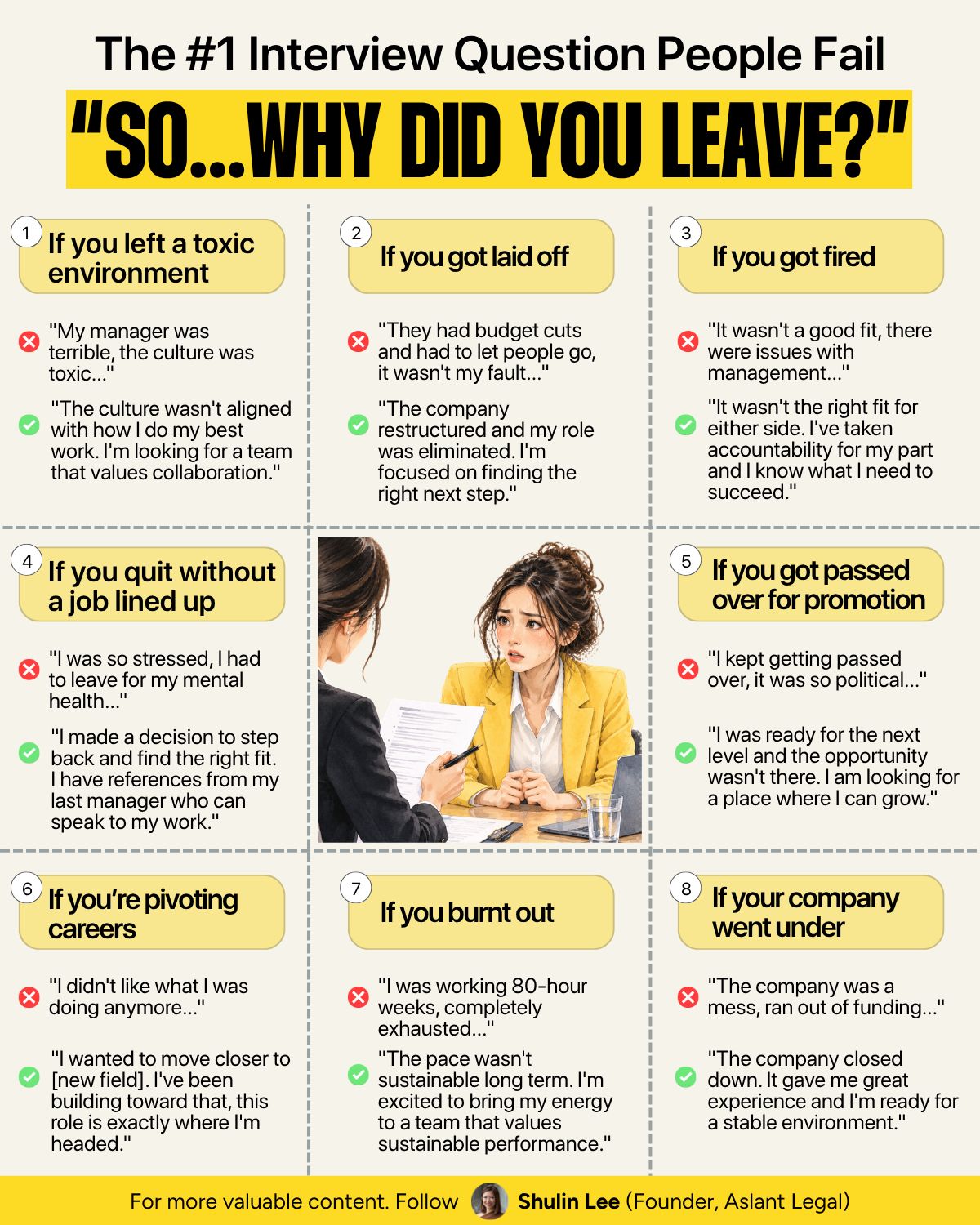
In a recent LinkedIn post, Shulin Lee tackles one of the most challenging questions job seekers face in interviews: “So… why did you leave?” Lee emphasizes that the difficulty often lies not in the circumstances of departure itself, but in how a candidate chooses to articulate their experience.
Shulin Lee highlights that while honesty is important, the framing of one’s exit is crucial for making a positive impression. The post suggests that common reasons for leaving, such as a toxic workplace, burnout, layoffs, being fired, passed over for promotion, or a career pivot, do not require outright falsehoods but demand careful presentation.
“Problem is not actually what happened. It’s HOW you talk about it.”
As Lee points out, the way a candidate discusses their past roles can significantly impact an interviewer’s perception. The core message is that individuals can navigate these potentially sensitive topics truthfully without raising unnecessary red flags.
The Art of Framing Past Departures
Shulin Lee breaks down the challenge of discussing previous employment by contrasting what “not to say” with more constructive approaches. While the specific advice on what to say instead is not detailed in the shared post, Lee’s emphasis is on strategic communication rather than deception.
According to Shulin Lee, even difficult situations like being “Fired” or experiencing a “Layoff” can be addressed professionally. The key, as Lee implies, is to focus on lessons learned, future aspirations, and the positive aspects of the job search, rather than dwelling on negativity or blame.
“You don’t need to lie about any of it. But you do need to know how to frame it without raising unnecessary red flags.”
The post serves as a practical guide for job seekers, encouraging them to prepare thoughtful responses that reflect resilience and a forward-looking attitude. Lee’s insight suggests that interviewers are looking for self-awareness and the ability to handle challenging situations with maturity.
Beyond the Negative: Focusing on Growth
In Lee’s view, transforming a potentially negative departure into a positive discussion is an essential job-seeking skill. This involves reframing experiences that might seem detrimental on the surface.
“Toxic workplace. Burnout. Layoff. Fired. Passed over. Career pivot.”
Shulin Lee’s advice underscores the importance of preparation and emotional intelligence in the job search process. By understanding that the narrative is as important as the event itself, candidates can approach this common interview hurdle with greater confidence and strategy.
The post concludes by inviting engagement, asking followers about the interview questions they find most difficult, further emphasizing the shared challenges faced by job seekers.
📝 About This Content
This article is based on insights shared by Shulin Lee on LinkedIn.
📅 Originally posted on September 14, 2026 | View original post on LinkedIn →