
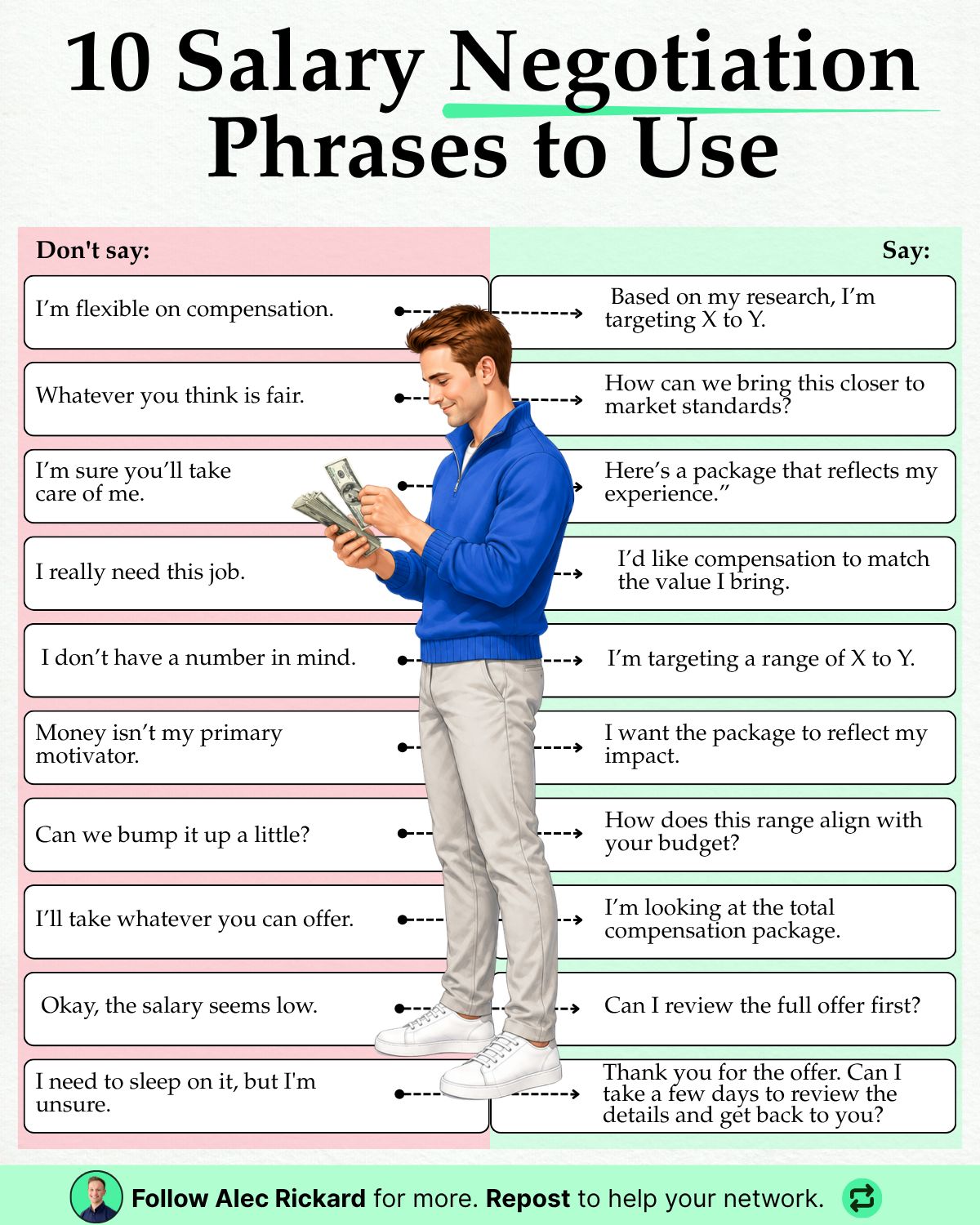
In a recent LinkedIn post, Alec Rickard delves into the critical art of salary negotiation, asserting that compensation is not a matter of what one deserves, but rather what one successfully negotiates. Drawing from his experience coaching over 150 professionals through career transitions, Rickard emphasizes that effective salary negotiation is a strategic process that begins long before the actual conversation takes place.
Rickard highlights the importance of preparation and precise language, stating:
“Salary negotiation starts before the conversation. The words you use matter.”
He points out that many individuals approach negotiations with a mindset of desperation or uncertainty, which can significantly undermine their ability to secure favorable terms. Instead, Rickard advocates for a confident, information-driven approach.
The Foundation of Successful Negotiation
According to Alec Rickard, the groundwork for a successful salary negotiation is laid through thorough research and a clear understanding of one’s own value. He critiques common missteps, such as phrases that convey flexibility without specificity or a lack of confidence.
Strategic Phrasing for Key Moments
Rickard provides a practical guide with ten specific phrases designed to empower individuals during salary discussions. These phrases are framed as alternatives to common, less effective statements. For instance, when discussing salary expectations, Rickard advises against saying “I’m flexible on compensation” and instead suggests:
“Based on my research, I’m targeting X to Y.”
This approach, as Rickard explains, immediately establishes a benchmark and demonstrates that the candidate has done their homework. Similarly, when faced with an offer that is perceived as too low, Rickard suggests moving away from passive statements like “Whatever you think is fair” and opting for a more proactive inquiry such as:
“How can we bring this closer to market standards?”
Rickard argues that such phrasing shifts the focus to collaboration and alignment with industry benchmarks, rather than simply accepting an inadequate offer.
Negotiating with Value, Not Desperation
A core theme in Rickard’s analysis is the distinction between negotiating from a position of need versus a position of value. He illustrates this with examples such as reframing “I really need this job” to “I’d like compensation to match the value I bring,” and replacing “Money isn’t my primary motivator” with “I want the package to reflect my impact.” These shifts in language, as Rickard points out, subtly but effectively communicate confidence and a clear understanding of one’s worth to the employer.
Furthermore, Rickard stresses the importance of considering the total compensation package rather than focusing solely on the base salary. He advises professionals to say “I’m looking at the total compensation package” instead of implying a willingness to accept less than ideal terms.
The Role of Preparation and Confidence
In conclusion, Alec Rickard’s insights underscore that successful salary negotiation is an informed and prepared process. He reiterates the goal:
“Don’t negotiate from desperation. Negotiate with information.”
By researching the market, knowing their contributions, and carefully preparing their communication, individuals can approach negotiations with greater confidence. Rickard suggests that this preparation is key to overcoming the inherent challenges of salary discussions and achieving outcomes that truly reflect their professional value.
📝 About This Content
This article is based on insights shared by Alec Rickard on LinkedIn.
📅 Originally posted on September 15, 2026 | View original post on LinkedIn →