
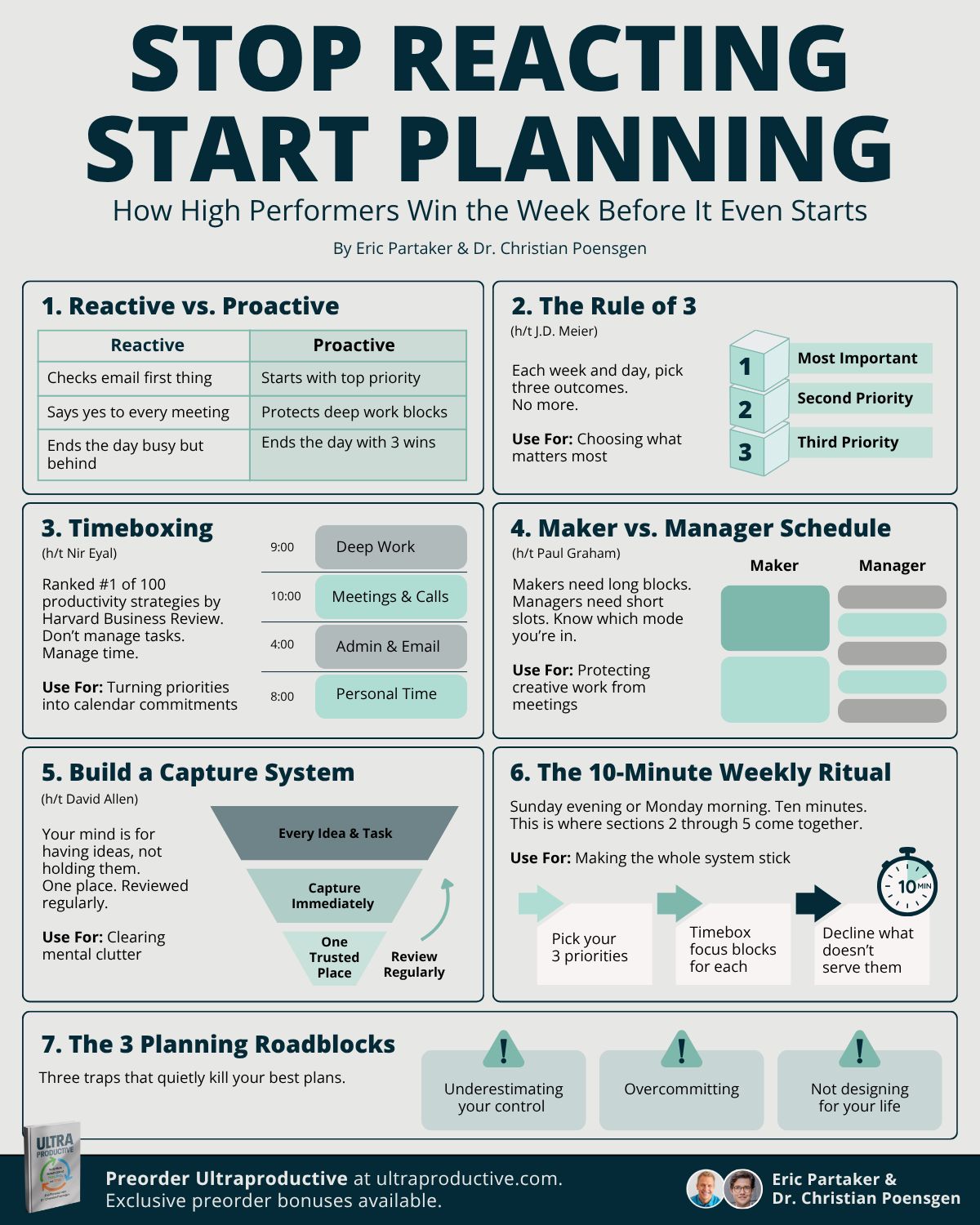
In a recent LinkedIn post, Eric Partaker delves into the common struggle of feeling overwhelmed by the demands of the modern work week, particularly for CEOs and high-achievers. He argues that the root cause of this disarray is often the absence of a robust system for managing time and priorities.
Partaker, who has coached over 650 CEOs, shares insights from his upcoming book, ‘Ultraproductive,’ co-authored with Dr. Christian Poensgen. He emphasizes a core principle observed among top performers: winning the week before it even begins.
“The problem almost always comes down to the absence of a system. When Dr. Christian Poensgen and I were writing the planning chapter in our new book, Ultraproductive, we found that the highest performers we studied share one habit. They win the week before it starts.”
The post outlines a seven-part system designed to foster this proactive approach to productivity. Partaker breaks down each component, offering actionable advice for professionals looking to regain control over their schedules and focus on what truly matters.
The Seven Pillars of Proactive Planning
Eric Partaker details a comprehensive system that moves individuals from a reactive to a proactive stance. This involves understanding fundamental principles and implementing specific rituals.
1. Reactive vs. Proactive Mindset
Partaker contrasts two modes of operation. The reactive approach, common among those who feel perpetually behind, involves checking emails first thing, accepting every meeting, and ending the day busy but unproductive. In contrast, the proactive approach prioritizes the day’s top objective, safeguards time for deep work, and aims for tangible accomplishments.
2. The Rule of 3
Drawing inspiration from J.D. Meier, Partaker advocates for selecting just three key outcomes for both the week and each day. This focused approach, he suggests, helps in discerning and committing to the most critical tasks.
“Each week and each day, pick three outcomes. No more. Use this to choose what matters most.”
3. Timeboxing for Commitment
Highlighting a strategy ranked highly in a Harvard Business Review survey of productivity hacks, Partaker explains the power of timeboxing. As he notes, this involves transforming priorities into concrete calendar commitments, ensuring dedicated time is allocated to important tasks.
4. Maker vs. Manager Schedules
Referencing Paul Graham’s concept, Partaker differentiates between the needs of ‘makers’ who require uninterrupted blocks for creative work, and ‘managers’ who operate on shorter meeting slots. He stresses the importance of understanding one’s primary mode and protecting creative time from constant interruptions.
5. Building a Capture System
Echoing David Allen’s principles, Partaker advises that the mind is for generating ideas, not for storing them. He recommends establishing a single, trusted system for capturing all thoughts and tasks immediately, with a plan for regular review.
“Your mind is for having ideas, not holding them. One trusted place. Captured immediately. Reviewed regularly.”
6. The 10-Minute Weekly Ritual
A cornerstone of Partaker’s system is a brief, yet powerful, weekly planning session. Conducted on Sunday evening or Monday morning, this ten-minute ritual involves identifying the week’s top three priorities, scheduling dedicated focus blocks for them, and consciously declining commitments that do not align with these objectives.
7. Overcoming Planning Roadblocks
Partaker also identifies three common pitfalls that undermine even the best-laid plans: underestimating personal control, overcommitting to too many tasks, and failing to design a system that accommodates one’s actual life.
In conclusion, Eric Partaker’s insights on LinkedIn offer a structured framework for individuals, especially business leaders, to move beyond a state of constant busyness towards genuine productivity. By implementing these seven components, he suggests, one can proactively shape their week and ensure significant progress on their most important goals.
📝 About This Content
This article is based on insights shared by Eric Partaker on LinkedIn.
📅 Originally posted on September 15, 2026 | View original post on LinkedIn →