
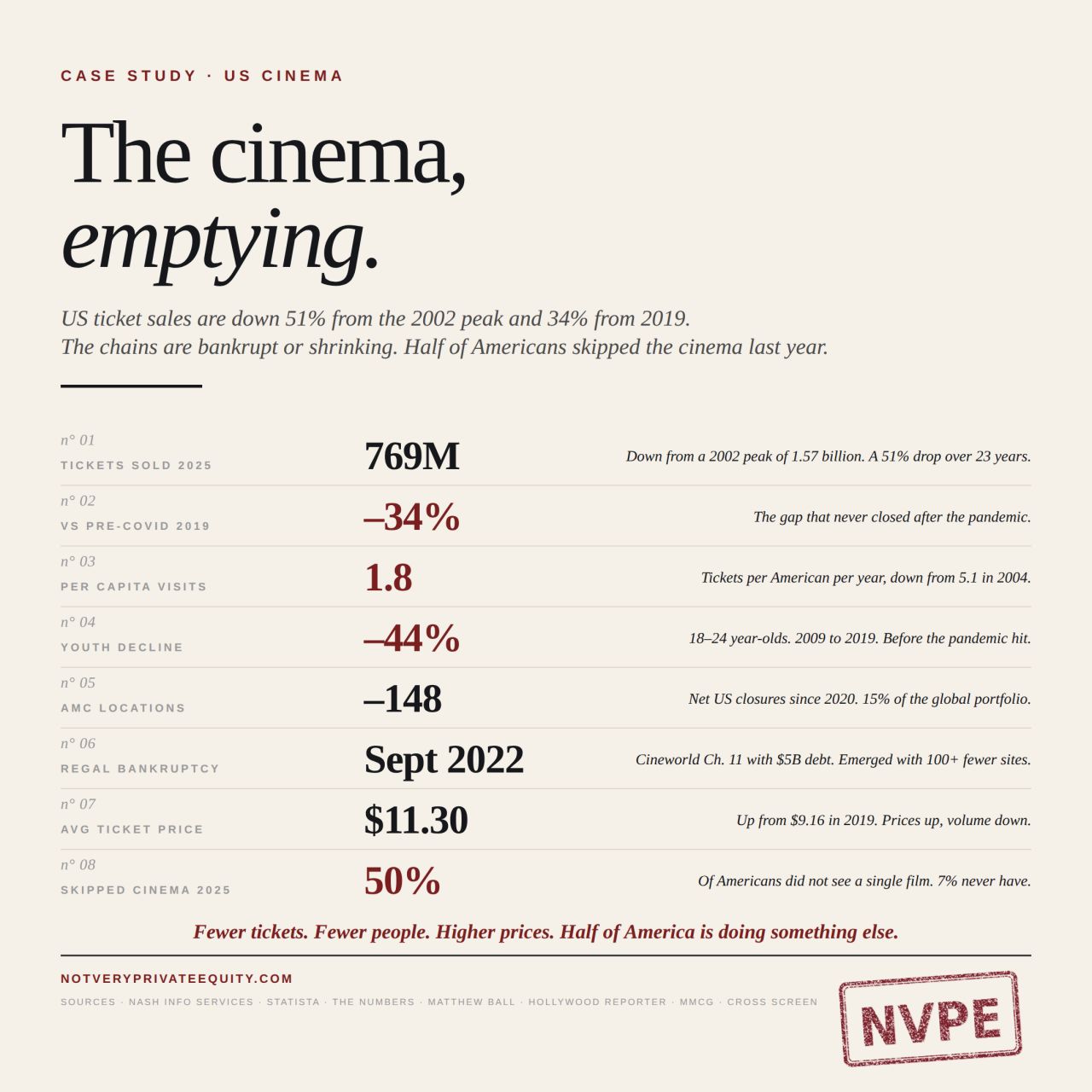
In a recent LinkedIn post, Lee McCabe discusses a critical issue facing the US cinema industry: the potential for rising ticket prices to mask underlying structural decline. McCabe, writing for his professional network, highlights how decades of price increases have coincided with a significant drop in attendance, questioning the long-term viability of a strategy that relies heavily on squeezing remaining customers.
McCabe points out the stark figures: North American cinemas sold approximately 769 million tickets in 2025, a dramatic decrease from the 1.57 billion tickets sold in 2002. This halving of attendance, he argues, has been obscured by a more than doubling of average ticket prices.
“The average ticket price has more than doubled. Revenue looks considerably less catastrophic because the remaining customers are paying more for premium screens, recliner seats and a bucket of popcorn requiring consumer finance.”
The Illusion of Premiumization
According to McCabe, what might be labeled as “premiumization” in a corporate presentation is perceived differently by consumers. He suggests that the strategy of increasing prices while the core customer base dwindles is leading audiences to “stay at home.” This dynamic, McCabe explains, is a classic example of how structural decline can be hidden within seemingly healthy financial statements.
He elaborates on this phenomenon:
“Volume falls. Prices rise. Revenue holds. Management congratulates itself on pricing power. Then another generation loses the habit, fixed costs remain stubbornly fixed and the business discovers that fewer customers paying more is not an endlessly renewable strategy.”
The Erosion of Habit and the Search for a Reason to Attend
Lee McCabe further emphasizes the severity of the attendance drop, noting that half of American adults did not visit a cinema in 2025, and frequent moviegoing has significantly declined since 2019. He posits that for cinemas to survive, they must offer genuine reasons for people to leave their homes – experiences that go beyond simply watching a film.
Identifying True Value Drivers
McCabe identifies key factors that could draw audiences back, including enhanced viewing formats like IMAX, improved food and beverage options, better venue quality, and the inclusion of live events. He also touches upon the potential of membership models and creating a sense of a “genuine occasion.” The core of his argument is that simply increasing the price for a standard experience is unlikely to compete with the convenience and diverse offerings of streaming services.
“Charging $18 for the same tired experience and calling it premium is unlikely to trouble Netflix.”
The insights shared by McCabe carry particular weight for the private equity sector. He issues a caution:
“Private equity should be particularly careful with businesses where price is doing all the work. Sometimes pricing power is evidence of a great product. Sometimes it is simply the last loyal customers being squeezed before they also disappear.”
McCabe’s analysis serves as a stark reminder that sustainable business growth requires more than just adjusting price points; it necessitates a deep understanding of evolving consumer behavior and delivering tangible value that encourages engagement and loyalty.
📝 About This Content
This article is based on insights shared by Lee McCabe on LinkedIn.
📅 Originally posted on September 15, 2026 | View original post on LinkedIn →