
In a recent LinkedIn post, Colin Shaw explores the potential pitfalls of implementing AI chatbots, particularly concerning customer trust and emotional responses. Shaw highlights a critical question he posed to a new client who had proudly announced cost savings through an AI chatbot: “How do your customers feel about it?” The ensuing silence, Shaw suggests, points to a significant, often overlooked, risk in AI adoption.
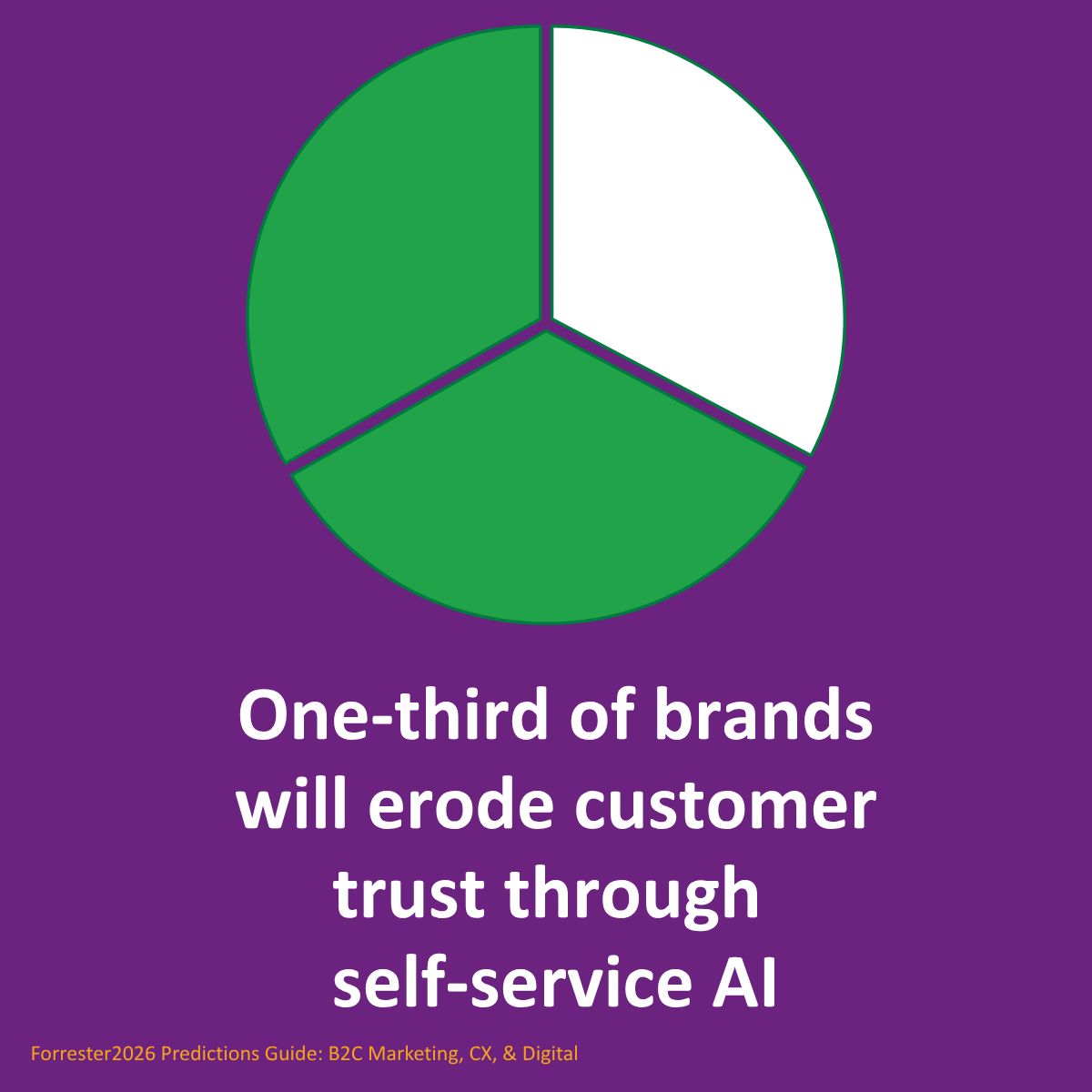
Shaw cites Forrester research predicting that by 2026, a substantial one-third of brands may erode customer trust through premature or poorly executed self-service AI initiatives. He emphasizes that this isn’t a minor issue but a significant threat to brand reputation and customer loyalty.
“The danger is that silence will be expensive. Forrester predicts that in 2026, one-third of brands will erode customer trust through self-service AI — rushing it in to cut costs rather than improve the experience. Not a rounding error. A third.”
The Emotional Landscape of AI Adoption
According to Shaw, customers are not neutral about AI; they often experience anxiety and annoyance. He likens the current phase of AI adoption to the early reception of other technologies, such as nuclear power, where initial fear and uncertainty gradually gave way to greater acceptance over decades. Shaw explains that behavioral science indicates that during these periods of high dread, people struggle to perceive or believe in the benefits of new technologies.
“Your customer isn’t neutral about AI. They can be anxious and annoyed about it. We’re in the fear-and-uncertainty phase of a new technology,” Shaw writes.
Maintaining Trust Amidst AI Integration
Shaw argues that implementing AI in a way that removes all human contact options can exacerbate customer fear, even if it achieves short-term cost savings. This approach, he believes, contributes to the erosion of trust identified by Forrester. To mitigate this risk, Shaw stresses the importance of maintaining a “trust anchor”—an option for customers to speak with a human.
“So implementing AI and taking away all options for human contact from an anxious customer may save a few dollars, but if not done in the right way, you help reinforce their fear, and fear is not good!”
He further elaborates on this point:
“This, for me, is part of the reason one-third of brands are eroding trust in Forrester’s research. What you need to keep is a ‘trust anchor’ in the shape of an option to speak with a person.”
Measuring AI Success Beyond Cost Savings
Shaw concludes by urging businesses to look beyond the immediate financial benefits when evaluating AI implementations. He poses a more challenging, yet crucial, question for leaders to consider:
“Before you measure your AI on cost saved, ask the harder question: where are your customers on the fear curve right now, and is your AI calming it, or feeding it?”
By focusing on the customer’s emotional journey and providing a human fallback, Shaw suggests, companies can implement AI more responsibly, preserving rather than damaging customer trust.
📝 About This Content
This article is based on insights shared by Colin Shaw on LinkedIn.
📅 Originally posted on September 15, 2026 | View original post on LinkedIn →